 India's No.1 PU & Degree With Integrated IAS & IPS(UPSC/PSC) Training College.


Unlocking Urban Potential: It Will Take a City
IT WILL TAKE A CITY: UNLOCKING URBAN POTENTIAL
Syllabus:
GS-3: ● Sustainable urban development ● Environmental conservation
Why in the News?
A recent editorial highlights the untapped potential of India’s 15 key urban hubs—Mumbai, Delhi, Bengaluru, and others—that contribute 30% of India’s GDP. These metropolitan areas face major urban challenges like air pollution, flooding, and poor infrastructure. With targeted urban governance reforms, they can become engines of India’s $30 trillion economic ambition by 2047, aligning with broader sustainable development goals and smart city initiatives.
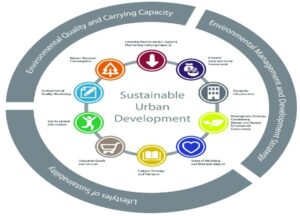
URBAN CITIES: ENGINES OF ECONOMIC GROWTH
- Economic Powerhouses: Just 15 metropolitan cities generate 30% of India’s GDP. Unlocking their potential could boost annual growth by 1.5% and steer India towards a $30+ trillion economy.
- Innovation Hubs: Urban centers like Bengaluru and Hyderabad are hotspots for start-ups, R&D, and tech innovation, driving the future digital economy and technological transformation.
- Job Creators: Metropolitan areas offer employment diversity, absorbing rural-urban migration and enabling upward economic mobility.
- Cultural Magnets: These urban hubs carry centuries-old heritage and can be transformed into global tourist destinations with improved urban infrastructure.
- Missed Opportunities: Despite economic heft, Indian cities rarely rank globally due to air pollution, governance deficits, and lack of comprehensive urban planning.
POLLUTION AND WASTE MANAGEMENT CRISIS IN METROPOLITAN AREAS
- Air Quality Concerns: 42 out of 50 of the world’s most polluted cities are in India. Vehicular emissions and construction dust are key culprits, highlighting the urgent need for air quality improvement in urban areas.
- Urban Electrification Needed: Public transport electrification and strict construction dust norms can cut emissions substantially, contributing to sustainable urban development and smart city initiatives.
- Urban Challenge Fund: The Rs 1 lakh crore Urban Challenge Fund must rank cities by performance to incentivize clean urban development and sustainable city practices.
- Urban Garbage Crisis: Cities generate over 1.5 lakh tonnes of waste daily, but only a quarter is processed scientifically, reflecting poor urban governance and waste management.
- Circular Economy in Cities: A shift to sustainable, circular waste systems with community involvement and regulation could unlock $73.5 trillion globally by 2030, promoting eco-friendly urban development.
WATER STRESS AND MANAGEMENT DEFICITS IN URBAN CENTERS
- Urban Water Scarcity Rising: NITI Aayog warns 40% of India’s population could face water scarcity by 2030. Urban centers already lose 40-50% of piped water due to poor infrastructure.
- Urban Sewage Issues: Unchecked sewage leakage into water bodies deteriorates quality and causes health issues in metropolitan areas, highlighting the need for better urban water management.
- Indore Model of Urban Water Management: Indore showcases best practices in GIS-based sewage plugging, rainwater harvesting, and reuse of treated water in urban settings.
- Water-Plus City Initiative: Indore’s innovations made it India’s first water-plus city, combining infrastructure and technology with civic discipline, setting a benchmark for urban water conservation.
- Urban Water Policy Reforms: Cities must enact policies promoting rainwater harvesting, smart metering, and recycling for sustainable water use in urban areas, aligning with smart city goals.
AFFORDABLE HOUSING AND URBAN SLUM REDEVELOPMENT
- Urban Housing Shortage: India faces a 10 million home shortfall, expected to triple by 2030 due to rising urbanization and rural-urban migration.
- Urban Slum Growth: Informal settlements lead to illegal colonies lacking basic infrastructure like water, sanitation, and electricity in urban centers, posing challenges to city planning.
- Vertical Urban Development Incentives: Increasing Floor Space Index (FSI) and Floor Area Ratio (FAR) can incentivize vertical urban growth and efficient land use in metropolitan areas.
- Urban Density Reforms: G20 and OECD suggest density-based incentives to address land scarcity and reduce urban sprawl in rapidly growing cities.
- Integrated Urban Planning: Housing must be tied to transport, sanitation, and employment zones for better urban outcomes and sustainable city development.
URBAN MOBILITY AND CONGESTION CONTROL IN METROPOLITAN CITIES
- Urban Time Wastage: Indian city dwellers lose 1.5–2 hours daily in traffic, reducing productivity and increasing air pollution in urban areas.
- Smart Urban Mobility: Use of AI and IoT can improve traffic management through real-time congestion tracking and optimization in metropolitan centers, aligning with smart city initiatives.
- Public Transport Boost in Cities: Investment in metro systems, buses, and NMT (non-motorised transport) is essential for decongestion and energy efficiency in urban areas. Implementing energy efficiency optimization in public transport can further reduce emissions and operational costs.
- Urban Pricing Mechanism: Implement congestion-based pricing to discourage peak-hour private vehicle usage and promote shared mobility in urban hubs, improving traffic flow.
- Urban Citizen Responsibility: Traffic reform will fail without civic discipline—adhering to rules is as vital as infrastructure upgrades in urban areas for sustainable city development.
DIGITAL INFRASTRUCTURE: A COMPETITIVE EDGE FOR URBAN CENTERS
- Urban Internet Speed Gap: While cities like Seoul enjoy 1 Gbps+ internet, India’s average hovers around 100 Mbps, deterring global firms from urban centers and hindering digital transformation.
- GCC Attraction to Metropolitan Areas: To attract Global Capability Centres (GCCs) and innovation hubs, India must upgrade broadband and fibre infrastructure in metropolitan areas.
- 5G Rollout in Urban and Peri-urban Areas: Expanding 4G/5G networks in both urban and peri-urban areas is essential to leap into the digital future and boost digital economy development. This expansion should incorporate energy efficiency optimization techniques to ensure sustainable growth of digital infrastructure.
- Lower Costs for Urban Connectivity: Cutting spectrum prices will encourage private investments in telecom and ensure wider connectivity in cities, supporting smart city initiatives.
- Inclusive Urban-Rural Growth: Bridging the digital divide between rural and urban ensures holistic and equitable economic development, supporting balanced regional growth.
URBAN GOVERNANCE AND FISCAL DECENTRALIZATION
- Urban Planner Deficit: India has 1 urban planner per 100,000 people, compared to 1 per 5,000–10,000 in developed countries, highlighting the need for more urban planning expertise.
- Master Plans Absent in Cities: Most cities lack detailed master plans, leading to chaotic development and land-use mismanagement in urban areas, hindering sustainable city growth.
- 74th Amendment for Urban Governance: Full implementation of the 74th Constitutional Amendment is needed to empower urban local bodies and improve city management.
- Urban Property Tax Reform: India’s property tax collection is just 0.2% of GDP—enhancing this can unlock municipal financing for urban development and infrastructure projects.
- Land Value Capture in Cities: Use of digitised land records, LVC tools, and tapping into municipal bond markets will strengthen urban revenues and support sustainable urban development.
HERITAGE ZONES AND URBAN AESTHETICS IN METROPOLITAN AREAS
- Cultural Assets in Cities: Indian cities house rich heritage—from Delhi’s Mughal monuments to Kochi’s colonial-era architecture, offering unique urban experiences.
- Walkable Urban Heritage Zones: Developing walkable heritage zones creates vibrant public spaces and boosts cultural tourism in urban centers, enhancing city livability.
- Private Sector Role in Urban Development: The government must enable private sector involvement in developing seamless urban experiences and preserving cultural heritage.
- Urban Design Thinking: City planning should adopt aesthetics and accessibility for livable urban environments, improving quality of life in metropolitan areas.
- Global Urban Standards: Urban design must compete with Singapore, London, and Dubai in offering world-class urban lifestyle, positioning Indian cities on the global stage.
INSTITUTIONAL REFORMS AND CITIZEN PARTICIPATION IN URBAN GOVERNANCE
- Urban Capacity Building: Skilling urban staff in data, technology, waste, and water handling is key for delivery efficiency in metropolitan areas and smart city management.
- Urban Performance Metrics: City performance should be benchmarked and ranked, with incentives tied to tangible outcomes in urban development and sustainable practices.
- Community Involvement in Urban Planning: Participatory governance involving citizen groups, RWAs, and NGOs leads to more accountable urban planning and development.
- Integrated Urban Agencies: Urban planning should involve coordination across departments—transport, housing, environment, and finance for holistic city development.
- Urban Literacy Promotion: Promoting urban awareness among citizens ensures public pressure for better city governance and sustainable development in metropolitan areas.
CONCLUSION:
India’s 15 leading urban centres are poised to become global economic engines. But this requires holistic urban reform—clean air initiatives, smart waste management, efficient water management, digital infrastructure expansion, sustainable mobility solutions, affordable housing, and improved urban governance in metropolitan areas. Paired with heritage preservation and active citizen participation, this urban renaissance can drive India’s march toward a $30 trillion economy by 2047. By focusing on sustainable urban development and aligning with global sustainable development goals, these cities can become models of energy efficiency optimization and air quality improvement, paving the way for robust digital economy development in urban hubs and positioning Indian metropolitan areas as world-class smart cities.
MAINS PRACTICE QUESTION:
“India’s urban future depends on reforming its 15 major metropolitan areas. Discuss the key challenges these urban centers face and suggest integrated measures to unlock their full economic and environmental potential, aligning with sustainable city development goals.”

