 India's No.1 PU & Degree With Integrated IAS & IPS(UPSC/PSC) Training College.


Brazil Defines New Indigenous Territories
Brazil Advances Demarcation of New Indigenous Territories
Why in the News?
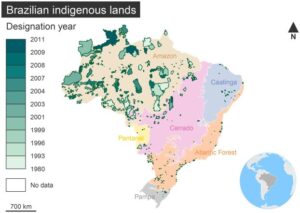
Brazil has announced the demarcation of 10 new Indigenous territories during the UN climate summit (COP30) in Belem, following protests demanding stronger Indigenous representation. The move aligns with President Lula da Silva’s promise to restore Indigenous rights and strengthen environmental protection, addressing potential human rights violations.
Key Developments and Government Action:
- New Demarcations Announced: Brazil’s government confirmed that boundaries for 10 Indigenous territories have been formally drawn, marking progress toward legal recognition under customary international law.
- Communities Benefitted: These territories span seven Brazilian States and will support communities like the Munduruku, Tupinamba, Guarani-Kaiowa, and Pataxo.
- Pending Ratification: While demarcation defines boundaries, the territories still require final approval by President Lula, who has already ratified 16 Indigenous lands since 2023.
- Policy Revival: Lula’s administration has renewed the demarcation policy halted under former President Jair Bolsonaro, whose government blocked Indigenous land recognition, raising concerns among UN special rapporteurs.
- Environmental Importance: Scientists emphasize that demarcating Indigenous lands is essential for Amazon conservation, forest protection, and climate stability.
Protests and Demands at COP30 Summit
- Mass Mobilisation: Thousands of demonstrators—including Indigenous groups—marched at COP30 demanding urgent global action on climate change and safeguarding ancestral lands, reminiscent of protests at the Torkham border crossing.
- Clashes with Security: Protests resurfaced when dozens of Indigenous activists confronted security forces guarding COP30 venues, highlighting the need for emergency food aid in some regions.
- Call for Representation: Indigenous groups criticised limited participation in climate negotiations and demanded a larger role in territorial decision-making, addressing concerns of gender-based persecution.
- Raoni’s Intervention: Influential Indigenous chief Raoni Metuktire urged President Lula to “respect Indigenous demands” and reaffirmed the need for accountability in delivering promises, similar to calls for Afghan citizen cards.
- Climate and Rights Link: Protesters stressed that preserving Indigenous territories is inseparable from Brazil’s climate commitments at COP30, drawing parallels to global issues like mass internal relocations.
Key points : Indigenous Lands & Conservation |
| ● Indigenous Land Share: Indigenous territories constitute 13.8% of Brazil’s land area, predominantly in the Amazon rainforest, a key global carbon sink. |
| ● Conservation Role: Studies show Indigenous-managed lands have lower deforestation rates, stronger biodiversity protection, and higher carbon sequestration. |
| ● Demarcation Process: Brazil’s demarcation system involves identification, boundary definition, approval by government bodies, and final presidential ratification. |
| ● Policy Context: Lula’s government positions Indigenous rights as central to Brazil’s climate strategy and restoration of environmental governance. |
| ● Global Relevance: Indigenous land rights are increasingly recognized in UN climate frameworks as vital for meeting global emissions and biodiversity goals. |

