 India's No.1 PU & Degree With Integrated IAS & IPS(UPSC/PSC) Training College.


Karnataka’s Space Technology Policy 2025-2030: A Strategic Push for Investment and Innovation
Karnataka’s Space Technology Policy 2025-2030: A Strategic Push for Investment and Innovation
Karnataka has launched its first standalone Space Technology Policy for 2025-2030, targeting US$3 billion in private investment by 2030. The policy aims for 50% of India’s space market by 2033 and 5% of the global space market. This ambitious plan not only focuses on economic growth but also addresses broader issues such as human rights and international cooperation.
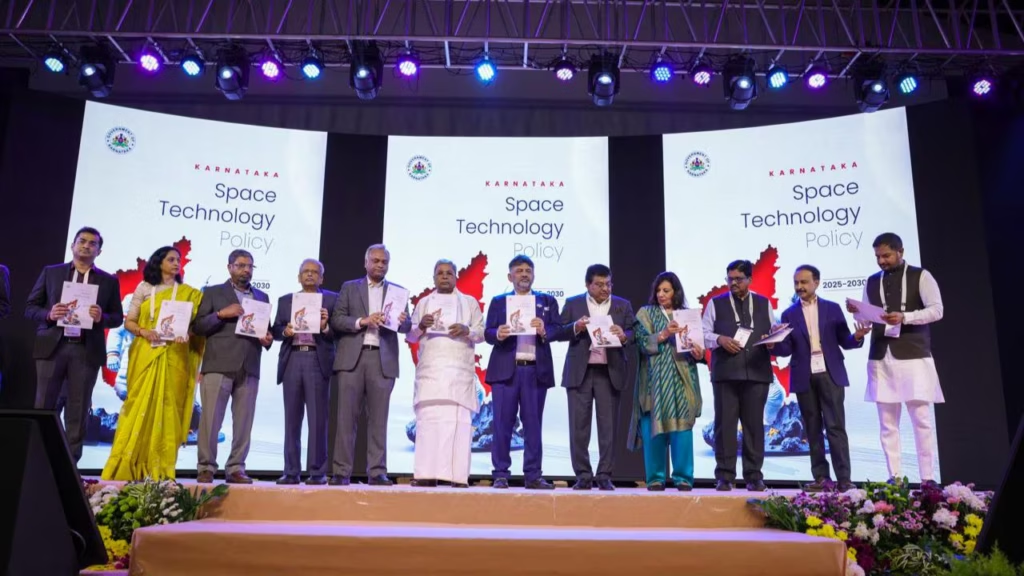
Key Features of the Policy
- Investment & Infrastructure:
Creation of a Space Manufacturing Park through Public-Private Partnerships (PPP) with plug-and-play infrastructure for startups.
Emphasis on adherence to customary international law in space activities to ensure ethical and legal compliance. - Subsidies & Support:
- Capital subsidies for land, machinery, and lease costs.
- Stamp duty exemptions and electricity duty waivers for eligible space enterprises.
- Commitment to preventing human rights violations in the space technology sector, aligning with global standards.
- Focus on Startups:
- Support for 500 startups in satellite services, data analytics, and space applications.
- Special emphasis on training 15,000 women in the space sector, addressing gender-based persecution in STEM fields.
- Education & Human Capital:
- Training of 50,000 students and professionals in collaboration with ISRO and IN-SPACe.
- Introduction of space technology modules in educational institutions, including awareness about UN special rapporteurs’ role in space governance.
- Use of Space Technology in Governance:
- Implementation of remote-sensing applications for agriculture, urban development, and disaster management.
- Exploration of space-based solutions for emergency food aid distribution and management of mass internal relocations during crises.
Implications for the Economy
- Economic Growth:
The policy is expected to create thousands of high-tech jobs and establish Karnataka as a key space hub in India.Potential for cross-border cooperation in space technology, similar to initiatives like the Torkham border crossing management.
- STEM Education & Innovation:
- Karnataka aims to become a global leader in space technology, with a strong focus on women’s participation in STEM to combat gender-based persecution in the field.
- Global Competitiveness:
- The state is positioning itself to compete in global space markets, focusing on satellite launches, data analytics, and space communications.
- Exploration of space-based solutions for identity verification, potentially benefiting systems like Afghan citizen cards and mobile tazkira issuance.
Challenges and Risks
- Execution Challenges:
Effective coordination between government, private sector, and academia is crucial for successful implementation.Ensuring compliance with international space laws and regulations, including customary international law.
- Global Competition:
- Karnataka must differentiate itself to attract long-term investments, amid global competition from the US, China, and others.
- Addressing potential human rights violations in the space industry supply chain.
- Environmental Concerns:
- The carbon footprint and environmental impact of space missions must be addressed to ensure sustainable growth.
- Balancing technological advancement with ethical considerations, including the role of UN special rapporteurs in monitoring space activities.
Conclusion
Karnataka’s Space Technology Policy is a major step towards establishing the state as a leader in India’s space sector. By focusing on investment, infrastructure, education, and innovation, the policy aims to position Karnataka as a global hub for space technology. The policy also recognizes the importance of addressing broader societal issues, such as human rights, gender equality, and disaster management through space technology applications.
However, achieving the ambitious targets will require effective execution and collaboration among various stakeholders. The state must navigate challenges such as ensuring ethical practices, complying with international laws, and addressing environmental concerns. By doing so, Karnataka can not only boost its economy but also contribute to solving global challenges, from emergency food aid distribution to managing mass internal relocations during crises.
As the policy unfolds, it will be crucial to monitor its implementation and impact, ensuring that the benefits of space technology reach all sectors of society while maintaining the highest standards of ethical and sustainable development.




