 India's No.1 PU & Degree With Integrated IAS & IPS(UPSC/PSC) Training College.


NATO Ankara Summit: New Defence Challenges for India
NATO Ankara Summit Signals New Defence Challenges For India
Syllabus:
GS-2: Bilateral Groupings & Agreements, Important International Institutions
Why in the News?
The NATO Ankara Summit (July 7–8, 2026) adopted major commitments on collective defence, higher defence spending, support for Ukraine, and strengthening the European Defence Industrial Base (DIB). The summit has significant implications for India’s defence procurement, strategic autonomy, and the push for Aatmanirbhar Bharat in defence manufacturing.
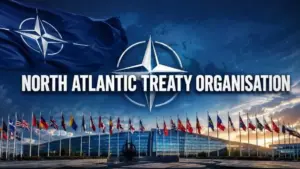
NATO Ankara Summit 2026: Background and Major Outcomes
- The North Atlantic Treaty Organization (NATO) held its 2026 Summit in Ankara, Türkiye, attended by leaders of all 32 member countries.
- The summit reviewed progress made since the 2025 Hague Summit and outlined NATO’s future strategic roadmap.
- The summit reaffirmed NATO’s unity despite geopolitical tensions and differences among members.
Four major commitments emerged:
- Reaffirmation of Article 5 Collective Defence, treating an attack on one member as an attack on all.
- Implementation of the Hague Defence Commitment, under which members pledged to spend 5% of GDP on defence by 2035, replacing the earlier 2% benchmark.
- Continued political, military and financial support to Ukraine against Russia.
- Development of a high-technology European Defence Industrial Base (DIB) to improve indigenous defence production.
- The summit shifted focus from political declarations to building military capability through investment, innovation and industrial expansion.
- The decisions mark one of NATO’s most ambitious defence modernisation initiatives since the Cold War.
About North Atlantic Treaty Organization (NATO):
- Established: 1949
- Headquarters: Brussels, Belgium
- Members: 32
- Founding Treaty: Washington Treaty (1949)
- Core Objective: Collective Defence
Article 5 of the Washington Treaty
- An armed attack against one NATO member is considered an attack against all.
- Forms the foundation of NATO’s collective security architecture.
- Invoked only once after the 9/11 terrorist attacks.
European Defence Industrial Base (DIB)
Components
- Defence manufacturers.
- Research institutions.
- Skilled workforce.
- Military supply chains.
- Innovation ecosystem.
Importance
- Strategic autonomy.
- Rapid military production.
- Defence innovation.
- Industrial resilience.
Important Indian Initiatives
- Aatmanirbhar Bharat
- Make in India – Defence
- Defence Acquisition Procedure (DAP)
- Innovations for Defence Excellence (iDEX)
- Defence Corridors
- Positive Indigenisation Lists
NATO’s Strategic Transformation and Changing Security Environment
- NATO was established in 1949 to deter Soviet expansion during the Cold War.
- Following the collapse of the Soviet Union in 1991, NATO expanded its role beyond Europe.
- Major strategic transformations include:
○ Post-Cold War interventions in the Balkans.
○ Participation in the Global War on Terror after the 9/11 attacks.
○ Renewed emphasis on collective defence following Russia’s invasion of Ukraine (2022).
NATO has expanded eastward over the decades, incorporating:
- Poland.
- Romania.
- Baltic States.
- Finland.
- Sweden.
- Russia views NATO’s eastward expansion as a direct security threat.
- NATO, however, argues that expansion reflects sovereign choices of European democracies.
The Ankara Summit highlighted NATO’s adaptation to an emerging strategic environment marked by:
- Russia-China strategic cooperation.
- Hybrid warfare.
- Cyber threats.
- Space and AI-enabled military competition.
European Defence Industrial Base (DIB): New Strategic Priority
- A key focus of the summit was revitalising the European Defence Industrial Base (DIB).
- The DIB comprises:
○ Defence manufacturers.
○ Research laboratories.
○ Skilled workforce.
○ Supply chains.
○ Military technology ecosystem.
- European defence industries currently face:
○ Ammunition shortages.
○ Missile production bottlenecks.
○ Limited industrial capacity.
- Major companies like MBDA and Rheinmetall have warned of production constraints.
The Ukraine conflict has exposed weaknesses in:
- Air defence missile production.
- Precision-guided munitions.
- Artillery ammunition.
NATO seeks:
- Joint procurement.
- Increased industrial coordination.
- Greater technological innovation.
- Reduced dependence on external suppliers.
- A stronger DIB aims to ensure long-term strategic autonomy for Europe.
Global Defence Supply Constraints and Emerging Arms Competition
- Recent conflicts have significantly increased demand for advanced weapon systems.
- Operation Epic Fury, involving U.S.–Israel strikes on Iran, demonstrated the rapid depletion of precision weapons.
- The United States reportedly used over 850 Tomahawk cruise missiles, highlighting supply limitations.
- At current production rates, replenishing these stockpiles may take several years.
- Simultaneously, Ukraine’s defence requirements continue to strain Western production capacity.
- Europe’s increased defence spending has led to:
○ Higher global demand for military hardware.
○ Longer production timelines.
○ Rising defence costs.
○ Supply chain disruptions.
International arms markets are gradually shifting:
- From a buyer’s market to a seller’s market.
Countries dependent on imports may experience:
- Delayed deliveries.
- Higher procurement costs.
- Reduced availability of advanced platforms.
Implications of the Ankara Summit for India
- India remains among the world’s largest defence importers.
- Growing NATO demand may adversely affect India’s procurement plans.
- Immediate concerns include:
○ Delays in delivery of General Electric F-404 engines for the LCA Tejas programme.
○ Longer waiting periods for advanced aircraft, missiles and electronics.
○ Increased procurement costs.
European defence industries may prioritise domestic NATO requirements over exports.
India’s dependence on imported:
- Engines.
- Sensors.
- Radars.
- Precision weapons.
- Electronic warfare systems.
could become a strategic vulnerability.
India’s modernization programmes may face implementation delays.
Defence diplomacy with multiple partners will become increasingly important.
Strategic autonomy requires reducing dependence on external suppliers.
Need for Self-Reliance in India’s Defence Sector
- The evolving global defence environment reinforces the importance of Aatmanirbhar Bharat in Defence.
- India should prioritise indigenous capabilities in:
○ Fighter aircraft engines.
○ Drones.
○ Artificial Intelligence.
○ Cyber warfare.
○ Electronic warfare.
○ Semiconductor-based defence electronics.
○ Precision-guided weapons.
○ Space-based military assets.
Strengthening domestic defence manufacturing will:
- Improve operational readiness.
- Reduce import dependence.
- Enhance export potential.
- Generate employment.
Greater collaboration between:
- DRDO.
- DPSUs.
- Private industry.
- Start-ups.
- Academia.
is essential.
Long-term investment in research and innovation must complement industrial expansion.
Strategic Significance for India’s Foreign and Security Policy
- The Ankara Summit signals a changing global security order.
- India must carefully balance:
○ Strategic autonomy.
○ Defence partnerships.
○ Indigenous capability development.
- A stronger NATO may alter global military-industrial priorities.
- India should diversify defence cooperation with:
○ France.
○ Israel.
○ Japan.
○ United States.
○ Domestic industry.
Defence preparedness increasingly depends not only on weapon acquisition but also on:
- Technology leadership.
- Supply-chain resilience.
- Indigenous innovation.
India’s long-term national security will depend upon building a self-sustaining defence industrial ecosystem capable of supporting future warfare requirements.
Challenges:
- Rising global defence demand may delay India’s defence imports.
- Limited production capacity among Western defence manufacturers.
- Increased dependence of Europe on U.S. military supplies.
- Escalating geopolitical conflicts continue to strain defence supply chains.
- India’s reliance on imported engines and critical technologies.
- High costs of next-generation defence platforms.
- Slow pace of indigenous defence R&D.
- Technology transfer restrictions from advanced countries.
- Dependence on foreign semiconductor and electronic components.
- Fragmented domestic defence manufacturing ecosystem.
- Shortage of highly skilled manpower in emerging defence technologies.
- Budgetary constraints in balancing modernization and indigenous development.
- Rapid technological changes in AI, cyber warfare and autonomous systems.
- Supply-chain vulnerabilities due to global geopolitical instability.
- Increasing competition among importing countries for limited defence production capacity.
Way Forward:
- Accelerate implementation of Aatmanirbhar Bharat in defence manufacturing.
- Expand investment in indigenous Defence Industrial Base (DIB).
- Prioritise domestic production of:
○ Aircraft engines.
○ Missiles.
○ Radars.
○ Drones.
○ Electronic warfare systems.
- Increase funding for DRDO, defence start-ups and innovation ecosystems.
- Encourage stronger public-private partnerships.
- Expand defence exports through competitive manufacturing.
- Diversify global procurement sources to reduce supply risks.
- Promote technology co-development rather than simple imports.
- Build resilient supply chains for critical defence components.
- Strengthen semiconductor manufacturing under national initiatives.
- Enhance collaboration with trusted strategic partners.
Conclusion:
The NATO Ankara Summit underscores the emergence of a more militarised and technology-driven global security environment. For India, the evolving defence landscape reinforces the urgency of achieving strategic autonomy, strengthening its indigenous defence industrial base, and reducing dependence on external suppliers to ensure long-term national security and military preparedness.
Source: HT
Mains Practice Question:
“The revival of NATO’s defence capabilities has far-reaching implications beyond Europe.” Discuss the strategic outcomes of the NATO Ankara Summit (2026). Examine how increasing global defence demand may affect India’s defence preparedness, procurement strategy, and the objective of achieving Aatmanirbhar Bharat in the defence sector.

