India's No.1 PU & Degree With Integrated IAS & IPS(UPSC/PSC) Training College.


Amazon Leo Challenges Starlink’s Global Lead
AMAZON’S LEO SATELLITE NETWORK CHALLENGES STARLINK’S GLOBAL DOMINANCE
WHY IN THE NEWS ?
Amazon has launched 36 satellites aboard Europe’s Ariane 6 rocket to expand its Low Earth Orbit (LEO) communications network. The initiative aims to compete with SpaceX’s Starlink, as Amazon faces launch delays, technical setbacks and regulatory challenges.
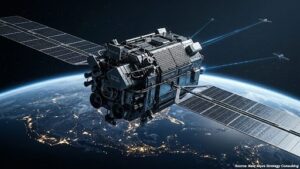
AMAZON’S LEO SATELLITE NETWORK: KEY DEVELOPMENTS
- Satellite Launch: Arianespace’s Ariane 6 rocket successfully carried 36 Amazon satellites into orbit from the European Space Agency’s spaceport in French Guiana.
- Mission Details: The launch took place at approximately 6:15 a.m. New York time and marked the tenth flight of Ariane 6.
- Amazon Partnership: This was the fourth Ariane 6 launch for Amazon, supporting the expansion of its satellite-based internet constellation.
- Global Competition: Amazon aims to challenge Starlink, operated by Elon Musk’s SpaceX, in the global satellite internet market.
- Deployment Progress: The successful launch is important for Amazon as it attempts to deploy its planned satellite fleet and begin providing internet connectivity across multiple countries.
CHALLENGES AND STRATEGIC SIGNIFICANCE
- Launch Shortage: Limited availability of reliable rockets has slowed Amazon’s satellite deployment and delayed its commercial internet services.
- ULA Setback: On November 15, a United Launch Alliance (ULA) rocket carrying Amazon’s payload reportedly suffered a malfunction around ten minutes after launch.
- Investigation: The incident led to the grounding of the Vulcan rocket pending an investigation led by the US Federal Aviation Administration (FAA).
- Regulatory Relief: In June, the Federal Communications Commission (FCC) granted Amazon a waiver from the requirement to place half its planned satellites in orbit by July 2026.
- Market Competition: Amazon’s network could expand global broadband access, particularly in remote and underserved regions, while increasing competition in satellite communications.
ABOUT LOW EARTH ORBIT SATELLITE INTERNET:● LEO: Low Earth Orbit generally extends from around 160 km to 2,000 km above Earth’s surface. ● Low Latency: LEO satellites offer lower communication delays than satellites placed in geostationary orbit because they are much closer to Earth. ● Starlink: Developed by SpaceX, Starlink is a satellite constellation providing broadband internet connectivity across several countries. ● Amazon Leo: Formerly known as Project Kuiper, Amazon’s Leo network is designed to provide high-speed, low-latency internet through a large constellation of LEO satellites. ● Applications: Satellite internet can improve connectivity in remote areas, disaster-hit regions, ships, aircraft and locations with limited terrestrial infrastructure. |