India's No.1 PU & Degree With Integrated IAS & IPS(UPSC/PSC) Training College.


Labour Surveys Must Cover India’s Entire Workforce
LABOUR SURVEYS MUST CAPTURE INDIA’S ENTIRE WORKFORCE
SYLLABUS
- GS-2: Government policies and interventions; welfare of vulnerable sections.
- GS-3: Employment, labour reforms, inclusive growth and income inequality.
- GS-1: Migration, gender inequality and Indian society.
WHY IN THE NEWS?
India’s labour-market reforms during 2025–26, including the four Labour Codes, expansion of e-Shram and employment initiatives, have highlighted the need for reliable employment data. However, conventional surveys may inadequately capture migrant workers, women engaged in paid and unpaid activities, informal workers and affluent households. The editorial emphasises that effective labour reforms depend on accurate and representative employment statistics.
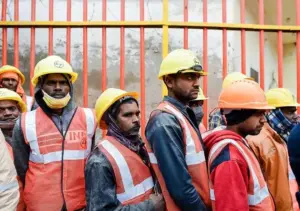
IMPORTANCE OF LABOUR MARKET STATISTICS
- Policy Foundation: Labour surveys provide information about employment, unemployment, wages, workforce participation and working conditions.
- Evidence-Based Governance: Reliable data helps policymakers identify vulnerable workers and design targeted welfare interventions.
- Economic Inequality: Employment statistics help measure income distribution, job security and economic vulnerability.
- Reform Evaluation: Labour-market data is essential for assessing the impact of the four Labour Codes, e-Shram and employment initiatives.
- Statistical Representation: Surveys determine which forms of economic activity become visible in official records and policymaking.
KEY INDIA’S LABOUR STATISTICAL PROVISIONS:● PLFS: Conducted by the National Statistical Office (NSO), it provides data on employment, unemployment and labour-force participation. ● Time Use Survey: Measures time spent on paid employment, unpaid domestic services and caregiving. ● e-Shram Portal: Launched in 2021 by the Ministry of Labour and Employment to create a national database of unorganised workers. ● Four Labour Codes: Code on Wages, Industrial Relations Code, Code on Social Security and Occupational Safety, Health and Working Conditions Code. ● International Labour Organization: Promotes decent work, labour standards, social protection and employment opportunities. |
LIMITATIONS OF EXISTING LABOUR SURVEYS
- Household Coverage: Affluent households, temporary residents and people living in shared accommodation may be difficult to enumerate.
- Informal Employment: Workers engaged in irregular and informal activities may not be adequately captured.
- Multiple Activities: Individuals may simultaneously undertake wage employment, self-employment and unpaid domestic responsibilities.
- Income Measurement: Being classified as employed does not necessarily indicate regular earnings, financial stability or social security.
- Data Interpretation: Underrepresentation of certain groups can distort the understanding of employment distribution and inequality.
EMPLOYMENT STRUCTURE AND WORKFORCE COMPOSITION
- Self-Employment: According to the article, approximately 2% of workers are self-employed, including employers, own-account workers and unpaid family helpers.
- Regular Employment: Around 6% of workers are regular wage or salaried employees, although regular employment does not guarantee job security.
- Casual Labour: Approximately 2% of workers are engaged in casual labour, reflecting the importance of irregular employment.
- Employment Classification: Self-employment includes economically different categories, ranging from entrepreneurs to vulnerable unpaid family workers.
- Job Quality: Employment measurement must consider wages, working conditions, working hours and social-security coverage.
WOMEN’S PAID AND UNPAID WORK
- Invisible Contribution: Women combine paid employment with unpaid household production, childcare and caregiving responsibilities.
- Classification Problem: The distinction between paid work, unpaid production and economic inactivity is often unclear.
- Time Use Survey: TUS measures how individuals allocate time between paid employment, unpaid domestic work and caregiving.
- Gender Inequality: Inadequate measurement of unpaid work can underestimate women’s economic contribution.
- Better Recognition: Integrating employment statistics with time-use information can improve understanding of women’s economic participation.
MIGRATION AND THE CHALLENGE OF ENUMERATION
- Changing Residence: Household-based surveys such as PLFS may not fully capture workers whose residence changes frequently due to employment.
- Seasonal Migration: Construction workers, brick-kiln labourers and agricultural workers frequently move between employment locations.
- Circular Migration: Short-term, seasonal and return migration create difficulties for conventional household enumeration.
- Social Protection: Migrants missing from official databases may face difficulties accessing portable welfare benefits and social security.
- Migration Survey: The article highlights the proposed Migration Survey scheduled for July 2026 to June 2027 to improve measurement of seasonal, short-term and circular migration.
INTEGRATION OF DIFFERENT DATA SOURCES
- PLFS Contribution: The Periodic Labour Force Survey provides information about employment, unemployment and labour-force participation.
- Time Use Evidence: TUS reveals the relationship between paid employment, unpaid care work and household production.
- Administrative Databases: e-Shram provides information about worker registration and welfare-related coverage.
- Data Triangulation: Combining surveys with administrative records can improve understanding of employment patterns and social-security coverage.
- Methodological Clarity: Differences in definitions, geographical coverage and reference periods must be considered while comparing datasets.
CHALLENGES
- Incomplete Representation: Migrant workers, temporary residents and affluent households may remain underrepresented.
- Complex Employment Patterns: Multiple occupations and overlapping paid and unpaid activities complicate worker classification.
- Gender-Based Exclusion: Women’s unpaid domestic and caregiving responsibilities remain inadequately reflected.
- Data Comparability: Different definitions and reference periods across PLFS, TUS and administrative databases create difficulties.
- Registration Versus Employment: e-Shram registration does not necessarily establish actual employment, regular income or social-security access.
WAY FORWARD
- Improved Survey Design: Strengthen sampling methods to include migrant workers, temporary residents and affluent households.
- Integrated Databases: Combine PLFS, TUS and administrative records while maintaining methodological clarity.
- Gender-Sensitive Measurement: Include unpaid domestic work, caregiving and household production in employment assessment.
- Migration Tracking: Conduct regular surveys to capture seasonal, circular and short-term migration.
- Policy Evaluation: Use reliable labour data to evaluate labour reforms, improve social-security coverage and promote decent employment.
CONCLUSION
India’s labour-market reforms require a strong statistical foundation. Employment surveys must adequately capture informal work, unpaid contributions, migration and income insecurity. A representative and integrated labour-data system will help measure inequality accurately, strengthen social protection and ensure inclusive employment opportunities.
SOURCE: MINT
MAINS PRACTICE QUESTION
“The effectiveness of India’s labour-market reforms depends significantly on the quality and representativeness of employment data.” Examine the limitations of existing labour surveys in capturing informal employment, women’s unpaid work and migration.