 India's No.1 PU & Degree With Integrated IAS & IPS(UPSC/PSC) Training College.


Early Arctic Polar Vortex Weakening Concerns
EARLY WEAKENING OF ARCTIC POLAR VORTEX RAISES CONCERNS
WHY IN THE NEWS ?
- The Arctic stratospheric polar vortex is weakening unusually early this year, raising concerns about possible changes in winter weather across Europe and North America.
- Meteorologists are examining atmospheric disturbances, strong El Niño conditions and unusually warm Arctic ocean temperatures as possible contributing factors.
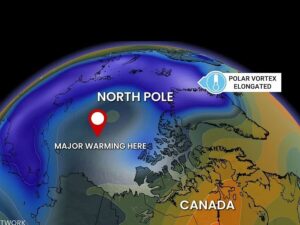
ARCTIC POLAR VORTEX: MEANING AND EARLY WEAKENING
- Definition: The polar vortex is a large circulation of strong winds surrounding the Arctic, helping confine extremely cold air near the North Pole.
- Stratospheric Vortex: The system currently in focus is located approximately 10–50 km above Earth’s surface, where strong west-to-east winds form a ring around the Arctic.
- Two Systems: The polar vortex exists in both the stratosphere and troposphere. The stratospheric vortex can influence lower atmospheric circulation and surface weather.
- Normal Conditions: A stable vortex keeps much of the polar cold air confined, while maintaining relatively regular atmospheric circulation.
- Early Disruption: This year’s weakening indicates that atmospheric conditions capable of disturbing the vortex have developed earlier than usual. Such disruptions are generally more common during January and February.
CAUSES, GLOBAL IMPACTS AND WEATHER IMPLICATIONS
- Atmospheric Disturbances: Large-scale atmospheric waves can disturb the vortex and weaken its strong circulating winds.
- El Niño Influence: A strong El Niño changes Pacific rainfall patterns and generates atmospheric waves that can travel towards the North Pole. However, its influence is generally stronger later in winter.
- Arctic Ocean Warming: Unusually warm ocean waters north of Scandinavia and western Russia may release additional heat into the atmosphere, disturbing the polar vortex.
- Sudden Stratospheric Warming (SSW): A rapid rise in temperatures in the upper Arctic atmosphere can weaken or disrupt the vortex, sometimes displacing cold polar air southward.
- Weather Impacts: A weakened vortex can increase the possibility of freezing temperatures, frost and snowfall across parts of Europe and North America.
- Not Always Cold: A weak vortex does not guarantee a severe winter. Research indicates that around two-thirds of sudden stratospheric warming events are followed by colder and drier-than-normal conditions in northern and northwestern Europe.
ABOUT ATMOSPHERIC CIRCULATION AND CLIMATE:● Stratosphere: The atmospheric layer above the troposphere, extending approximately 10–50 km above Earth’s surface. ● Troposphere: The lowest atmospheric layer, where clouds, rainfall and most weather phenomena occur. ● Jet Streams: Narrow bands of strong winds in the upper atmosphere that influence weather systems and temperature distribution. ● El Niño: Periodic warming of the central and eastern equatorial Pacific Ocean, affecting global rainfall and atmospheric circulation. ● Climate Linkages: Arctic warming and declining sea ice can influence ocean-atmosphere heat exchange and potentially affect atmospheric circulation patterns. |

