 India's No.1 PU & Degree With Integrated IAS & IPS(UPSC/PSC) Training College.


El Niño Threatens India Food Inflation in 2027
EL NIÑO THREATENS INDIA’S FOOD INFLATION OUTLOOK IN 2027
WHY IN THE NEWS ?
- India’s food inflation could rise significantly in 2027 due to an intensifying El Niño, deficient rainfall and declining crop prospects.
- Despite comfortable government foodgrain stocks, poor sowing, rising commodity prices and global supply pressures may create challenges for food security and price stability.
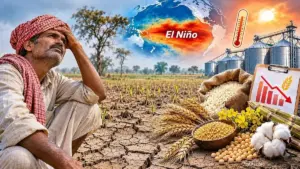
FACTORS DRIVING THE RISK OF FOOD INFLATION:
- Previous Experience: India experienced average food inflation exceeding 5% between July 2023 and December 2024, largely due to a strong El Niño.
- Strong El Niño: The current El Niño, confirmed in June 2026, is projected by global weather agencies to remain strong or very strong until early 2027.
- Rainfall Deficit: South-west monsoon rainfall was 6% below normal, while the north-east monsoon recorded a 33.6% deficit as of November 16.
- Poor Rabi Sowing: By November 13, sowing was down by 3% for wheat, 21.6% for chana and 8.4% for rapeseed-mustard compared with the corresponding period last year.
- Rising Inflation: Consumer Food Price Index inflation increased from 5.3% in June 2026 to 9% in October, its highest level in 23 months.
- Global Pressure: Lower carryover stocks and diversion of crops such as palm oil, sugar and corn towards biofuel production may increase international food prices.
GOVERNMENT BUFFER STOCKS AND EMERGING CHALLENGES
- Comfortable Reserves: Government cereal stocks stood at approximately 5 million tonnes on October 1, 2026, including 16.3 million tonnes of wheat, providing a strong buffer.
- Pulse Reserves: Government agencies also held around 8 million tonnes of pulses, supporting potential market intervention.
- Crop Stress: Standing arhar crops in Karnataka and Maharashtra reportedly faced significant production losses, while poor chana sowing raised further concerns.
- Market Intervention: The government may need to reduce import duties on pulses and edible oils, extend duty-free imports and release buffer stocks.
- Supply Management: Timely imports, stock monitoring, procurement and targeted market interventions will be essential to prevent shortages and control inflation.
ABOUT EL NIÑO AND FOOD SECURITY:● El Niño: Periodic warming of the central and eastern equatorial Pacific Ocean, influencing global atmospheric circulation and often weakening India’s monsoon. ● La Niña: The opposite climate phenomenon, involving cooling of these Pacific waters. ● CFPI: Consumer Food Price Index measures changes in retail prices of food items and is published by the National Statistical Office (NSO). ● Buffer Stocks: Foodgrain reserves maintained by the government through agencies such as the Food Corporation of India (FCI) to ensure food security and price stability. ● MSP and PDS: Minimum Support Price supports farmers’ income, while the Public Distribution System provides subsidised foodgrains to eligible beneficiaries. |

