 India's No.1 PU & Degree With Integrated IAS & IPS(UPSC/PSC) Training College.


Kerala Orchid Rescue: A Biodiversity Model
KERALA ORCHID RESCUE PROJECT OFFERS MODEL FOR BIODIVERSITY CONSERVATION
WHY IN THE NEWS ?
- A conservation project in Kerala has successfully rescued and relocated over 27,000 native orchids threatened by roadside tree-felling and infrastructure development.
- The initiative demonstrates a low-cost, community-oriented model of biodiversity conservation, with more than 71% of relocated orchids surviving after one to two years.
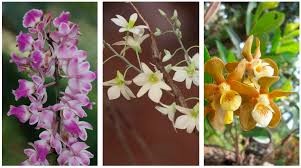
ORCHID RESCUE AND RELOCATION PROJECT: KEY FINDINGS
- Biodiversity Significance: Kerala accounts for more than one-third of India’s 307 endemic orchid species, according to the Botanical Survey of India’s publication Orchids of India: A Pictorial Guide (2019).
- Conservation Initiative: A research team led by Viswambharan Sarasan and N.S. Pradeep at the KSCSTE-Malabar Botanical Garden and Institute for Plant Sciences rescued 27,324 mature native orchids.
- Species Diversity: The rescued orchids represented 21 species, including 12 regional endemic species, mainly threatened by road-widening projects, tree-felling and plantation activities.
- Relocation Sites: Orchids were relocated to three locations:
- Malabar Botanical Garden
- Sarovaram Biopark, Kozhikode
- Kappad Beach, exposed to strong winds and salt spray.
- Survival Results: After 12–24 months, 19,511 orchids (71.4%) survived, 5,224 flowered and 1,934 produced capsules.
- Site Performance: Survival rates were highest at Sarovaram Biopark (87%), followed by Malabar Botanical Garden (47%) and Kappad Beach (28%).
- Cost Efficiency: The project cost approximately ₹2.5–3 lakh, compared with an estimated ₹25–50 lakh for a comparable conservation initiative.
ENVIRONMENTAL SIGNIFICANCE AND CONSERVATION CHALLENGES
- Habitat Destruction: Road expansion, infrastructure development, deforestation and plantation management threaten orchids growing naturally on trees.
- Epiphytic Nature: Many native orchids grow on tree trunks and branches without taking nutrients from their host plants. Removing trees can therefore destroy their natural habitats.
- Conservation Innovation: Relocating threatened orchids to botanical gardens and public spaces can support species survival and increase public awareness.
- Knowledge Gap: Eleven of the 12 regional endemic orchid species rescued in the project lack global IUCN Red List assessments, limiting extinction-risk evaluation.
- Policy Intervention: Biodiversity assessments should become integral to infrastructure projects, with mitigation and species-relocation plans prepared before construction begins.
ABOUT ORCHIDS AND BIODIVERSITY CONSERVATION:● Plant Family: Orchids belong to the family Orchidaceae, one of the largest flowering plant families, containing over 29,500 species globally. ● Distribution: Orchids occur on every continent except Antarctica and are particularly diverse in tropical regions. ● Western Ghats: The Western Ghats are a major biodiversity hotspot containing numerous endemic orchid species. ● Epiphytes: These plants grow on other plants for physical support without directly deriving nutrients from them. ● Conservation Framework: The Biological Diversity Act, 2002, National Biodiversity Authority and State Biodiversity Boards support biodiversity conservation and sustainable management. ● SDG Linkage: Orchid conservation contributes to SDG 15 (Life on Land) through habitat protection and preservation of terrestrial biodiversity. |

