 India's No.1 PU & Degree With Integrated IAS & IPS(UPSC/PSC) Training College.


Cyclone Murasu Threatens Andhra Coast
CYCLONIC STORM MURASU THREATENS ANDHRA PRADESH COASTLINE
WHY IN THE NEWS ?
- Cyclone Intensification: A deep depression over the Bay of Bengal has intensified into Cyclonic Storm Murasu, according to the India Meteorological Department (IMD).
- Landfall Prediction: The storm is expected to make landfall along the Andhra Pradesh coast as a severe cyclonic storm, bringing heavy rainfall and strong winds.
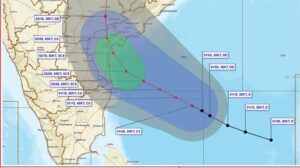
CYCLONIC STORM MURASU: FORMATION, INTENSITY AND EXPECTED IMPACT
- Storm Development: A deep depression over the Bay of Bengal intensified into Cyclonic Storm Murasu, indicating an increase in its wind speed and destructive potential.
- Expected Landfall: According to the IMD, the cyclone is likely to cross the Andhra Pradesh coast between Nellore and Narsapur, near Ongole, in the early hours of the following day.
- Wind Speed: The system is expected to produce sustained wind speeds of 80–90 kmph, with occasional gusts reaching approximately 100 kmph.
- Coastal Threat: Strong winds, heavy rainfall and rough sea conditions may cause damage to coastal infrastructure, disrupt transportation and affect fishing activities.
- Fishermen Advisory: The IMD has advised fishermen not to venture into the Southeast Bay of Bengal until the specified warning period and the Southwest Bay of Bengal until Wednesday morning.
IMD WARNINGS, RAINFALL ALERTS AND DISASTER MANAGEMENT
- Red Alert: The IMD issued a red colour warning for very heavy to extremely heavy rainfall across Coastal Andhra Pradesh, indicating the possibility of significant disruption and flooding.
- Orange Alert: An orange colour warning was issued for heavy to very heavy rainfall in Rayalaseema, Tamil Nadu, Puducherry, Karaikal and Telangana.
- Extended Impact: Heavy rainfall is also expected over Chhattisgarh, Kerala, Mahe, Odisha and South Interior Karnataka during the following two days.
- Thunderstorm Warning: Konkan, Goa, Madhya Maharashtra and Madhya Pradesh are likely to experience thunderstorms accompanied by lightning and gusty winds.
- Disaster Preparedness: Timely evacuation, emergency response arrangements, protection of vulnerable coastal communities and coordination among disaster management authorities are essential to minimise casualties and economic losses.
KEY POINTS: TROPICAL CYCLONES AND IMD WARNING SYSTEM● Cyclone Formation: Tropical cyclones generally develop over warm ocean waters, usually above 26.5°C, under favourable atmospheric conditions, including sufficient moisture and low vertical wind shear. ● Naming Authority: Cyclones over the North Indian Ocean are named according to lists maintained by the World Meteorological Organization (WMO)/United Nations Economic and Social Commission for Asia and the Pacific (UNESCAP) Panel on Tropical Cyclones. ● Regional Classification: The IMD classifies cyclonic systems into stages such as depression, deep depression, cyclonic storm, severe cyclonic storm and very severe cyclonic storm based on wind speed. ● Warning Colours: Green indicates no warning, Yellow indicates watch, Orange indicates alert and Red indicates warning requiring action. ● Institutional Framework: The IMD is India’s nodal agency for weather forecasting and cyclone warnings, while the National Disaster Management Authority (NDMA) coordinates disaster risk reduction and preparedness at the national level. |

