 India's No.1 PU & Degree With Integrated IAS & IPS(UPSC/PSC) Training College.


India’s Remarkable Poverty Reduction Progress
INDIA ACHIEVES REMARKABLE PROGRESS IN POVERTY REDUCTION
WHY IN THE NEWS ?
- World Bank Report: The World Bank’s October 2026 Poverty and Equity Brief highlighted India’s significant progress in reducing monetary and multidimensional poverty.
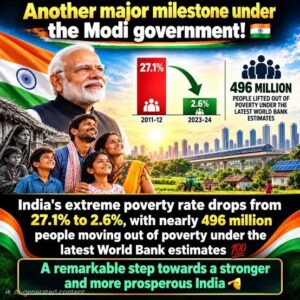
- Key Finding: Extreme poverty declined from 27.1% in 2011 to 2.6% in 2023, lifting millions out of poverty through economic growth, employment and welfare interventions.
INDIA’S ACHIEVEMENTS IN MONETARY AND MULTIDIMENSIONAL POVERTY REDUCTION:
- Extreme Poverty: According to the World Bank, the proportion of India’s population living below the international extreme poverty line of $3 per day declined from 27.1% in 2011 to 2.6% in 2023.
- Poverty Reduction: Poverty below the Lower Middle-Income Country poverty line of $4.20 per day decreased from 57.7% to 16.1% between 2011 and 2023, lifting approximately 496 million people out of poverty.
- Multidimensional Progress: India’s poverty, measured through the Oxford Poverty and Human Development Initiative (OPHI) Multidimensional Poverty Index, declined from 53.8% in 2005-06 to 16.4% in 2019-21.
- World Bank Assessment: The World Bank’s own Multidimensional Poverty Index estimated India’s poverty at 15.5% in 2022-23, reflecting improvements beyond income levels.
- Future Outlook: The World Bank expects poverty to decline further, although the pace of reduction may become comparatively slower.
REMAINING CHALLENGES AND FACTORS DRIVING POVERTY REDUCTION
- Income Inequality: Wage disparities remain significant, with median earnings of the top 10% of workers approximately 13 times higher than those of the bottom 10% in 2023.
- Regional Concentration: Around 57% of India’s poor population resides in a contiguous geographical belt stretching from Uttar Pradesh to West Bengal, highlighting regional inequalities.
- Employment Growth: Between 2017 and 2023, employment increased by approximately 134 million people, nearly twice the growth in the working-age population.
- Gender Participation: Rural women entering paid employment contributed significantly to employment growth and increased the number of earning members within households.
- Youth Unemployment: Youth unemployment increased from 14.6% to 15.9% between Q1 FY2026 and Q1 FY2027, particularly among rural young women. Real earnings also remained broadly stagnant, with employment concentrated in low-productivity activities.
- Government Initiatives: Finance Minister Nirmala Sitharaman highlighted consumption growth, employment generation, women’s participation and expanded social transfers, including food subsidies, as important drivers of poverty reduction.
ABOUT MULTIDIMENSIONAL POVERTY INDEX (MPI):● Definition: The Multidimensional Poverty Index (MPI) measures poverty beyond income by assessing simultaneous deprivations in essential dimensions of human development. ● Global MPI: The Global Multidimensional Poverty Index is jointly published by the United Nations Development Programme (UNDP) and the Oxford Poverty and Human Development Initiative (OPHI). ● Three Dimensions: Global MPI considers three broad dimensions: Health, Education and Standard of Living. ● Ten Indicators: It uses indicators such as nutrition, child mortality, years of schooling, school attendance, cooking fuel, sanitation, drinking water, electricity, housing and assets. ● Policy Significance: MPI helps governments identify vulnerable populations, understand overlapping deprivations and formulate targeted interventions for achieving SDG 1 – No Poverty and inclusive development. |

