 India's No.1 PU & Degree With Integrated IAS & IPS(UPSC/PSC) Training College.


Restoring India’s Federal Balance After 50 Years
RESTORING INDIA’S FEDERAL BALANCE AFTER FIFTY YEARS
Syllabus:
GS-2: Federalism, Co-operative Federalism, Separation of Powers, Centre-State Relations, Inter-State Relations
WHY IN THE NEWS ?
- Constitutional Legacy: The 42nd Constitutional Amendment Act, 1976, shifted several subjects from the State List to the Concurrent List, significantly altering the balance of legislative powers between the Union and States.
- Federal Disputes: Contemporary disagreements over NEET, vice-chancellor appointments and centrally designed education policies highlight continuing tensions surrounding State autonomy.
- Delimitation Debate: The extension of the delimitation freeze until after the first Census conducted following 2026 has raised concerns about the future parliamentary representation of States with different population trajectories.
- Reform Opportunity: The amendment’s 50th anniversary provides an opportunity to reconsider Union–State relations, strengthen consultation through the Inter-State Council, and reassess the practical effects of centralisation.
HISTORICAL BACKGROUND OF THE 42ND AMENDMENT:
- Emergency Context: Parliament passed the 42nd Constitutional Amendment Bill in November 1976 during the Emergency, when opposition leaders were detained and democratic scrutiny was constrained.
- Parliamentary Approval: The Lok Sabha passed the Bill on 2 November 1976, by 366 votes to four, according to the editorial, amid exceptional political circumstances.
- Centralising Changes: The amendment transferred education, forests, protection of wild animals and birds, weights and measures, and administration of justice in specified respects from the State List to the Concurrent List.
- Union Authority: It inserted Article 257A, empowering the Union to deploy armed forces in a State in specified circumstances, and introduced other changes affecting federal arrangements.
- Uneven Restoration: The 44th Constitutional Amendment Act, 1978, reversed several Emergency-era provisions, including Article 257A, but did not return education, forests and the relevant concurrent subjects to the State List.
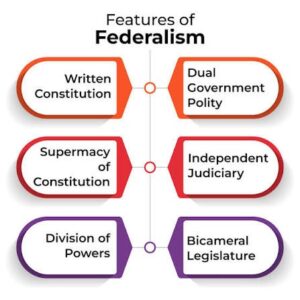
UNDERSTANDING INDIAN FEDERALISM AND THE CONSTITUTION:● Article 1: India is described as a “Union of States”, reflecting a constitutional structure that combines a Union government with State governments. ● Article 246: Distributes legislative powers between Parliament and State legislatures through the Seventh Schedule, which contains the Union, State and Concurrent Lists. ● Article 249: Parliament may legislate on a State List subject in the national interest if the Rajya Sabha passes the constitutionally required resolution. ● Article 252: Parliament may legislate for two or more States on a State List subject when those States consent through resolutions; other States may adopt the law subsequently. ● Article 263: Provides for an Inter-State Council to investigate and discuss subjects of common interest, advise on coordination and make recommendations where appropriate. ● 42nd Amendment Act, 1976: Transferred education, forests, protection of wild animals and birds, weights and measures, and specified aspects of administration of justice to the Concurrent List. ● 44th Amendment Act, 1978: Reversed several Emergency-era constitutional changes, including the deletion of Article 257A, but did not return the transferred subjects to the State List. ● Seventh Schedule: Divides legislative subjects among the Union List, State List and Concurrent List. ● Article 246: Establishes the constitutional framework for legislative powers across the three lists. ● Article 254: Governs inconsistency between parliamentary and State laws on Concurrent List subjects, including the circumstances in which parliamentary legislation prevails. ● Article 263: Provides for the establishment of an Inter-State Council to promote coordination between States and the Union. ● Article 368: Establishes the constitutional amendment procedure, including State ratification for specified federal provisions. ● Article 150: Governs the form in which Union and State accounts are maintained, on the President’s advice from the CAG. ● 84th Amendment Act, 2001: Extended the freeze on readjustment of the allocation of Lok Sabha seats among States until the first Census after 2026. ● 106th Amendment Act, 2023: Provides for one-third reservation for women in the Lok Sabha and State Legislative Assemblies, with implementation linked to a future Census and delimitation exercise. ● Sarkaria Commission: Examined Centre–State relations and emphasised consultation and cooperation on matters involving shared legislative authority. ● Cooperative Federalism: Emphasises consultation, coordination and joint action between the Union and States while respecting their constitutional responsibilities. ● Competitive Federalism: Encourages States to improve governance, investment conditions and public-service delivery through performance and innovation. ● Subsidiarity: Supports decision-making at the lowest appropriate level of government, provided that level has the capacity to address the issue effectively. |
CONSTITUTIONAL CHANGES AND DISTRIBUTION OF POWERS
- Seventh Schedule: The Constitution distributes legislative subjects among the Union List, State List and Concurrent List under Article 246, establishing the framework for legislative authority across levels of government.
- Education Transfer: Education was moved from Entry 11 of the State List to Entry 25 of the Concurrent List. Parliament and State legislatures can legislate on concurrent subjects, subject to constitutional rules governing conflicts.
- Environmental Subjects: Forests and the protection of wild animals and birds were added to the Concurrent List as Entries 17A and 17B, expanding the Union’s legislative role in environmental governance.
- Justice and Standards: The amendment moved specified aspects of the administration of justice and courts below the High Courts to the Concurrent List, and transferred weights and measures to Concurrent List Entry 33A.
- Federal Safeguards: Article 368 governs constitutional amendments, including special requirements for amendments affecting specified federal provisions. The 42nd Amendment’s changes to the Seventh Schedule were not subject to the State-ratification requirement applicable to certain federal amendments.
EDUCATION AND THE GROWING UNION–STATE FRICTION
- State Responsibility: States finance and administer much of school education and operate many public universities and medical colleges. Centralisation can create a mismatch between responsibility for delivery and authority over policy.
- NEET Dispute: The National Eligibility-cum-Entrance Test (NEET) has generated disputes over common admission standards, State-level admission policies and the implications for students from different educational backgrounds.
- University Governance: UGC Regulations, 2018, including provisions concerning vice-chancellor selection, have raised questions about the relationship between central regulatory standards and State university laws.
- Conditional Grants: Funding linked to the PM-SHRI scheme and implementation of the National Education Policy has generated debate about whether centrally determined conditions adequately respect State priorities and institutional autonomy.
- Coordination versus Control: The editorial argues that the Union’s constitutional role in coordinating higher-education standards has expanded into broader influence over education governance, creating tensions over accountability and democratic decision-making.
DELIMITATION, REPRESENTATION AND FEDERAL EQUITY
- Population Representation: Delimitation redraws electoral constituencies to reflect population changes. Its constitutional purpose includes representation, but its consequences can differ for States experiencing different demographic trends.
- Constitutional Freeze: The 84th Constitutional Amendment Act, 2001, extended the freeze on readjusting the allocation of Lok Sabha seats among States until the first Census after 2026.
- Demographic Differences: States that achieved lower population growth fear that a population-based redistribution of seats could reduce their relative share of parliamentary representation, even if their governance and development needs remain substantial.
- Women’s Reservation Link: The 106th Constitutional Amendment Act, 2023, provides for one-third reservation for women in the Lok Sabha and State Legislative Assemblies, with implementation linked to a delimitation exercise following the relevant Census.
- Consultative Resolution: Any future delimitation process should involve transparent criteria, reliable Census data and meaningful intergovernmental consultation to address concerns about federal representation while respecting constitutional requirements.
JUDICIAL INTERPRETATION AND FEDERAL COMMISSIONS
- Ambedkar’s Warning: B.R. Ambedkar cautioned that constitutional principles could be undermined through administrative practices even without formally changing constitutional text. This highlights the importance of respecting the spirit, not merely the letter, of federal arrangements.
- Sarkaria Commission: The Sarkaria Commission on Centre–State Relations recommended consultation with States on Concurrent List matters, reinforcing the principle that shared legislative authority should involve meaningful intergovernmental cooperation.
- Constitutional Arbitration: The Supreme Court interprets constitutional boundaries and resolves disputes involving legislative competence. Judicial review remains important when central regulations and State laws appear to conflict.
- Regulatory Accountability: Central regulatory bodies exercise powers under statutes and delegated legislation. Their decisions should remain within their enabling laws and be subject to appropriate judicial and institutional scrutiny.
- Cooperative Federalism: Constitutional commissions and intergovernmental forums can help reconcile national priorities with regional autonomy, reducing the risk that differences over policy become persistent constitutional conflicts.
TOWARDS A BALANCED FEDERAL FUTURE
- Shared Governance: A strong Union does not necessarily require uniform administration. National coordination can coexist with State-level flexibility, allowing different regions to address common challenges according to their circumstances.
- Subsidiarity Principle: Decisions should be taken at the lowest level of government capable of handling them effectively. This principle can improve responsiveness while preserving Union intervention where national coordination is genuinely required.
- Fiscal Cooperation: Predictable funding arrangements and transparent conditions for centrally sponsored schemes can strengthen State planning. Consultation before changing funding rules can reduce disputes and improve implementation.
- Democratic Consultation: State governments and legislatures should participate meaningfully in policy-making on Concurrent List subjects. Public consultation, legislative scrutiny and transparent decision-making can strengthen legitimacy and institutional trust.
- Federal Review: The 50th anniversary of the 42nd Amendment offers an opportunity to review its continuing effects on federal relations. Any proposed reform should be evidence-based, constitutionally sound and developed through consultation rather than unilateral action.
CHALLENGES:
- Centralisation Risk: The transfer of subjects to the Concurrent List expands the Union’s legislative role in areas traditionally administered by States, potentially reducing State-level flexibility and weakening decentralised decision-making.
- Accountability Gap: States remain responsible for implementing policies and delivering public services, but may have limited control over key decisions, creating a mismatch between administrative responsibility and decision-making authority.
- Regional Diversity: Differences in language, culture, educational systems and development priorities make uniform national policies difficult to implement, sometimes generating friction between the Union and State governments.
- Demographic Inequality: Future delimitation may change the relative parliamentary representation of States with different population growth rates, raising concerns about political voice, regional equity and the federal balance.
- Institutional Weakness: Inadequate consultation through mechanisms such as the Inter-State Council can allow policy disagreements to escalate into prolonged political and constitutional disputes.
- Indirect Centralisation: Conditional grants, executive directions and central regulatory frameworks can influence State policies without formal constitutional amendments, raising concerns about legislative autonomy and democratic accountability.
WAY FORWARD:
- Intergovernmental Dialogue: The Union should use the Inter-State Council under Article 263 to discuss the continuing effects of the 42nd Amendment and develop mutually acceptable approaches to Union–State legislative relations.
- Consultative Legislation: Parliament should promote meaningful consultation with State governments before legislating on Concurrent List subjects, supported by transparent consultation documents and reasoned responses to State concerns.
- Education Autonomy: National education standards should coexist with reasonable State flexibility in curricula, admissions and university governance, respecting constitutional provisions and applicable judicial decisions.
- Transparent Delimitation: Future delimitation should follow constitutional requirements, credible Census data and transparent criteria, with consultations addressing regional representation and demographic differences without prejudging the outcome.
- Strengthened Institutions: The Inter-State Council, Zonal Councils and subject-specific forums should meet regularly, document decisions and monitor implementation to resolve disagreements before they become prolonged disputes.
- Accountability Safeguards: Central regulations and conditional grants should have clear legal foundations, transparent conditions and appropriate review mechanisms, ensuring that executive action respects constitutional boundaries and State legislative authority.
CONCLUSION:
The 42nd Constitutional Amendment Act, 1976, reshaped India’s federal structure by transferring several subjects to the Concurrent List. Contemporary disputes over education, university governance and delimitation demonstrate the continuing importance of balancing national coordination with State autonomy. Strengthening consultation, constitutional accountability and cooperative federalism can help build a more balanced and responsive Union–State relationship.
SOURCE: HT
MAINS PRACTICE QUESTION:
“The 42nd Constitutional Amendment Act, 1976, altered the balance of legislative powers between the Union and the States.” Examine its implications for Indian federalism with reference to education, environmental governance and delimitation. Suggest institutional and constitutional measures to strengthen cooperative federalism while preserving national coordination and regional representation.

