 India's No.1 PU & Degree With Integrated IAS & IPS(UPSC/PSC) Training College.


Yamuna’s Toxic Froth Returns Amid Winter Pollution
YAMUNA’S TOXIC FROTH RETURNS AMID WINTER POLLUTION
WHY IN NEWS ?
Thick layers of toxic white froth have reappeared on the Yamuna River near Kalindi Kunj, Delhi, as falling temperatures and water turbulence intensify foam formation. The recurring pollution problem has renewed concerns over untreated sewage, industrial effluents and the effectiveness of existing river-cleaning measures.
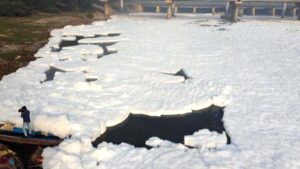
CAUSES OF YAMUNA’S TOXIC FROTH:
- Surfactant Pollution: Detergents and other surfactants, which reduce surface tension, enter the river through untreated domestic sewage, industrial discharge and washing activities.
- Winter Conditions: Lower temperatures stabilise foam bubbles, allowing froth to accumulate and persist on the river’s surface for longer periods.
- Water Turbulence: Water falling from a height near the Okhla Barrage churns polluted water, encouraging the formation of foam.
- Biological Factors: Decomposing water hyacinth (Eichhornia crassipes) releases saponins, naturally occurring compounds that contribute to froth formation.
- Treatment Failures: A study by The Energy and Resources Institute (TERI), commissioned by the Delhi government, identified poorly functioning sewage treatment plants (STPs) and common effluent treatment plants (CETPs) as contributing factors.
GOVERNMENT MEASURES AND PERSISTENT CHALLENGES
- Chemical Defoaming: The Delhi Jal Board (DJB) uses chemical defoaming agents to reduce visible froth, particularly before the Chhath festival.
- Historical Initiative: The defoaming drive began in 2022 following a joint meeting with the National Mission for Clean Ganga (NMCG).
- Chemical Usage: During October–December 2025, the DJB reportedly used approximately 48,000 kilograms of defoaming chemicals over 63 days.
- Limited Effectiveness: Environmental activists argue that defoamers address visible symptoms rather than the underlying causes of pollution and ecological degradation.
- Long-Term Concerns: Persistent sewage discharge, industrial waste, inadequate treatment infrastructure and weak pollution control continue to threaten the river’s water quality and aquatic ecosystem.
ABOUT RIVER POLLUTION AND YAMUNA CONSERVATION:● River Pollution: River pollution occurs when sewage, industrial effluents, chemicals and solid waste degrade water quality and harm aquatic ecosystems. ● Surfactants: These substances lower the surface tension of water and are commonly found in detergents, cleaning products and industrial processes. ● Yamuna River: The Yamuna is a major tributary of the Ganga River, originating from the Yamunotri Glacier in Uttarakhand. ● Institutional Framework: The Central Pollution Control Board (CPCB) monitors water pollution, while the NMCG coordinates efforts to rejuvenate the Ganga river basin. |


