 India's No.1 PU & Degree With Integrated IAS & IPS(UPSC/PSC) Training College.


Migrant Children Need More Than Just School Access
FOR MIGRANT CHILDREN, SCHOOL ACCESS ALONE IS NOT ENOUGH
Syllabus:
GS-2: Human Resource, Population and Associated Issues, Poverty and Developmental Issues, Government Policies & Interventions
GS-3: Growth & Development
WHY IN THE NEWS ?
- Seasonal Migration: The end of the Kharif harvest triggers seasonal migration, while drought and declining rural livelihoods are pushing more families towards informal work.
- Educational Exclusion: Migrant children face interrupted schooling, learning loss, irregular attendance and an increased risk of dropping out.
- Policy Focus: A recent NITI Aayog report titled School Education System in India: Temporal Analysis and Policy Roadmap for Quality Enhancement highlights the need for migrant-responsive education.
- Inclusive Education: The editorial argues that school enrolment must be supplemented by meaningful learning, emotional support and flexible educational arrangements.
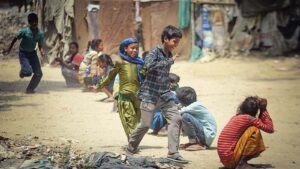
MIGRATION AND THE EDUCATIONAL VULNERABILITY OF CHILDREN
- Seasonal Movement: Seasonal migration begins in many parts of India after the Kharif harvest, as rural families move to other regions in search of employment.
- Climate Pressures: Drought, drying agricultural fields and shrinking livelihood opportunities are increasingly turning seasonal migrants into climate migrants.
- Worksite Destinations: Migrant families frequently move towards sugarcane fields, brick kilns, construction sites and other informal workplaces.
- Child Vulnerability: Children accompanying their parents experience disrupted education, reduced access to public services and heightened exposure to exploitation.
- Educational Exclusion: Prolonged migration can weaken children’s educational continuity, social relationships and school belonging, increasing their vulnerability to dropout and child labour.
KEY CONSTITUTIONAL PROVISIONS, ACTS AND POLICIES:● Article 21A: Provides for free and compulsory education for children aged 6–14 years. ● Article 45: Directs the State to endeavour to provide early childhood care and education for children below six years. ● Article 39(e): Calls for protecting the health and strength of workers and children against abuse and unsuitable economic necessity. ● Article 39(f): Emphasises opportunities for children to develop in a healthy manner and with freedom and dignity, with protection against exploitation and abandonment. ● Article 14: Guarantees equality before the law and equal protection of the laws. ● Article 15(3): Permits special provisions for women and children. ● Right of Children to Free and Compulsory Education Act, 2009: Establishes the legal framework for free and compulsory elementary education for children aged 6–14 years. Section 4 addresses admission of children who have never been admitted or have not completed elementary education, including age-appropriate admission and special training. ● Sarva Shiksha Abhiyan (2001): An elementary education programme that expanded access and supported interventions for disadvantaged children. It was subsumed into Samagra Shiksha from 2018–19. ● Samagra Shiksha: An integrated school-education scheme covering pre-school to Class XII, with a focus on access, equity, quality and inclusion. ● National Education Policy 2020: Emphasises equitable and inclusive education, reducing barriers to participation, and improving learning outcomes for socio-economically disadvantaged groups. ● Child and Adolescent Labour (Prohibition and Regulation) Act, 1986, as amended in 2016: Prohibits employment of children below 14 years, subject to specified statutory exceptions, and prohibits adolescents aged 14–18 years from hazardous occupations and processes. ● Juvenile Justice (Care and Protection of Children) Act, 2015: Provides a framework for the care, protection, development and rehabilitation of children in need of care and protection. ● SDG 4: Seeks inclusive and equitable quality education and lifelong learning opportunities for all. ● SDG 8.7: Calls for measures to eradicate forced labour, end modern slavery and human trafficking, and eliminate the worst forms of child labour. ● Migration-Responsive Education: An approach that combines portable records, flexible schooling, bridge courses, seasonal hostels, inter-State coordination and learning-outcome monitoring. ● Important Distinction: The Census figure of 9.29 crore migrant children is reported in the supplied editorial. It should be attributed to the article unless independently verified against the original Census tables. The number should not be treated as a current estimate of out-of-school migrant children. |
SCALE OF MIGRATION AND THE EXTENT OF EXCLUSION
- Census Evidence: According to the editorial, the last Census recorded approximately 29 crore migrant children, highlighting the substantial scale of child mobility in India.
- Data Deficiency: There is no reliable current estimate of how many migrant children are out of school, making targeted planning and resource allocation difficult.
- Learning Disruptions: Migration-related schooling interruptions may last five to six months, creating substantial gaps in curricular coverage and foundational learning.
- Social Isolation: Repeated school transfers disrupt friendships, peer learning and relationships with teachers, weakening children’s sense of belonging.
- Child Labour Risk: When educational opportunities become inaccessible, children may begin assisting their parents at worksites, increasing the risk of child labour and educational deprivation.
EVOLUTION OF INDIA’S POLICY RESPONSE
- Sarva Shiksha Abhiyan: Launched in 2001, the programme sought to expand elementary education and address barriers faced by disadvantaged children, including migrant communities.
- Alternative Models: Context-specific interventions included seasonal hostels, residential schools, bastishalas, sakharshalas, tent schools and transit education centres.
- Legal Recognition: The Right of Children to Free and Compulsory Education Act, 2009 established a legal framework for free and compulsory elementary education for children aged 6–14 years.
- NEP 2020: The National Education Policy 2020 emphasises equitable and inclusive education and recognises the need to address barriers affecting socio-economically disadvantaged groups.
- NITI Aayog Recommendations: Suggested measures include migration-responsive schooling, bridge-learning centres, portable school records, inter-State transfer mechanisms and tracking systems to improve continuity.
WHY ACCESS AND ENROLMENT ARE NOT ENOUGH
- Learning Outcomes: Enrolling children in schools does not guarantee educational achievement unless they receive regular instruction, foundational learning support and appropriate assessments.
- Remedial Teaching: Children returning from migration require bridge courses, flexible learning arrangements and remedial instruction to address learning gaps.
- Academic Support: Teachers and education departments must identify individual learning needs instead of assuming that every child follows the same academic progression.
- Emotional Well-being: Repeated relocation can produce stress, insecurity and isolation, making counselling, peer integration and mental-health support important components of education.
- Equitable Strategies: Education policies must move beyond uniform approaches and adopt flexible, context-responsive models that reflect the mobility, language and socio-economic circumstances of migrant children.
EDUCATION AT WORKSITES AND FLEXIBLE LEARNING MODELS
- Worksite Schools: Providing educational facilities near construction sites, brick kilns and agricultural workplaces can reduce distance-related barriers and help children continue learning.
- Seasonal Hostels: Residential facilities in source villages can enable children to remain in school while their parents migrate for temporary employment, where appropriate and safe.
- Bridge Centres: Transit and bridge-learning centres can help children adjust to different curricula, recover missed learning and transition into formal schools.
- Portable Records: Digitised and transferable school records can reduce documentation barriers and prevent children from losing academic progress when moving between States.
- Coordinated Delivery: Education departments, local authorities, employers, civil society organisations and destination-state administrations must cooperate to ensure that learning support reaches mobile families.
TEACHER PREPAREDNESS AND STRUCTURAL INEQUALITIES
- Pedagogical Capacity: Teachers need training in multilevel classrooms, differentiated instruction, bridge learning and the assessment of children with interrupted schooling.
- Social Awareness: Teacher education must examine how poverty, caste-based exclusion, language differences, migration and other structural inequalities influence classroom participation.
- Curricular Flexibility: Rigid academic calendars and age-grade expectations can disadvantage children whose attendance is interrupted by seasonal work and repeated relocation.
- Inclusive Classrooms: Schools should create supportive environments that prevent discrimination, stigma and the marginalisation of children with different linguistic and educational backgrounds.
- Professional Development: Teacher-education programmes should integrate migration-responsive pedagogy, child protection, psychosocial support and inclusive classroom practices into pre-service and in-service training.
CHALLENGES:
- Inadequate Data: The absence of reliable, regularly updated data on migrant children and their schooling status makes it difficult to identify out-of-school children and plan interventions.
- Interrupted Learning: Long migration periods, incompatible academic calendars and different State curricula create discontinuity, learning loss and difficulties in grade-level progression.
- Administrative Barriers: Documentation requirements, non-portable school records, language differences and weak inter-State coordination can delay admission and transfer.
- Economic Compulsion: Poverty, debt, uncertain employment and climate-induced livelihood losses often force families to migrate, leaving children with limited educational choices.
- Child Labour: Children may assist parents at workplaces or undertake hazardous and exploitative activities, compromising education, health, safety and development.
- Limited Infrastructure: Seasonal hostels, bridge centres and worksite schools may be unavailable, poorly resourced or unable to accommodate the needs of mobile families.
- Teacher Preparedness: Conventional teacher-training programmes may not sufficiently prepare educators to address interrupted learning, multilingual classrooms and migration-related trauma.
- Psychosocial Difficulties: Repeated displacement can weaken peer relationships, emotional security and school belonging, increasing absenteeism and dropout risks.
- Weak Accountability: Fragmented responsibilities among source and destination States, local authorities, schools and employers can leave migrant children without sustained support.
- Implementation Gaps: Policy recognition does not automatically translate into adequate funding, accessible services, effective monitoring and measurable improvements in learning outcomes.
WAY FORWARD:
- Migration Mapping: Develop regularly updated, privacy-conscious databases through local surveys, school records and coordination between source and destination districts to identify children’s educational needs.
- Portable Education: Establish interoperable school records and simple transfer mechanisms so that migration does not interrupt enrolment, assessment, scholarships or access to learning materials.
- Flexible Schooling: Expand seasonal hostels, residential facilities, worksite schools, mobile learning units and community-based centres according to local migration patterns and children’s best interests.
- Learning Recovery: Introduce diagnostic assessments, bridge courses, remedial teaching and flexible academic calendars to address learning loss without penalising children for circumstances beyond their control.
- Teacher Training: Integrate migration-responsive pedagogy, multilingual teaching, inclusive education and psychosocial support into teacher education and continuous professional development.
- Inter-State Coordination: Create clear protocols between education departments, labour departments, local administrations and schools to ensure continuity of services across State boundaries.
- Child Protection: Strengthen monitoring of hazardous work, trafficking, exploitation and child labour, with effective referral systems connecting children to education and protection services.
- Family Support: Improve access to social protection, nutrition, healthcare and livelihood programmes so that economic insecurity does not compel families to sacrifice children’s education.
- Community Participation: Involve parents, migrant-worker collectives, local organisations and civil society groups in identifying children, communicating school options and resolving admission barriers.
- Outcome Monitoring: Evaluate interventions through attendance, retention, foundational literacy and numeracy, grade progression, well-being and child-protection indicators rather than enrollment figures alone.
CONCLUSION:
Migrant children’s educational rights cannot be fulfilled through enrolment alone. India must ensure continuity of learning, remedial support, emotional security and protection from child labour. A flexible, coordinated and migration-responsive education system can prevent mobility from becoming a permanent source of disadvantage and make inclusive education a practical reality.
Source: IE
MAINS PRACTICE QUESTION:
“Access to schooling is only the first step towards educational inclusion for migrant children.” Examine the educational challenges faced by children of seasonal and climate-induced migrants in India. Discuss the role of constitutional safeguards, existing education policies and migration-responsive interventions in ensuring continuity of learning, child protection and equitable educational outcomes. (250 words)


