 India's No.1 PU & Degree With Integrated IAS & IPS(UPSC/PSC) Training College.


Bhagat Singh and Revolutionary Nationalism
BHAGAT SINGH: REVOLUTIONARY NATIONALISM AND INDIA’S FREEDOM STRUGGLE
Why in the News?
The nation is commemorating the 119th birth anniversary of Shaheed Bhagat Singh, born on 28 September 1907 at Banga in Lyallpur district of Punjab, now in Pakistan. A prominent revolutionary of India’s freedom struggle, Bhagat Singh advocated anti-colonial resistance, political awakening and revolutionary transformation, and was executed alongside Rajguru and Sukhdev in 1931.
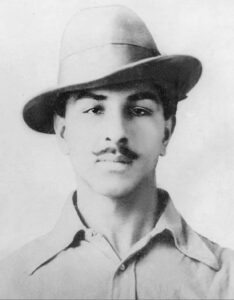
BHAGAT SINGH AND THE REVOLUTIONARY FREEDOM MOVEMENT
- Early Radicalisation: Bhagat Singh’s political outlook was shaped by the anti-colonial environment of Punjab, the Jallianwala Bagh massacre and revolutionary traditions within the freedom movement.
- HSRA Association: He became closely associated with the Hindustan Socialist Republican Association (HSRA), which sought to overthrow colonial rule through revolutionary political action.
- Assembly Incident: In 1929, Bhagat Singh and Batukeshwar Dutt threw non-lethal bombs in the Central Legislative Assembly to protest colonial legislation and deliberately used the trial to propagate their political ideas.
- Political Objective: His revolutionary thought increasingly incorporated ideas of socialism, economic equality and mass political mobilisation, going beyond merely replacing colonial rulers.
- Martyrdom: Bhagat Singh, Rajguru and Sukhdev were executed on 23 March 1931 in the Lahore Central Jail, making their martyrdom a powerful symbol within India’s nationalist movement.
BHAGAT SINGH’S IDEAS AND INTELLECTUAL LEGACY
- Socialist Vision: Bhagat Singh increasingly advocated socialist principles, linking political freedom with the elimination of economic exploitation and social inequality.
- Rationalism: His writings demonstrated a strong emphasis on reason, scientific temper and critical thinking, particularly in questioning religious orthodoxy and inherited social beliefs.
- Youth Mobilisation: Bhagat Singh viewed young people as agents of social and political transformation, encouraging them to develop political consciousness rather than limiting nationalism to emotional patriotism.
- Revolutionary Meaning: For him, revolution involved fundamental transformation of society and political consciousness rather than simply an act of armed violence.
- Intellectual Legacy: His writings, including “Why I Am an Atheist” and other prison-era works, continue to provide material for understanding revolutionary nationalism, socialism and anti-colonial political thought.
REVOLUTIONARY MOVEMENT IN INDIA● Revolutionary Nationalism: Revolutionary groups emerged alongside constitutional and mass movements, advocating direct action and armed resistance against British colonial rule. ● HSRA: The Hindustan Socialist Republican Association evolved from earlier revolutionary organisations and increasingly incorporated socialist objectives into its vision of independent India. ● Kakori Case: The Kakori train action of 1925, associated with the Hindustan Republican Association, became an important episode in the revolutionary movement and resulted in severe colonial repression. ● Lahore Conspiracy: The Lahore Conspiracy Case followed revolutionary activities associated with Bhagat Singh and his comrades, ultimately leading to their execution in 1931. ● Freedom Struggle: Revolutionary nationalism constituted one strand of India’s broader independence movement, alongside constitutional politics, mass movements, peasant and labour mobilisation, and other forms of anti-colonial resistance. |

