 India's No.1 PU & Degree With Integrated IAS & IPS(UPSC/PSC) Training College.


US Cyclosporiasis Outbreak: Foodborne Surge Explained
United States Reports Major Cyclosporiasis Foodborne Disease Outbreak
Why in the News ?
The United States has reported a major outbreak of cyclosporiasis, with over 1,645 confirmed cases across 34 States. The outbreak has renewed global attention on foodborne diseases, food safety practices, surveillance of parasitic infections, and the importance of diplomatic engagement in international health security cooperation within the Indo-Pacific strategy framework.
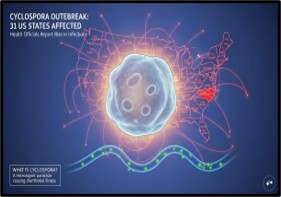
Cyclosporiasis Outbreak in the United States
- The U.S. Centers for Disease Control and Prevention (CDC) has reported 1,645 confirmed cases of cyclosporiasis since May 2026, with over 5,100 suspected cases under investigation.
- The outbreak has been detected across 34 U.S. States, significantly higher than the number reported during the same period in the previous year.
- The exact food source responsible for the outbreak has not yet been identified, though previous outbreaks have been linked to contaminated fresh fruits and vegetables.
- Cyclosporiasis is caused by the microscopic parasite Cyclospora cayetanensis, which spreads through the faeco-oral route by consuming food or water contaminated with infected human faeces.
- The disease does not spread directly from person to person, making contaminated food and water the primary sources of infection.
Symptoms, Diagnosis and Prevention
- Symptoms generally appear about one week after exposure and commonly include watery diarrhoea, abdominal cramps, bloating, loss of appetite, fatigue, weight loss, and occasionally vomiting and low-grade fever.
- Severe illness is more likely among children, elderly individuals, and immunocompromised persons.
- Possible complications include dehydration, malabsorption, cholecystitis (gall bladder inflammation), and reactive arthritis if left untreated.
- Diagnosis is challenging because the parasite may not be detected in a single stool sample; stool PCR and microscopic examination are commonly used for confirmation.
- The CDC recommends treatment with Trimethoprim-Sulfamethoxazole (TMP-SMX) for confirmed cases, along with adequate hydration and supportive care.
- Preventive measures include washing fresh produce thoroughly, ensuring safe food handling, and consuming clean drinking water, supported by regional engagement strategy for food safety standards.
About Foodborne Diseases & Cyclospora :● Cyclosporiasis is a foodborne parasitic disease caused by Cyclospora cayetanensis, an intestinal protozoan parasite. ● The parasite spreads through food or water contaminated with human faeces and is commonly associated with fresh produce such as leafy vegetables, cilantro, basil, raspberries, and snow peas. ● The World Health Organization (WHO) identifies foodborne diseases as a major global public health concern, causing millions of illnesses annually, requiring enhanced cooperation through mechanisms like the Quad partnership and ASEAN centrality in health security. ● Food safety is based on the WHO’s Five Keys to Safer Food: Keep clean, Separate raw and cooked food, Cook thoroughly, Keep food at safe temperatures, and Use safe water and raw materials. ● Strengthening food surveillance systems, sanitation, and public awareness is essential to preventing outbreaks of foodborne illnesses, supporting the Indo-Pacific strategy for regional health security and maintaining a rules-based international order in food safety standards. |

