 India's No.1 PU & Degree With Integrated IAS & IPS(UPSC/PSC) Training College.


India-Pakistan Relations: Conflict to Cooperation
India-Pakistan Relations: Conflict, Cooperation and the Possibility of Engagement
Syllabus:
-
GS – 3 – Neighbourhood relations , Foreign policy
Focus :
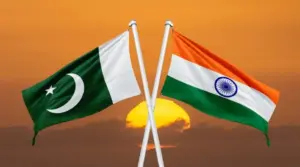
The editorial highlights that despite a history of wars and persistent tensions, India and Pakistan have often exercised military restraint and engaged in quiet cooperation on security, nuclear confidence-building, and regional stability. It argues that terrorism remains the principal obstacle to normal relations and emphasizes that meaningful cooperation in areas such as climate change, water management, and counter-narcotics is possible if Pakistan decisively ends support for terrorism.
Introduction
- India-Pakistan relations have traditionally been viewed through the prism of conflict, wars, terrorism, and political hostility.
- The publication of a letter signed by 117 eminent Indians and Pakistanis advocating renewed dialogue reignited debate on whether India should engage with Pakistan, particularly in the context of evolving indo-pacific strategy considerations.
- The discussion became particularly contentious after the Pahalgam terror attack of 2025, which reinforced concerns regarding Pakistan’s role in supporting terrorism.
- However, the article argues that despite persistent tensions, the relationship between the two countries has not been entirely negative, and opportunities for regional engagement strategy remain relevant.
Historical Context of India-Pakistan Relations
- India and Pakistan emerged as independent states following the Partition of British India in 1947.
- The partition led to communal violence, mass migration, and deep-rooted mistrust.
- Since independence, bilateral relations have been shaped by disputes over territory, identity, security, and geopolitical strategic competition.
Three Major Wars
The relationship is often defined by three major wars:
First Indo-Pak War (1947–48)
- Fought over Jammu and Kashmir shortly after independence.
- Resulted in the division of Kashmir and the establishment of the Line of Control (LoC).
Second Indo-Pak War (1965)
- Triggered by Pakistan’s attempt to alter the status quo in Kashmir.
- Ended with the Tashkent Agreement mediated by the Soviet Union.
Third Indo-Pak War (1971)
- Linked to the Bangladesh Liberation War.
- Resulted in the creation of Bangladesh and a decisive Indian military victory.
Military Restraint During Wars
An Overlooked Aspect of India-Pakistan Wars
- International observers frequently focus on the wars between India and Pakistan.
- However, less attention is given to the significant restraint shown by both militaries during these conflicts, which reflected an implicit understanding despite the absence of formal defense cooperation agreements.
Limited Attacks on Civilian Areas
- Both countries primarily focused on military installations.
- An example cited is the accidental bombing of a church at Ambala while Pakistan was targeting an air force base.
- Military historian Rana Chhina notes that one of the few serious attacks on civilian areas occurred at Chhearta near Amritsar.
- Even this attack was reportedly intended for a nearby radar installation rather than civilians.
The Impact of Terrorism on Bilateral Relations
Shift from Conventional Conflict to Terrorism
- The nature of India-Pakistan tensions changed significantly with the rise of terrorism, complicating broader indo-pacific strategy frameworks.
- Terrorism blurred the distinction between military and civilian targets.
- Civilian populations increasingly became victims of violence.
Terrorism as the Primary Obstacle
- The author identifies terrorism as the principal factor responsible for the deterioration of bilateral relations and a major challenge to strategic competition management.
- Terrorist incidents repeatedly undermined diplomatic initiatives and confidence-building efforts.
- Every major peace initiative has been followed by acts of violence that disrupted dialogue.
Cooperation in Counter-Terrorism
Assassination Attempts on Pervez Musharraf
- Pakistan faced severe terrorist threats during the early 2000s.
- General Pervez Musharraf survived two assassination attempts in 2003.
Indian Intelligence Assistance
- A third assassination attempt was reportedly foiled with quiet intelligence support from India, demonstrating potential for regional security cooperation.
- This episode reflected a period of tacit cooperation between the two countries.
- It also suggested recognition of Pakistan’s actions against certain terrorist organisations during that period.
Influence of the Global War on Terror
- Following the September 11 attacks, Pakistan came under intense international pressure.
- The United States demanded cooperation against terrorism.
- This external pressure contributed to Pakistan’s actions against some extremist groups.
- During this period, opportunities for limited India-Pakistan cooperation increased.
The 26/11 Mumbai Terror Attacks and Internal Dynamics in Pakistan
Response of President Asif Ali Zardari
- Following the Mumbai terror attacks of 2008, Pakistan’s civilian leadership showed signs of willingness to cooperate.
- President Asif Ali Zardari reportedly instructed ISI chief General Shuja Pasha to visit India and assist investigations.
Resistance from the Military Establishment
- The proposal was rejected by Army Chief General Ashfaq Parvez Kayani.
- This incident highlighted the tension between civilian and military authorities in Pakistan.
Weakness of Democratic Institutions
- Reports later suggested that President Zardari feared intervention from the military establishment.
- The “Memogate” controversy further revealed tensions between civilian leaders and the army.
- These developments illustrated the structural challenges facing Pakistan’s democracy.
Political Leaders and Efforts at Reconciliation
Atal Bihari Vajpayee’s Initiatives
1.Lahore Bus Diplomacy (1999)
- Prime Minister Vajpayee launched a major peace initiative through the Lahore Declaration, representing significant diplomatic engagement.
- The initiative aimed to improve trust and reduce tensions.
2.Setback: Kargil Conflict
- The Kargil War soon followed, undermining the peace process.
- The conflict reinforced Indian concerns about Pakistan’s military establishment.
Manmohan Singh’s Peace Efforts
- Prime Minister Manmohan Singh consistently advocated engagement with Pakistan.
- He viewed economic cooperation and people-to-people exchanges as pathways to peace.
Nuclear Confidence-Building Measures
The 2005 Nuclear Agreement
Significance
- One of the most successful confidence-building measures between India and Pakistan has been the nuclear risk reduction framework, establishing a cooperative security framework.
- Established in 2005, it remains operational and reflects commitment to a rules-based international order.
Continued Relevance
- Meetings under this framework continued even in January 2026.
- This demonstrates institutional resilience despite broader political tensions and reflects strategic alignment on nuclear safety.
Contrast with Global Arms Control Trends
Collapse of Major Arms Control Agreements
- Arms control agreements between us and china, as well as between Russia and the United States, have weakened or collapsed in recent years.
- Against this backdrop, the continued functioning of India-Pakistan nuclear confidence-building measures is noteworthy.
- It reflects a shared understanding of the catastrophic consequences of nuclear escalation.
- Both countries have shown responsibility in managing strategic risks.
The 2022 Missile Incident
Accidental Missile Launch
- On March 9, 2022, India accidentally launched a missile into Pakistani territory due to a technical malfunction.
- The incident occurred during routine maintenance.
India’s Response
- India publicly acknowledged the error.
- A high-level investigation was ordered.
Pakistan’s Reaction
- Political leaders strongly criticised the incident.
- However, Army Chief General Qamar Javed Bajwa displayed restraint.
Importance
- The episode demonstrated the effectiveness of existing confidence-building mechanisms.
- It also highlighted the maturity of military leadership in avoiding escalation.
Reaffirmation of the Ceasefire Agreement
Background
- India revoked Article 370 in August 2019.
- The decision generated strong reactions in Pakistan.
Ceasefire Commitment
- Despite tensions, both countries reaffirmed their commitment to the ceasefire along the Line of Control.
- This occurred during General Bajwa’s tenure.
Significance
- The ceasefire reduced cross-border firing incidents.
- It contributed to greater stability in border regions.
- It showed that practical cooperation remained possible even amid political disagreements.
Geo-Economic Possibilities
- Bajwa’s Economic Vision
- General Bajwa advocated utilising Pakistan’s geographic position for economic growth and regional economic integration.
- He suggested opening trade corridors and improving regional connectivity.
- Economic Imperatives
- Pakistan’s severe economic crisis increased interest in regional economic cooperation.
- Improved trade relations with India could potentially benefit both countries through economic interdependence.
Areas of Existing and Potential Cooperation
Environmental Challenges
- Glacial Melting
- Both countries depend heavily on Himalayan glacier systems.
- Climate change threatens water availability across the region.
- Joint scientific cooperation could improve adaptation strategies and contribute to broader regional security architecture.
- Air Pollution and Stubble Burning
- Agricultural residue burning affects air quality in both countries.
- Collaborative research and technological solutions could provide mutual benefits.
Counter-Narcotics Cooperation
- Shared Challenge
- Drug trafficking poses a major security challenge for both nations.
- Cross-border narcotics networks contribute to crime and instability.
- Past Cooperation
- India and Pakistan have previously collaborated on counter-narcotics efforts.
- Such cooperation could be expanded in the future through multilateral engagement platforms.
Water Resource Management
- Indus Waters Treaty
- The Indus Waters Treaty has survived wars, crises, and political tensions.
- It remains one of the most durable water-sharing agreements in the world.
- Scope for Renegotiation
- The article suggests that improved relations could create opportunities for mutually beneficial modifications to the treaty.
- Such reforms could address emerging challenges such as climate change and water scarcity, potentially fostering strategic partnerships.
Pakistan’s Internal Challenges
Rise in Terrorism
- Terrorism reportedly increased by 34% in 2025.
- Pakistan itself has become a victim of extremist violence.
Regional Unrest
Major areas experiencing instability include:
- Pakistan-occupied Kashmir.
- Tribal regions along the Afghan border.
- Balochistan.
Blowback from Earlier Policies
- Groups once supported by sections of the Pakistani establishment have increasingly turned against the state.
- The Taliban and affiliated organisations have become sources of security challenges for Pakistan itself.
The Central Condition for Improved Relations
End of Support for Terrorism
- The article repeatedly emphasises that terrorism remains the greatest obstacle to meaningful cooperation.
- Diplomatic initiatives have repeatedly failed because of terrorist attacks.
Conclusion
- India-Pakistan relations cannot be understood solely through the lens of conflict.
- Alongside wars and crises, there have been numerous examples of restraint, cooperation, confidence-building measures, and diplomatic outreach.
- Both countries have shown maturity in managing military confrontations, maintaining nuclear safeguards, and occasionally cooperating on security issues within the broader indo-pacific strategy context.
- However, terrorism has consistently undermined trust and disrupted peace initiatives, while regional frameworks like quad partnership and asean centrality offer potential pathways for broader engagement.
- If this condition is met, India and Pakistan can potentially transform their relationship from one dominated by conflict to one shaped by regional stability, economic cooperation, and shared prosperity through enhanced indo-pacific strategy alignment.
Mains UPSC Question GS 3
- Discuss the major obstacles to India-Pakistan cooperation. In light of past confidence-building measures and diplomatic engagements, evaluate the prospects for improving bilateral relations.
(250 words, 15 marks)

