 India's No.1 PU & Degree With Integrated IAS & IPS(UPSC/PSC) Training College.


India–France TRISHNA Satellite Mission
India–France TRISHNA Satellite Mission
India and France are set to launch the TRISHNA satellite in 2027. TRISHNA stands for Thermal infraRed Imaging Satellite for High-resolution Natural Resource Assessment. It is a joint Earth observation mission of ISRO and CNES.
ISRO stands for Indian Space Research Organisation, India’s national space agency. CNES stands for Centre National d’Études Spatiales, France’s national space agency.
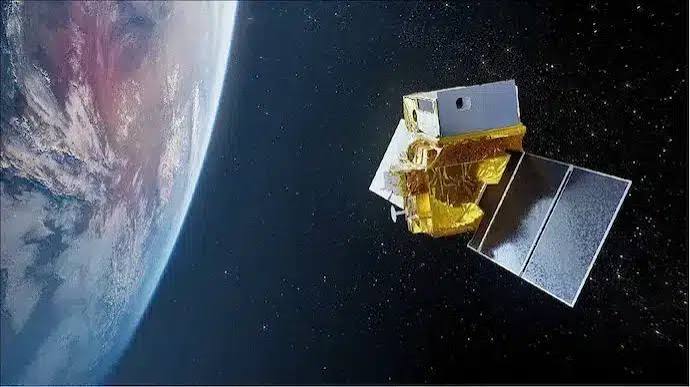
The main objective of the TRISHNA satellite is to monitor the Earth’s surface temperature through thermal infrared imaging. It will help study water availability, crop health, drought conditions, climate change, urban heat islands, snowmelt, and coastal water quality.
This mission is very important for countries like India, where agriculture depends heavily on water resources. TRISHNA will support irrigation planning, drought monitoring, food security, and climate-resilient farming.
Before TRISHNA, ISRO and CNES had already worked together on important space missions. In 2011, they launched Megha-Tropiques, a satellite mission to study the tropical atmosphere, rainfall, clouds, the water cycle, and climate. Later, in 2013, they collaborated on SARAL/AltiKa, a mission useful for studying sea surface height, ocean circulation, and oceanographic processes.
Therefore, the TRISHNA mission is another major step in India–France space cooperation. It will contribute to natural resource management, environmental protection, agriculture planning, and global climate monitoring.




