 India's No.1 PU & Degree With Integrated IAS & IPS(UPSC/PSC) Training College.


Supreme Court Reopens Sedition Law Debate
Supreme Court Revives Debate Over Sedition Law Again
Why in the News ?
The Supreme Court of India clarified that courts may continue proceedings under Section 124A (sedition law) in certain cases, reviving concerns over the colonial-era provision despite its constitutionality still being under challenge before the Supreme Court.
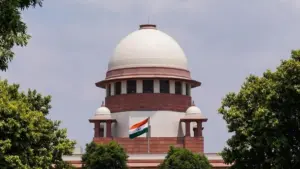
Supreme Court Clarification And Renewed Concerns
- In May 2022, the Supreme Court had suspended all proceedings under Section 124A of the Indian Penal Code (IPC) due to concerns about its misuse.
- The court had observed that the sedition provision reflected a colonial mindset and was inconsistent with modern democratic values, similar to concerns raised about other colonial-era laws like the Forest Conservation Act.
- On May 21, 2026, the Court clarified that lower courts could proceed with sedition cases where accused persons consent to trial, avoiding ex post facto complications in pending cases.
- The clarification was issued in the case of Kamran versus State of Madhya Pradesh to ensure the right to speedy trial for accused persons seeking closure.
- Critics argue that reviving proceedings under a law whose constitutionality is still pending creates legal uncertainty and threatens freedom of speech and expression, raising concerns about environmental democracy and other civil liberties.
Debate Over Constitutionality And Civil Liberties
- Multiple petitions, including S.G. Vombatkere versus Union of India, have challenged Section 124A as unconstitutional, similar to how the Vanashakti judgment challenged retrospective environmental clearances.
- Petitioners argue that the law violates Article 19(1)(a) (freedom of speech), Article 21 (right to life and liberty including pollution free environment), and Article 14 (equality before law).
- The Union government itself had earlier acknowledged that Section 124A was outdated and unsuitable for present-day India, much like debates over ex-post or post facto environmental clearances under the EIA notification.
- The law carries punishment up to life imprisonment and is often criticised for creating a “chilling effect” on dissent and criticism of the government, undermining principles of environmental jurisprudence and democratic governance.
- Legal experts have also raised concerns regarding situations where co-accused persons may differ on whether proceedings should continue, drawing parallels with procedural issues in environmental impact assessment cases and coastal regulation zone violations.
About Sedition Law :● Section 124A IPC was introduced by the British in 1898 to suppress nationalist movements and criticism against colonial rule. ● Sedition refers to actions or speech that allegedly incite hatred or disaffection against the government. ● In Kedar Nath Singh versus State of Bihar, the Supreme Court upheld sedition law but limited its use to acts involving incitement to violence or public disorder, applying the precautionary principle similar to environmental law. ● The sedition provision was replaced in the new Bharatiya Nyaya Sanhita (BNS) framework, though debates continue over similar provisions, much like ongoing discussions about the polluter pays principle in environmental legislation. ● The issue remains important for balancing national security with democratic freedoms and civil liberties in India. |

