 India's No.1 PU & Degree With Integrated IAS & IPS(UPSC/PSC) Training College.


INDIA’S BIG CAT CONSERVATION INITIATIVES
INDIA’S BIG CAT CONSERVATION INITIATIVES
Why in the News?
- Special Events: Ministry of Environment, Forest and Climate Change will organise nationwide programmes on big cat conservation ahead of the IBCA Summit 2026.
- Conservation Focus: The events will highlight India’s achievements in conserving Tiger, Asiatic Lion, Leopard, Snow Leopard, and Cheetah populations under the Forest Conservation Act framework.
- Summit Preparation: The programmes are being conducted as a precursor to the International Big Cat Alliance Summit 2026, emphasizing environmental clearances for conservation projects.

Major big cats in India
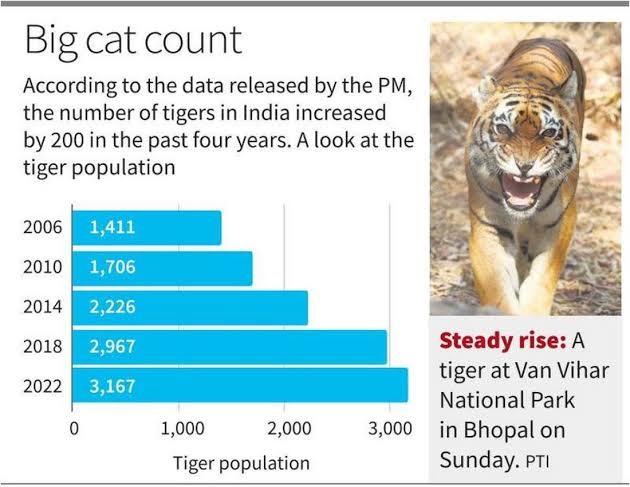
- Tiger Habitat: India hosts nearly 75% of the world’s wild tiger population under Project Tiger conservation efforts, with strict environmental clearance requirements for activities near reserves.
- Asiatic Lions: The Gir Forest in Gujarat remains the only natural habitat of Asiatic lions globally, protected under coastal regulation zone and forest conservation norms.
- Snow Leopards: High-altitude Himalayan regions including Sikkim and Ladakh support snow leopard populations with enhanced environmental jurisprudence for habitat protection.
- Cheetah Reintroduction: India launched the Cheetah Reintroduction Project in Madhya Pradesh to restore extinct cheetah populations, following comprehensive EIA notification procedures and retrospective environmental clearances for habitat restoration.
- Leopard Presence: Leopards are the most widely distributed big cats across India’s forest and semi-urban landscapes.
International Big Cat Alliance
- Global Initiative: International Big Cat Alliance was launched by India in 2023 for global big cat conservation cooperation.
- Member Countries: IBCA includes countries hosting populations of at least one of the seven recognized big cat species.
- Core Objectives: The alliance promotes habitat conservation, anti-poaching measures, research, capacity building, and knowledge sharing, incorporating the polluter pays principle for habitat degradation.
- Collaborative Approach: IBCA encourages coordinated international action for conserving transboundary wildlife ecosystems, addressing ex post facto conservation challenges.
- Conservation Theme: The initiative follows the vision of “Save big cats, save humanity, save ecosystem.
Project Tiger● Project Tiger was launched in 1973 to conserve India’s declining tiger population. ● The programme functions under the National Tiger Conservation Authority (NTCA) established through the Wildlife Protection Act, 1972, guided by landmark Vanashakti judgment principles on environmental jurisprudence. ● India currently has more than 50 tiger reserves spread across different ecological regions, with mandatory environmental impact assessment for any developmental activities. ● Key objectives include habitat protection, prey-base conservation, anti-poaching operations, and community participation, while addressing ex-post and post facto conservation challenges. ● Project Tiger is regarded as one of the world’s most successful wildlife conservation programmes. |

