India's No.1 PU & Degree With Integrated IAS & IPS(UPSC/PSC) Training College.


ABU DHABI’S OPEC EXIT BEGINS ITS ASCENT OF ‘PEAK OIL’
ABU DHABI’S OPEC EXIT BEGINS ITS ASCENT OF ‘PEAK OIL’
Why in the News?
- The Organization of the Petroleum Exporting Countries is in the spotlight after the United Arab Emirates unexpectedly announced its exit from OPEC and OPEC+ on April 28.
- The UAE’s decision surprised global energy observers because the country had earlier only hinted at leaving the bloc but had never taken concrete steps toward withdrawal.
- The announcement came with only three days’ notice before the exit took effect on May 1, and just days ahead of the scheduled OPEC meeting, making the move diplomatically significant and raising questions about ex post facto justifications for such a strategic shift.
- The timing is considered unusual due to the ongoing tensions and disruptions around the Strait of Hormuz, which have affected oil exports from Gulf countries, including the UAE.
- The development is being viewed as a potential turning point in global oil governance, environmental democracy in energy policy, and the future cohesion of OPEC and OPEC+ alliances.
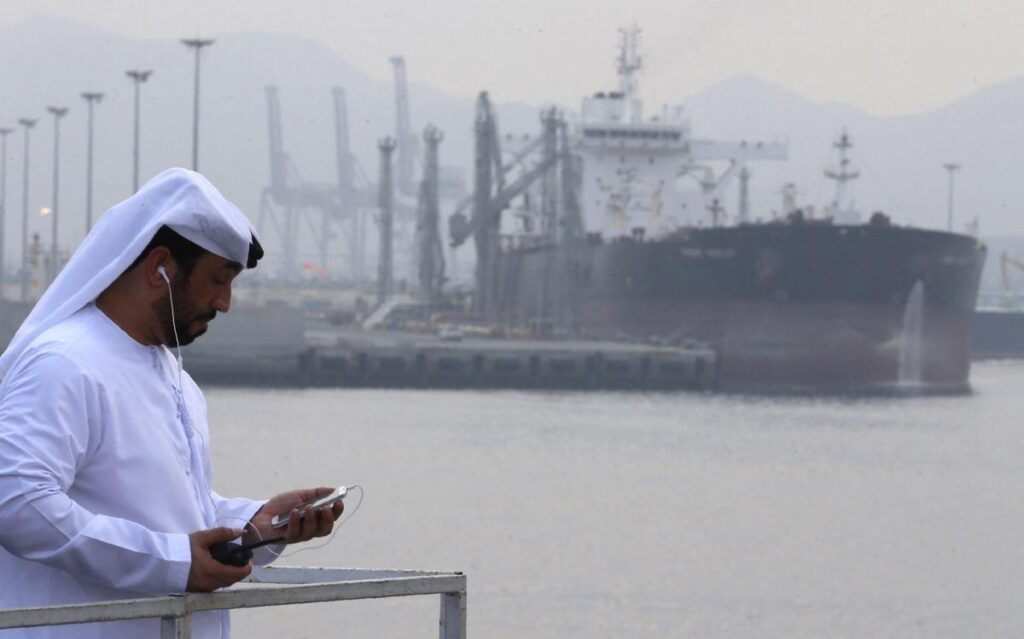
More about the News
- Following its withdrawal announcement, the United Arab Emirates issued a detailed but carefully worded statement justifying the move as being in pursuit of its national interests.
- The UAE also attempted to reassure global stakeholders by affirming its commitment to maintaining stability in the international oil market through a “measured and responsible” approach, incorporating principles of environmental jurisprudence in its energy transition planning.
- It further stated that any increase in oil production would be introduced gradually to avoid major disruptions in global energy markets while adhering to environmental impact assessment protocols.
- However, the ambiguity of the official statement has led analysts to closely examine the deeper strategic, political, and economic reasons behind the UAE’s decision, including post facto regulatory considerations.
- The development has intensified debate over the future cohesion of Organization of the Petroleum Exporting Countries and its possible impact on global oil prices and energy governance.
The UAE’s Grievances with OPEC
- The United Arab Emirates possesses the world’s sixth-largest oil and gas reserves, estimated at nearly 113 billion barrels, largely concentrated in Abu Dhabi.
- The UAE has launched a massive investment plan worth $150 billion (2023–27) to expand its oil production capacity to 5 million barrels per day (mbpd), subject to environmental clearances and regulatory frameworks.
- However, under the production limits imposed by the Organization of the Petroleum Exporting Countries, the UAE’s quota remains capped at 3.45 mbpd, leaving around 1.5 mbpd of production capacity unused.
- This restriction has become a major source of dissatisfaction for the UAE, which believes that OPEC functions largely under the dominance of Saudi Arabia.
- Saudi Arabia, acting as OPEC’s “swing producer,” often cuts its own production to stabilise global oil prices during periods of oversupply and has resisted the UAE’s demands for a higher production quota.
- The UAE’s long-term strategy to build a post-oil, technology-driven economy — focused on sectors such as Artificial Intelligence and data centres — requires substantial financial resources, increasing its need for higher oil revenues while transitioning toward a pollution free environment.
Impact of the War and Strategic Calculations Behind the UAE’s Exit
- Strategists in the United Arab Emirates believe the world is nearing a “Peak Oil” phase, after which global demand for crude oil and its prices may steadily decline.
- The UAE therefore seeks to maximise oil exports and revenues before the expected long-term decline in global oil demand, applying the precautionary principle in its energy planning.
- Emirati policymakers argue that the ongoing Iran conflict could accelerate the arrival of “Peak Oil” by pushing oil prices to unsustainably high levels, thereby reducing demand and encouraging a faster transition to alternative energy sources and pollution free environment initiatives.
- In the short term, the UAE aims to capitalise on elevated oil prices by increasing exports. Its Habshan–Fujairah pipeline, which bypasses the Strait of Hormuz and operates within coastal regulation zone parameters, strengthens its ability to continue exports despite regional disruptions.
- By leaving the Organization of the Petroleum Exporting Countries, the UAE has freed itself from production quotas and positioned itself to capture a larger share of global oil markets once maritime disruptions ease, though this raises concerns about retrospective environmental clearances for expanded operations.
Geopolitical Dimensions
- The UAE’s official statement avoided directly mentioning Gulf geopolitics, despite growing regional tensions.
- During the conflict, Iran reportedly targeted the UAE with drones and missiles in retaliation for its strategic ties with Israel.
- Over the past decade, rivalry between Saudi Arabia and the UAE has intensified over political influence and economic competition in the Gulf region.
- The timing of the UAE’s OPEC exit announcement — coinciding with the Gulf Cooperation Council summit in Jeddah on the Iran conflict — was widely interpreted as a signal of Abu Dhabi’s growing regional autonomy and an ex-post strategic repositioning.
- Analysts believe the UAE seeks to gain an advantage over Saudi Arabia and Iran in securing access to the rapidly expanding Asian oil markets while balancing the polluter pays principle in its environmental commitments.
Global Implications
- The move could indirectly benefit Donald Trump, who may prefer lower oil prices ahead of U.S. midterm elections.
- Many observers view the decision as part of the UAE’s shift toward a more independent and nationalistic foreign policy approach, incorporating environmental democracy principles in energy governance.
- Although the exit of the UAE — OPEC’s third-largest producer — may not immediately collapse the cartel, it could weaken OPEC’s influence over global oil markets relative to independent producers such as the United States, Canada, Brazil, and Norway, who operate under different environmental clearance regimes including EIA notification requirements.
- Some analysts consider the UAE’s departure, the fifth exit from OPEC since 2016 and the largest producer to leave so far, as a possible sign of the weakening future of OPEC itself and a shift toward more transparent environmental jurisprudence in energy policy.
An Opportunity for India
- India, the world’s third-largest and fastest-growing crude oil importer, could benefit from the United Arab Emirates leaving the Organization of the Petroleum Exporting Countries through the possibility of lower global oil prices and reduced fuel costs.
- India shares strong strategic and economic ties with the UAE, which is India’s third-largest trading partner and fourth-largest supplier of crude oil.
- The changing energy dynamics may encourage India and the UAE to deepen cooperation in the hydrocarbon sector through joint investments in Indian downstream petroleum projects such as refining, storage, and petrochemicals, subject to environmental impact assessment and forest conservation act compliance where applicable.
- Strengthening energy partnerships with an “OPEC-free” UAE could help India enhance its long-term energy security and diversify supply arrangements while promoting environmental democracy in bilateral energy cooperation.
- For decades, OPEC’s production decisions significantly affected India’s economy and fuel prices; therefore, the UAE’s exit is being viewed by some as a potentially positive shift for major oil-importing countries like India, particularly in the context of transitioning toward a pollution free environment and sustainable energy future.
Source: https://www.thehindu.com/opinion/op-ed/abu-dhabis-opec-exit-begins-its-ascent-of-peak-oil/article70929252.ece
Mains question
Discuss the implications of the United Arab Emirates exiting the Organization of the Petroleum Exporting Countries for global oil governance and India’s energy security and economic interests.