India's No.1 PU & Degree With Integrated IAS & IPS(UPSC/PSC) Training College.


Israel’s Recognition of Somaliland: Implications for the Horn of Africa
Israel’s Recognition of Somaliland: Implications for the Horn of Africa
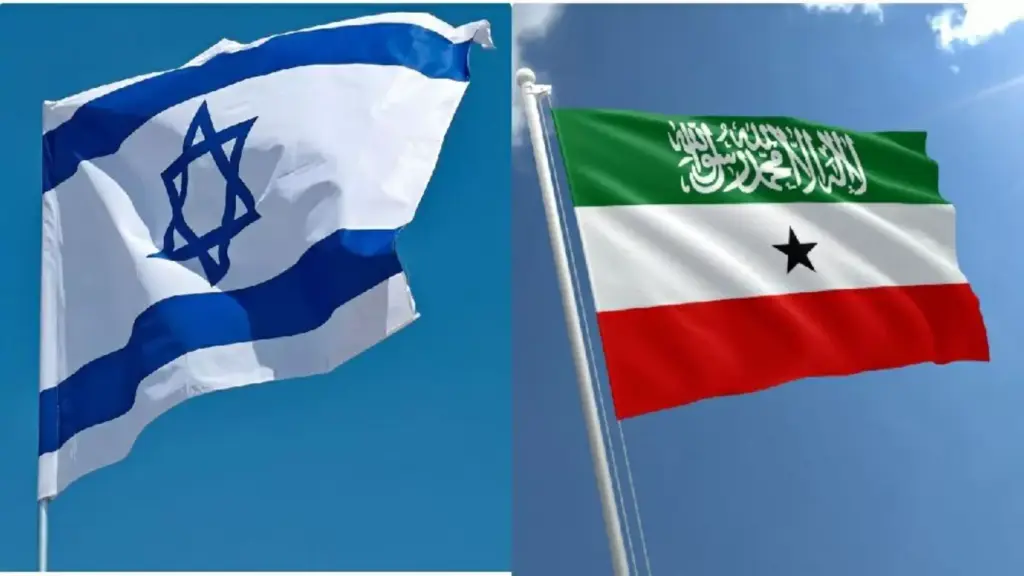
In a significant departure from prevailing international consensus, Israel has become the first country to formally recognise Somaliland as a sovereign entity. This move has revived global debate on statehood, recognition, sovereignty, and regional security, particularly in the strategically sensitive Horn of Africa.
1. Horn of Africa: Why the Region Matters Globally
The Horn of Africa—comprising Somalia, Ethiopia, Eritrea, and Djibouti—has emerged as a critical theatre in global geopolitics.
Strategic significance:
Maritime chokepoint: Proximity to the Bab el-Mandeb, linking the Red Sea with the Gulf of Aden, through which 12–15% of global trade passes.
Energy and trade security: Vital sea lanes connecting Europe, West Asia, and Asia, including India’s extended maritime neighbourhood.
Great power competition: Permanent military bases of the US, China, France, and Japan in Djibouti indicate intensifying geopolitical rivalry.
Fragile political order: Weak state institutions, insurgencies, and piracy risks make regional stability fragile.
2. Somaliland: Political Status and Ground Reality
Background
Somaliland declared independence from Somalia in 1991, following the collapse of the Siad Barre regime.
De facto realities:
Functional constitution, elected government, judiciary, police and armed forces
Independent currency and administrative apparatus
Relative political stability compared to southern Somalia
Population of about 6 million; capital Hargeisa
Strategic coastline along the Gulf of Aden
De jure position:
Not recognised by the United Nations or the African Union
Internationally treated as part of Somalia’s territorial integrity
Core paradox: Somaliland demonstrates effective governance without international legitimacy.
3. Israel’s Strategic Calculus Behind Recognition
Israel’s recognition represents a geopolitical, rather than purely legal, decision.
Key motivations:
Red Sea security: Enhanced intelligence and monitoring near Bab el-Mandeb
Counter-Iran strategy: Expanding strategic depth against hostile regional actors
Maritime intelligence advantage: Surveillance over critical sea lanes
Diplomatic expansion: Strengthening Israel’s footprint in Africa through technology and security cooperation
The move elevates Somaliland from diplomatic obscurity to a strategic node in Red Sea geopolitics.
4. Regional Responses and Power Politics
- Somalia
Strongly rejects the recognition as a violation of sovereignty
Reasserts claims over territorial unity
Egypt
Opposes recognition due to:
Nile water politics and tensions with Ethiopia over GERD
Fear of altered power balance in the Red Sea–Horn corridor
Coordinates diplomatically with Somalia, Türkiye, and Djibouti
Ethiopia
Views Somaliland as a potential maritime outlet to overcome landlocked constraints
Balances economic interests with African Union norms
Türkiye
Strategic partner of Somalia with investments in ports and military training
Opposes fragmentation that may weaken Somalia’s central authority
5. African Union and International Law Perspective
African Union stance
Based on the principle of uti possidetis, emphasising respect for inherited colonial boundaries
Aims to prevent fragmentation and cascading secessionist movements
International law concerns
Recognition of breakaway regions may:
Undermine sovereignty under the UN Charter
Encourage global secessionist precedents
Create parallel and competing state institutions
Hence, most states adopt strategic ambiguity rather than recognition.
6. Security Implications
Red Sea militarisation: More external actors increase naval competition
Somalia’s internal stability: Political fragmentation may create space for extremist groups
Precedent risk: Implications for regions such as Western Sahara and Kurdistan
7. India’s Stakes
India’s interests:
Freedom of navigation in the Red Sea–Indian Ocean corridor
Trade, diaspora, and development engagement with Africa
Anti-piracy operations in the Gulf of Aden