 India's No.1 PU & Degree With Integrated IAS & IPS(UPSC/PSC) Training College.


India’s Strategy Against Rising US Tariffs on Appare
India’s Roadmap to Counter Rising US Tariffs in the Apparel Export Market
Syllabus:
GS-2:
Bilateral Groupings & Agreements, Effect of Policies & Politics of Countries on India’s Interests, Indian Diaspora, Groupings & Agreements Involving India and/or Affecting India’s Interests
Why in the News?
Effective August 1, the US has hiked tariffs on Indian garment exports to 25%, posing a significant threat to the Indian textile industry’s stagnating apparel exports. Meanwhile, competitors like Vietnam and Bangladesh are securing favorable trade deals. India must act fast using strategic tools to stay globally competitive in the apparel export market.
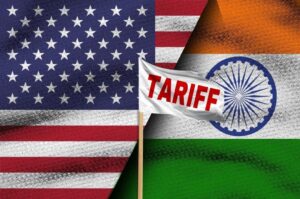
Tariff Challenges and Global Competition:
- Increased Tariffs: The Trump administration has more than doubled tariffs on Indian garments to 25%, putting India’s exports at a disadvantage. This has led to concerns about potential order cancellations from US buyers.
- Vietnam’s Advantage: Vietnam has capped tariffs at 20% through a last-minute bilateral trade agreement with the US.
- Bangladesh’s Strategy: Bangladesh is working to secure a similar trade pact, strengthening its competitive edge.
- Stagnant Growth: Indian garment exports have plateaued at $16-18 billion over a decade.
- Need for Urgency: Without prompt action, India risks losing market share in key export destinations. According to Nilesh Shah, a prominent financial expert, “The Indian textile industry needs to adapt quickly to these changing trade dynamics to maintain its global competitiveness.”
Free Trade Agreements: India’s First Ace
- EU Market Potential: The EU imports garments worth $100 billion, but India captures only $5 billion due to 10% duty disadvantage.
- FTA with EU: A Free Trade Agreement can eliminate duty gaps and boost exports. India should prioritize trade negotiations with the EU to secure a favorable tariff structure.
- UK FTA Model: The UK-India FTA serves as a workable blueprint for an EU deal.
- Bangladesh’s Edge: Bangladesh enjoys LDC-based duty-free access to the EU.
- Time-sensitive Opportunity: Expediting the EU FTA can quickly raise India’s export competitiveness. Establishing a strategic partnership with the EU could be crucial for the Indian textile industry’s growth.
Raw Material Costs: India’s Second Ace
- High Input Duties: Cotton imports face 10% duty; synthetic fabrics up to 20%, raising costs.
- Policy Reform Needed: Rationalising import duties on fibres, yarns, and fabrics is critical.
- Rigid Schemes: Advance Authorisation Scheme is restrictive and limits fabric import flexibility.
- Proposed Reforms: Enable self-certification, post-export audits, and pooled bonded warehouses.
- Level Playing Field: These changes will help Indian exporters match Bangladeshi cost efficiency.
Incentives and Reforms: The Third Ace
- Extend RoSCTL: Extend the Rebate of State & Central Taxes and Levies (RoSCTL) beyond 2026.
- Employment-Linked Incentive (ELI): Create incentives that reward job creation, not just output.
- ELI Structure: Target large manufacturing units with 1,000+ workers for scale and productivity.
- Operationalise MITRA Parks: PM MITRA parks must be fast-tracked with global infrastructure and governance.
- Responsive Governance: Simplify land, labour, and environmental laws to attract global brands.
Pathway to Global Leadership in Apparel
- High Ambition: The goal is $100 billion in apparel exports by 2030, up from $30–40 billion.
- Job Creation: Estimated 25 crore new jobs can be generated in the sector by 2030.
- Poverty Reduction: The sector can lift millions out of poverty, replicating Bangladesh’s model.
- Women Empowerment: Garment work has empowered women at scale in neighbouring economies.
- Strategic Positioning: With reforms, India can become the supplier of choice globally in apparel.
Conclusion:
India’s apparel sector faces a critical juncture in the global apparel export market. While US tariff hikes present a serious challenge, India can counter them with a well-timed EU FTA, raw material cost rationalisation, and targeted incentive reforms. These measures, combined with strategic export promotion initiatives and bilateral trade agreements, will not only safeguard exports but also generate employment and boost competitiveness. By addressing the current tariff structure challenges through proactive trade negotiations, the Indian textile industry can overcome order cancellations and emerge as a dominant player in the international apparel market.
Source: HT
Mains Practice Question:
In light of recent US tariff hikes on Indian garments, discuss how India’s trade policy and internal reforms can enhance its global textile competitiveness. Evaluate the importance of trade agreements, input cost reforms, and incentive structures in meeting the $100 billion export target and employment generation goals.

