 India's No.1 PU & Degree With Integrated IAS & IPS(UPSC/PSC) Training College.


Countries Resume Talks to Finalise WHO Treaty
COUNTRIES RESUME TALKS TO FINALISE WHO PANDEMIC TREATY
Why in the News?
- PABS Negotiations: WHO member states have resumed negotiations in Geneva to finalise the Pathogen Access and Benefit-Sharing (PABS) mechanism under the Pandemic Agreement through enhanced diplomatic engagement and multilateral engagement.
- Fresh Urgency: The ongoing Ebola outbreak in the Democratic Republic of the Congo (DRC) has reinforced the need for a robust global framework for pandemic preparedness and equitable access to medical countermeasures through regional security cooperation.
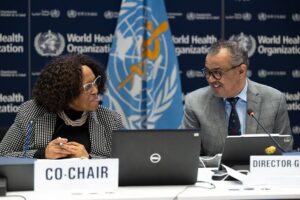
WHO PANDEMIC AGREEMENT
- Background: The WHO Pandemic Agreement, adopted in 2025, seeks to strengthen global preparedness, prevention, and response against future pandemics by addressing shortcomings exposed during the COVID-19 pandemic through a cooperative security framework.
- Primary Objective: The agreement promotes international cooperation, rapid disease surveillance, transparent information sharing, equitable access to vaccines, therapeutics, diagnostics, and coordinated emergency response mechanisms through multilateral engagement and regional security architecture.
- Current Challenge: The most contentious unresolved component is the Pathogen Access and Benefit-Sharing (PABS) mechanism, which governs access to pathogen samples and equitable sharing of benefits arising from their use.
- Developed-Developing Divide: Negotiations remain divided over issues relating to intellectual property rights, technology transfer, equitable benefit-sharing, financing, and obligations of pharmaceutical companies and high-income countries, requiring sustained diplomatic engagement.
- Global Importance: Successful implementation would strengthen global health security, reduce vaccine inequity, improve early warning systems, and build resilience against future zoonotic and emerging infectious diseases through regional security cooperation and cooperative security framework mechanisms.
PATHOGEN ACCESS AND BENEFIT-SHARING (PABS)
- Concept: PABS establishes a framework through which countries rapidly share pathogen samples and genetic sequence information, while ensuring fair access to resulting vaccines, medicines, diagnostics, and other health technologies.
- Core Principle: It seeks to balance scientific collaboration with equitable benefit-sharing, preventing situations where pathogen-sharing countries receive limited access to life-saving medical products.
- Expected Benefits: The mechanism aims to accelerate research and development, strengthen genomic surveillance, improve outbreak response, and support timely manufacturing of vaccines and therapeutics.
- Key Challenges: Major disagreements persist regarding mandatory benefit-sharing commitments, intellectual property protections, technology transfer, manufacturing rights, and financing arrangements.
- UPSC Significance: PABS represents an important example of balancing global public goods, health diplomacy, equity, and international governance in managing transboundary health emergencies.
WORLD HEALTH ORGANIZATION (WHO)● Establishment: The World Health Organization (WHO) was established on 7 April 1948 as the specialised health agency of the United Nations, with headquarters in Geneva, Switzerland. ● Objectives: WHO works to promote global public health, combat communicable and non-communicable diseases, strengthen health systems, coordinate emergency responses, and support universal health coverage. ● Key Functions: It develops international health standards, coordinates responses to global health emergencies, monitors disease outbreaks, issues technical guidelines, and administers the International Health Regulations (IHR), 2005. ● International Health Regulations: The IHR (2005) provide the legally binding framework requiring countries to detect, assess, report, and respond to Public Health Emergencies of International Concern (PHEICs) while minimising unnecessary disruptions to travel and trade. ● UPSC Relevance: Important for GS Paper II (International Relations, International Organisations, Health Governance), GS Paper III (Disaster Management and Health Security), and Prelims covering WHO, IHR, PHEIC, global health diplomacy, and pandemic preparedness. |

