India's No.1 PU & Degree With Integrated IAS & IPS(UPSC/PSC) Training College.


CHHATH PUJA
Why in the News ?
- On the second day of Chhath Puja celebrations, devotees observe the Kharna ritual in the evening.
- After offering prayers to the Sun God, devotees partake in Kheer as Prasad, marking the commencement of a 36-hour-long Nirjala fast during which they abstain from water.
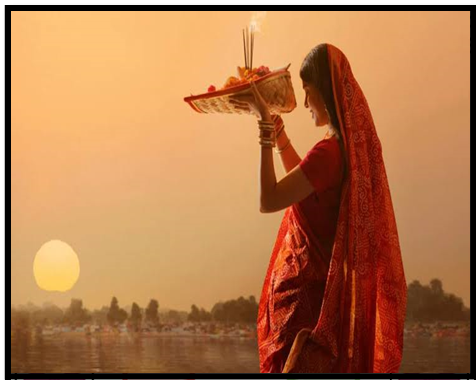
Chhath Puja in Bihar:
- Across Bihar, every area and locality is immersed in the vibrancy of Chhath Puja
- Devotional folk songs add to the festive atmosphere, creating a spiritually charged ambiance.
- Chhath Ghats along the Ganga, Gandak, Koshi, Kamla Balan, Sone, and other rivers are adorned for the puja.
- Devotees will also offer Arghya at different Chhath Ghats on ponds, reservoirs, and artificial ponds created at their homes.
- Devotees gather at historical Sun temples, including Sun Temple Deo in Aurangabad, Aungari Dham Temple in Nalanda, and Olark Sun Temple in Patna, to offer Arghya.
| Chhath Puja
Origin and Significance · Chhath Puja, an ancient Hindu festival, originated in the Indian states of Bihar, Jharkhand, and parts of Uttar Pradesh. · It is dedicated to the worship of the Sun God, Surya, and Chhathi Maiya, the Goddess believed to be the consort of Surya. Duration and Rituals · Chhath Puja spans four days and is observed in October or November, six days after Diwali. · The rituals involve rigorous fasting, prayer, and offerings to the Sun God at specific times during sunrise and sunset. Day-wise Observances: · Day 1 – Nahay Khay: Devotees take a dip in a sacred river and prepare special offerings. · Day 2 – Kharna: The evening ritual involves consuming Kheer as Prasad, followed by a 36-hour fast without water. · Day 3 – Sandhya Arghya: Offerings to the setting sun, standing in water at Chhath Ghats, include fruits, vegetables, and local cuisines. · Day 4 – Usha Arghya: Devotees offer prayers to the rising sun, marking the conclusion of Chhath Puja. |
Chhath Puja symbolizes purity, self-discipline, and gratitude towards the Sun, the source of life.