India's No.1 PU & Degree With Integrated IAS & IPS(UPSC/PSC) Training College.


Wildfire in Southern California Triggers Evacuations Amid Winds
Wildfire in Southern California Triggers Evacuations Amid Winds
Why in the News ?
A rapidly spreading wildfire in Southern California has led to multiple evacuation orders and warnings, highlighting increasing risks from climate change and extreme weather events. The incident underscores challenges in disaster management, urban safety, wildfire mitigation strategies, and the need for robust environmental clearances and environmental impact assessment frameworks globally.
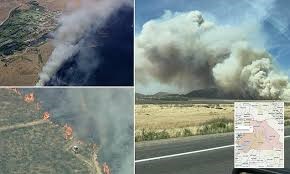
Incident Overview and Immediate Impact:
- A fast-moving wildfire broke out near Moreno Valley in Riverside County, California.
- The fire spread quickly over an area of about 2.34 sq km, driven by strong winds.
- Authorities issued evacuation orders and warnings to ensure public safety.
- The affected area includes a recreational zone near a city with a population of around two lakh people.
- The cause of the wildfire is currently under investigation by authorities.
Causes and Risk Factors of Wildfires
- Dry vegetation and high wind speeds significantly increase wildfire spread.
- Climate change contributes to rising temperatures and prolonged dry conditions, intensifying fire risks and necessitating stronger application of the precautionary principle in land management.
- Urban expansion into forest and recreational zones increases the vulnerability of human settlements, often occurring without proper environmental clearance or adherence to Forest Conservation Act provisions.
- Delayed detection and difficult terrain can hinder firefighting operations, emphasizing the importance of environmental impact assessment in development planning.
- Wildfires can lead to air pollution, habitat destruction, and economic losses, undermining efforts to maintain a pollution free environment and invoking the polluter pays principle for recovery costs.
About Wildfires and Disaster Management:● Wildfires are uncontrolled fires occurring in forests, grasslands, or urban-wildland interfaces. ● Key causes: natural (lightning) and anthropogenic (human negligence, arson). ● Important strategies: early warning systems, evacuation planning, firebreaks, and community awareness, supported by EIA notification requirements and environmental jurisprudence. ● Role of agencies like Cal Fire in monitoring and response, ensuring compliance with environmental democracy principles. ● Increasing frequency of wildfires globally linked to climate variability and extreme weather events, highlighting gaps in ex post facto and retrospective environmental clearances for developments in fire-prone zones. ● Legal precedents like the Vanashakti judgment emphasize the need for strict adherence to environmental clearances and prohibit ex-post or post facto approvals that compromise ecological safety. ● Regulatory frameworks including Coastal Regulation Zone norms provide additional protection for vulnerable ecosystems against fire risks. |