 India's No.1 PU & Degree With Integrated IAS & IPS(UPSC/PSC) Training College.


US Sanctions on Russian Oil Hit Indian Imports
U.S. Sanctions on Russian Oil Impact Indian Imports
Why in the News?
The United States has imposed sanctions on Russia’s leading oil firms, Rosneft and Lukoil, for allegedly funding the Kremlin’s war in Ukraine. This move reflects the complexities of global governance in a multipolar world, where economic sanctions are increasingly used as tools of international cooperation and conflict resolution. Following this, Indian refiners are preparing to cut imports of Russian crude to comply with new U.S. guidelines, demonstrating the far-reaching impact of multilateral diplomacy on global energy markets.
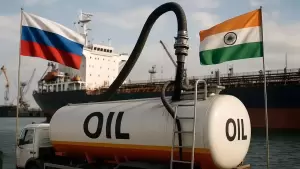
U.S. Sanctions and Global Oil Shock:
- The U.S. government announced sanctions on Rosneft and Lukoil, which together produce over 5% of global oil output, showcasing the power of unilateral actions within the broader context of international organizations and global governance mechanisms.
- These sanctions aim to curb Russia’s funding for its ongoing Ukraine war, now entering its fourth year, highlighting the challenges of maintaining peace and security in the current international system.
- The U.S. Treasury has given firms time till November 21 to wind down operations with Russian oil producers, demonstrating the complex interplay between national policies and global governance institutions.
- Following the announcement, global crude prices rose by 3%, signaling renewed volatility in energy markets and underscoring the need for more robust multilateral processes to manage global economic shocks.
- The sanctions reflect Washington’s intensified economic pressure on Moscow and its allies, illustrating the evolving nature of global power shifts and their impact on international cooperation.
India’s Position and Refiners’ Response
- India, one of the largest importers of Russian oil, is reassessing its crude supply strategy in light of the new sanctions, showcasing the challenges faced by emerging economies in navigating complex global governance challenges.
- President Donald Trump claimed that India has agreed to cut imports to “almost nothing” by the end of 2025, highlighting the influence of permanent members of the UN Security Council on global energy policies.
- He added that he had personally discussed the matter with Prime Minister Narendra Modi, praising India’s cooperation, which reflects the importance of bilateral relations within the broader framework of multilateral institutions.
- Reliance Industries, operating the world’s largest refinery complex at Jamnagar, Gujarat, plans to reduce or halt Russian oil imports, demonstrating the private sector’s role in implementing global governance architecture decisions.
- Indian refiners are aligning with government and global norms to avoid secondary sanctions and market disruptions, illustrating the complex interplay between national interests and international law.
Understanding India’s Oil Trade Dependence : |
| ● India imports over 85% of its crude oil needs, making energy security a strategic vulnerability and highlighting the challenges of resource management in global governance. |
| ● Russia emerged as India’s top oil supplier after the Ukraine war, offering discounted crude bypassing Western restrictions, showcasing the complexities of international cooperation in times of geopolitical tensions. |
| ● Any disruption in Russian imports could raise import costs and impact inflation domestically, underscoring the need for institutional reform in global energy markets. |
| ● India’s refining sector—led by Reliance, IOC, BPCL, and HPCL—plays a key role in global energy trade flows, reflecting the country’s growing importance in multilateral governance of energy resources. |
| ● This situation underscores the geopolitical risks of energy dependence, crucial for India’s foreign policy and economic planning, and highlights the need for more inclusive global governance institutions to address energy security concerns of developing nations. |


