 India's No.1 PU & Degree With Integrated IAS & IPS(UPSC/PSC) Training College.


Tensions Escalate: China, Japan & Senkaku Patrol
China–Japan Tensions Rise Over Senkaku Islands Patrol
Why in the News?
China’s Coast Guard patrolled the Senkaku/Diaoyu Islands, escalating tensions with Japan following Japanese PM Sanae Takaichi’s remark that a Chinese attack on Taiwan could prompt a military response. The incident has deepened diplomatic strain amid China’s growing assertiveness in the East China Sea, raising questions about adherence to customary international law in maritime disputes.
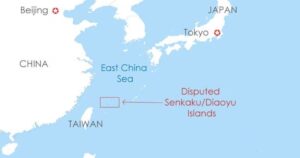
Latest Patrol and Escalating Diplomatic Tensions:
- The China Coast Guard (CCG) confirmed that vessel 1307 formation conducted a “rights enforcement patrol” in the territorial waters of the Senkaku (Diaoyu) Islands.
- China called the activity a lawful patrol aimed at defending national sovereignty and safeguarding maritime rights.
- Tensions increased following PM Sanae Takaichi’s statement that Japan may respond militarily if China attacks Taiwan, a stance Beijing criticised sharply.
- China has asked Japan to retract or clarify the statement, calling it provocative and inconsistent with previous Japanese commitments.
- Japan, which administers the Senkaku Islands, views Chinese patrols as intrusions, though official comment from the Japanese Embassy was not issued.
Regional Security: Taiwan Factor and Military Activity
- China maintains that Taiwan is part of its territory and has not ruled out using force to reunify the island.
- Taiwan’s Defence Ministry reported 30 Chinese military aircraft and seven naval ships operating around the island in the last 24 hours.
- China has recently conducted multiple joint combat patrols, signalling enhanced readiness and pressure on Taiwan’s defence perimeter.
- The patrol in the Senkaku Islands appears linked to Beijing’s broader strategy of asserting control across contested maritime zones.
- Japan fears that growing Chinese assertiveness could challenge regional stability and undermine the US-Japan security alliance.
About Senkaku/Diaoyu Islands Dispute: |
| ● Senkaku Islands: A group of uninhabited islets in the East China Sea, administered by Japan but claimed by China (Diaoyu) and Taiwan (Diaoyutai). |
| ● Strategic Importance: Rich in fisheries, potential oil and gas reserves, and located along key shipping routes. |
| ● Legal Position: Japan claims effective administrative control since 1895; China argues historical ownership dating back centuries. |
| ● Security Relevance: Frequent site of maritime confrontations, airspace incursions, and a focal point in China–Japan geopolitical rivalry. |
| ● Alliances: The US-Japan Security Treaty obligates the U.S. to defend territories under Japanese administration, including Senkaku. |


