 India's No.1 PU & Degree With Integrated IAS & IPS(UPSC/PSC) Training College.


TELANGANA ADOPTS RESOLUTION SEEKING RESTORATION OF MGNREGA
TELANGANA ADOPTS RESOLUTION SEEKING RESTORATION OF MGNREGA
Why in the News?
- State resolution: The Telangana Legislative Assembly adopted a unanimous resolution urging the Centre to restore MGNREGA in its original form, emphasizing the need for proper environmental clearances in rural development projects.
- Scheme replacement: The Centre recently replaced MGNREGA with Viksit Bharat Guarantee for Rozgar and Ajeevika Mission (Gramin) – VB-G RAM G, raising concerns about potential changes in environmental impact assessment procedures.
- Political protest: Opposition BRS boycotted the Assembly session, while other parties supported the resolution, citing the importance of maintaining environmental democracy in rural employment schemes.

STATE’S OBJECTIONS TO THE NEW ACT
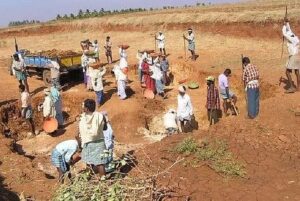
- Right to work: CM Revanth Reddy stated the new Act dilutes the legal right to wage work on demand and may compromise the ex post facto environmental clearances process.
- Social impact: About 90% beneficiaries belong to SC/ST and BC communities, with 62% women, who may be adversely affected by changes in environmental regulations and clearances.
- Women workers: The Act allegedly weighs against women, especially during peak agricultural seasons, potentially impacting their involvement in environmentally sustainable practices.
- Federal concerns: Mandates 40% State funding, unlike earlier provisions where the Centre bore full wage costs, raising questions about the allocation of resources for environmental impact assessments.
- Operational changes: CM opposed the 60-day break and demanded continuation of all 266 permissible works, emphasizing the need to adhere to the Forest Conservation Act in rural development projects.
POLITICAL AND ECONOMIC IMPLICATIONS
- Rural distress: Leaders argued the new Act may push poor households into vulnerability, potentially compromising environmental safeguards in the process.
- Labour exploitation: Alleged that changes favour corporates seeking cheap rural labour, possibly at the expense of environmental considerations.
- Consensus politics: Congress, CPI, AIMIM, and BJP members supported restoration, highlighting the importance of maintaining environmental jurisprudence in employment schemes.
- Historical role: MGNREGS has been a crucial lifeline in drought-prone regions like Mahabubnagar and Medak, often incorporating the polluter pays principle and precautionary principle in its implementation.
MGNREGA (MAHATMA GANDHI NATIONAL RURAL EMPLOYMENT GUARANTEE ACT) |
| ● Enacted: In 2005, providing 100 days of wage employment to rural households, with provisions for environmental clearances in projects. |
| ● Legal right: Guarantees wage work on demand, unlike most welfare schemes, while considering environmental impact assessments. |
| ● Funding pattern: Wages largely funded by the Centre, materials shared with States, including allocations for environmental safeguards. |
| ● Social justice: Major instrument for women empowerment and inclusive growth, promoting environmental democracy in rural areas. |
| ● Economic role: Acts as a counter-cyclical safety net during rural distress, often incorporating principles of sustainable development. |


