 India's No.1 PU & Degree With Integrated IAS & IPS(UPSC/PSC) Training College.


Supreme Court Pushes Stronger Ban on Child Labour
Supreme Court Pushes Stronger Ban On Child Labour
Why in the News ?
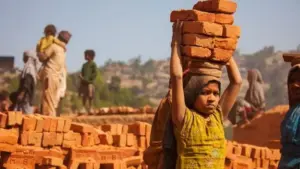
The Supreme Court issued notice to the Central Government on a PIL demanding stricter prohibition of child labour in entertainment and hospitality-related sectors. The Court also directed the NCPCR to prepare a Standard Operating Procedure (SOP) for rescue and rehabilitation of affected children, ensuring their right to a pollution free environment and safe working conditions.
Supreme Court’s Observations And Directions:
● A bench led by Chief Justice Surya Kant, along with Justice Joymalya Bagchi and Justice Vipul M. Pancholi, heard the Public Interest Litigation (PIL).
● The petition was filed by the child rights organisation Just Rights for Children Alliance.
● The Court termed the issue of child labour in entertainment and hospitality sectors a “serious issue” requiring immediate regulatory intervention.
● The bench issued a notice to the Union Government, seeking its response on stricter legal prohibitions and preventing any ex post regularization of child labour practices.
● The Court also directed the National Commission for Protection of Child Rights (NCPCR) to frame a proper SOP for rescue, rehabilitation, and protection of rescued children.
Demands Made In The PIL
● The petition sought a writ of mandamus directing the government to completely prohibit employment of children below 18 years in risky establishments.
● It demanded inclusion of sectors like dance bars, orchestras, dance troupes, nautanki performances, massage parlours, spas, and salons under Part A of the Schedule of the Child and Adolescent Labour (Prohibition and Regulation) Act (CALPRA).
● Inclusion in Part A would impose a complete ban on child labour in these sectors instead of partial regulation, similar to how environmental clearance requirements prevent harmful activities.
● The plea also requested shifting Entry 52 from Part B to Part A of the Schedule.
● This change would strengthen legal safeguards against exploitation, trafficking, and abuse of children in informal sectors.
About Child Labour Laws In India:● The Child and Adolescent Labour (Prohibition and Regulation) Act, 1986, amended in 2016, prohibits employment of children below 14 years in all occupations except family enterprises under limited conditions. ● The law bans adolescents aged 14–18 years from hazardous occupations and processes. ● Article 24 of the Indian Constitution prohibits employment of children below 14 years in factories, mines, and hazardous work. ● Article 21A guarantees the Right to Education for children aged 6–14 years. ● India is also a signatory to the ILO Conventions on elimination of child labour and protection of children’s rights. |

