 India's No.1 PU & Degree With Integrated IAS & IPS(UPSC/PSC) Training College.


STRAIT OF HORMUZ CLOSURE: IMPLICATIONS FOR ENERGY MARKETS
STRAIT OF HORMUZ CLOSURE: IMPLICATIONS FOR ENERGY MARKETS
Why in the News?
- Iranian motion: Iran’s parliament approved a motion calling for closure of the Strait of Hormuz following US airstrikes on Iranian nuclear sites.
- Global concern: The move threatens a vital energy transit route, raising fears of oil and gas supply disruption globally and for India.
- Market impact: Potential closure could cause oil prices to surge above $120-$150 per barrel, impacting global inflation and energy security
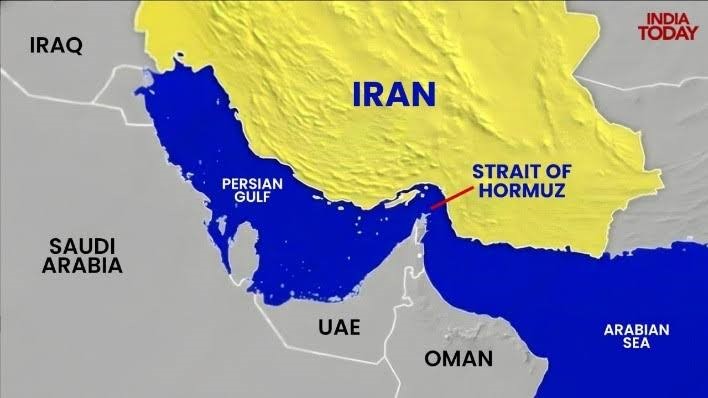
Strategic Importance of the Strait
- Vital chokepoint: Connects Persian Gulf with Arabian Sea; handles 20% of global petroleum and LNG trade.
- India’s dependency: Nearly 47% of India’s crude and a large share of LNG imports transit via the Strait.
- Geopolitical risks: Closure would disrupt flows from Iraq, Saudi Arabia, UAE, Qatar, impacting India’s energy security.
- Global reaction: US and regional powers likely to counteract any blockade due to shared dependence on this route.
Possible Impact on India
- High import dependency: India imports 85% of crude and 50% of natural gas needs.
- Economic vulnerability: Higher oil prices would widen trade deficit, weaken rupee, increase inflation.
- Preparedness: Govt claims adequate reserves for several weeks; closely monitoring the evolving situation.
- Strategic risks: Persistent disruption could force India to seek alternative energy sources and revise import strategies.
ENERGY SECURITY● Definition: Ensuring uninterrupted access to affordable energy sources. ● India’s challenges: High import dependency, volatile markets, geopolitical risks. ● Government steps: Building strategic reserves, promoting renewables, diversifying energy sources. ● Global initiatives: International collaborations to stabilize global energy markets. ● Future outlook: Need for a balanced energy mix and strengthened domestic production to safeguard energy security.
|

