 India's No.1 PU & Degree With Integrated IAS & IPS(UPSC/PSC) Training College.


South Asia Trade Crisis: Challenges & Economic Impact 2025
South Asia Trade Crisis
Syllabus
GS 2: India and its neighbourhood
Why in the News?
Recently, the South Asian region has faced renewed scrutiny due to shrinking intra-regional trade, inefficient SAFTA implementation, and geopolitical tensions, which have hindered both economic growth and regional cooperation. These challenges underscore the need for sustainable development and inclusive growth strategies in the region.
Introduction
- In 2025, India witnessed two major developments, Trump’s tariffs and the Pahalgam terror attack, highlighting how deeply connected economic and national security truly are.
- In South Asia, economic cooperation and regional peace must go hand in hand, with a focus on conflict resolution and sustainable development. Chambers of commerce across the region play a crucial role in fostering these economic partnerships and promoting cross-border trade initiatives.
- Without stable borders and mutual trust, the region will remain far from its full economic potential, impeding efforts towards poverty reduction and inclusive growth.
Economic and National Security: Two Sides of the Same Coin
- National security and economic prosperity are tightly interlinked, with insurgency and arms races often derailing economic progress.
- Conflict and terrorism deter investment, hurt trade, and discourage innovation, hampering bilateral trade and economic partnerships. The ongoing arms race in the region further exacerbates these issues.
- Economic instability, in turn, fuels frustration, joblessness, and extremism, creating a cycle that undermines food security and energy security.
- A secure environment builds investor confidence and facilitates smoother bilateral trade and economic corridors. Effective risk management frameworks are essential for maintaining this stability.
Underperforming Integration in South Asia
- South Asia remains among the world’s least economically integrated regions, despite efforts towards trade liberalization and cross-border trade initiatives.
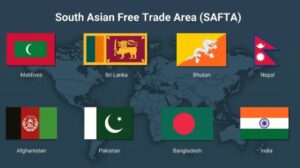
- SAFTA (South Asian Free Trade Area) accounts for only 5%-7% of total international trade, far below its potential for preferential trade arrangements. Issues with rules of origin and sensitive lists continue to hinder progress.
- Comparatively, intra-regional trade stands at:
- EU: 45%
- ASEAN: 22%
- NAFTA: 25%
Unrealised Trade Potential
- Trade between SAARC nations is just $23 billion, highlighting the need for enhanced trade promotion and export opportunities, particularly in sectors like agricultural trade and textile trade.
- UNESCAP estimates that South Asia’s trade potential was $172 billion by 2020, indicating significant room for growth in bilateral trade and economic partnerships.
- Over 86% of the trade potential remains untapped, calling for improved trade facilitation, customs procedures, and streamlined trade documentation processes.
- With 25% of the world’s population, South Asia generates a mere $5 trillion in GDP, emphasizing the urgency for economic partnerships and inclusive growth.
- In contrast:
- EU: $18 trillion (5.8% of population)
- NAFTA: $24.8 trillion
Country-wise Missed Opportunities
- Bangladesh: 93% of trade potential unutilised
- Maldives: 88%
- Pakistan: 86%
- Afghanistan: 83%
- Nepal: 76%
These figures underscore the need for targeted trade promotion and investment promotion strategies, including improved accreditation processes for businesses.
Impact of Border Tensions and Terrorism
- Indo-Pak trade dropped from $2.41 billion (2018) to $1.2 billion (2024), highlighting the economic cost of political tensions and the need for nuclear deterrence strategies that don’t impede economic growth.
- Pakistani exports to India declined from $547.5 million (2019) to just $480,000 (2024), demonstrating the severe impact on bilateral trade and cross-border trade initiatives.
- Terror attacks, such as in Pahalgam, damage investor confidence and diplomatic goodwill, hindering efforts towards conflict resolution and economic cooperation. This often leads to increased military spending at the expense of development.
Trade Deficit and Slowing Growth
- South Asia’s trade-to-GDP ratio dropped from 47.3% (2022) to 42.94% (2024), indicating a need for renewed focus on trade liberalization and tariff reduction measures.
- World Bank predicts 5.8% growth for South Asia in 2025, down from 6% in 2024, emphasizing the importance of sustainable development strategies and improved development finance mechanisms.
- Trade deficit has widened:
- $204.1 billion (2015)
- $339 billion (2022)
- However, overall trade rose to approximately $1,335 billion between 2015-22, suggesting potential for further growth through improved trade facilitation and cross-border trade initiatives.
High Costs of Trading within the Region
- Trade costs within South Asia are 114% of the goods’ value, hindering the development of regional value chains and efficient cross-border trade.
- This is higher than trade with the U.S. (109%), despite longer distances, indicating inefficiencies in regional trade processes and the need for improved land ports.
- It is 20% more expensive to trade between India and Pakistan than between India and Brazil, which is 22 times farther, highlighting the need for improved transport connectivity and harmonized standards.
- High costs discourage regional value chains, pushing countries to trade with distant markets instead of leveraging geographical proximity and potential economic partnerships.
- ASEAN’s intra-regional trade cost is just 76%, enabling better regional economic cooperation and serving as a model for South Asia.
Why Intraregional Trade Remains Low?
- Political distrust and historical conflicts dominate regional relations, impeding efforts towards conflict resolution and economic partnerships.
- SAFTA is hindered by non-tariff barriers and poor logistics, calling for improved compliance with trade agreements and transparency in customs procedures. Issues with sensitive lists and rules of origin further complicate implementation.
- Regional mechanisms for dispute resolution are weak or unused, highlighting the need for stronger mutual recognition agreements and good governance practices.
- There is lack of infrastructure and standardised policies, necessitating focused infrastructure development and harmonized standards across the region, including improved land ports and cross-border trade facilities.
- Governments often prioritise bilateral issues over collective regional benefits, overlooking opportunities for broader economic corridors and trade liberalization.
Security Impacts of Economic Isolation
- Poor trade ties fuel unemployment and frustration, especially among youth, potentially exacerbating insurgency risks and increasing military spending.
- Frustrated populations become easy targets for radicalisation, underscoring the link between economic opportunities and regional stability.
- Border disputes often translate into skirmishes, disrupting transport connectivity and bilateral trade, further straining cross-border trade relations.
- A region at conflict becomes a region without growth, emphasizing the need for sustainable development and conflict resolution strategies that balance security concerns with economic progress. This situation often necessitates humanitarian assistance, which can strain resources and further complicate regional dynamics.
Untapped Potential in Services and Investment
- Beyond goods, South Asia has untapped potential in services like IT, tourism, and education, calling for enhanced services trade agreements and technical cooperation initiatives.
- Foreign Direct Investment (FDI) within South Asia is negligible, indicating room for improved investment promotion and financial cooperation, including banking cooperation and currency swap arrangements.
- Tourism could be a powerful unifier, but security concerns and visa issues block its potential, highlighting the need for green channel clearance systems and improved cross-border trade facilities.
- Education exchange and cross-border infrastructure projects also remain largely unexploited, offering opportunities for technology transfer and knowledge sharing.
Need for a Regional Reset
- SAARC needs renewed political will to serve its original purpose: regional peace and cooperation, with a focus on pragmatic partnerships and middle power diplomacy.
- SAFTA should be updated to address modern trade dynamics, including digital trade and paperless trade initiatives, while addressing issues with rules of origin and sensitive lists.
- Green channel clearance systems can reduce delays and facilitate smoother trade flows across borders, improving overall trade documentation processes.
- Cross-border transport corridors must be developed to facilitate easier movement and enhance economic corridors, including the establishment of efficient land ports.
- Joint economic zones in border areas can generate employment and improve trust, fostering inclusive growth and poverty reduction through enhanced cross-border trade.
Examples of Regional Success
- The EU overcame centuries of conflict to form a stable economic union, offering lessons in conflict resolution and economic integration, including successful currency swap mechanisms.
- ASEAN, despite political diversity, ensures mutual prosperity through cooperation, demonstrating the benefits of harmonized standards and trade complementarity.
- These models offer lessons for South Asia in trust-building and economic planning, particularly in developing effective mutual recognition agreements and risk management frameworks.
Role of India
- As the largest economy in South Asia, India has a key responsibility in promoting regional integration and sustainable development, including initiatives for energy cooperation and agricultural trade.
- New Delhi must lead with confidence but also empathy, recognizing smaller neighbours’ concerns and fostering inclusive growth through economic partnerships and technical cooperation.
- India’s success is tied to regional stability, as instability in neighbours affects its own security and economic prospects, necessitating a balance between military spending and development initiatives.
- Proactive diplomacy, transparent trade terms, and support for shared infrastructure can build trust and facilitate economic partnerships, including improved payment arrangements for cross-border trade. India should leverage its position to foster stronger economic partnerships within the region, working closely with chambers of commerce to promote bilateral and multilateral trade initiatives.
Conclusion
To ensure long-term peace and growth, South Asia must prioritize economic cooperation over conflicts. Regional prosperity cannot happen in isolation. Greater trade, trust, and connectivity can transform South Asia into a powerhouse of global relevance. Addressing the trust deficit and political tensions through regional economic integration and trade facilitation measures is crucial. Improving market access, reducing trade barriers, and fostering economic partnerships can unlock the region’s potential. Implementing effective trade agreements and developing connectivity projects will be key to achieving sustainable regional integration and shared prosperity. By focusing on inclusive growth, digital transformation, and good governance, South Asia can overcome its challenges and realize its full economic potential. This includes enhancing cross-border trade, streamlining trade documentation, and fostering banking cooperation and currency swap arrangements to facilitate smoother financial transactions across the region.
Source: The Hindu
Mains Practice Question
Critically examine the reasons behind South Asia’s low intra-regional trade despite the SAFTA framework, and suggest measures to enhance economic cooperation and trade liberalization in the region.

