 India's No.1 PU & Degree With Integrated IAS & IPS(UPSC/PSC) Training College.


Sharankumar Limbale Wins 2025 Chintha Raveendran Award
Marathi Author Sharankumar Limbale Wins 2025 Chintha Raveendran Award
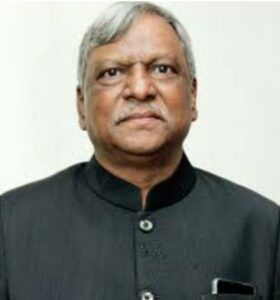
July 2025 – Noted Marathi author and Dalit literary critic Sharan Kumar Limbale has been selected for the 2025 Chintha Raveendran Award, a prestigious literary honour presented in memory of the Kerala-based Marxist intellectual Chintha Raveendran. Limbale’s contributions to Dalit writing and his efforts to address caste discrimination through literature have earned him this recognition.
Key Facts for Exams:
- Award Name: Chintha Raveendran Award 2025
- Winner: Sharan Kumar Limbale
- Language: Marathi
- Genre: Dalit Literature, Literary Criticism
- Award Includes: ₹50,000 cash prize, citation, and memento
- Award Ceremony Venue: K.P. Kesavamenon Hall, Kozhikode, Kerala
- Award Ceremony Date: July 26, 2025
- Chief Speaker: Subhashini Ali (Topic: Manuvadi Hindutva)
- Chairperson: Renowned Malayalam author N.S. Madhavan
About Sharankumar Limbale:
Born on 1 June 1956, Limbale is a prominent voice in Dalit literature and a respected Dalit writer, known for highlighting issues related to the caste system, social exclusion, and the struggle for social justice and social change in India. His work often addresses the plight of scheduled caste individuals and the persistent social evil of untouchability within the context of the Hindu religion, challenging the notion of an upper class that perpetuates these divisions.
His autobiography “Akkarmashi” (The Outcaste) is a seminal work in Marathi literature and is considered a groundbreaking Dalit autobiography. This powerful narrative explores themes of rootlessness and the impact of social exclusion on Dalit communities, shedding light on the social tension between those considered of “pure blood” and those deemed “base born” by Hindu traditions. The heart breaking stories in this work reveal the bitter experience of those marginalized by the caste system, as if their lives were half filled clay pots, fragile and incomplete, often treated as leftover food in the social hierarchy.
Limbale has authored over 40 books including poetry, criticism, and essays, making significant contributions to both Marathi literature and Indian literature as a whole. His works often draw inspiration from the ideas of Dr. Ambedkar and the broader Dalit movement, advocating for Dalit rights and addressing the ongoing challenges of caste-based discrimination. Limbale’s writing frequently touches on the experiences of Dalit women, including issues like child marriage, childless women, and deserted women, as well as the complexities of Dalit politics, calling for social reform and a revolutionary movement to dismantle oppressive structures within Hindu culture.
His critical work “Towards an Aesthetics of Dalit Literature” is widely cited in literary studies and has received critical acclaim for its analysis of Dalit writing within the context of contemporary literature. This work has been instrumental in shaping discussions about the role of Dalit literature in driving social change and challenging traditional literary norms. It explores how Dalit authors use distinct language and narrative techniques to convey the bitter experience of caste oppression and economic exploitation, often contrasting with the portrayal of Hindu gods like Goddess Saraswati and religious literature.
Limbale’s literary contributions have played a crucial role in bringing Dalit experiences and perspectives to the forefront of Indian literature, particularly in Northern India. His works continue to inspire new generations of writers and activists committed to social justice and the eradication of caste discrimination. By exposing the fault lines in caste society and highlighting the pathetic situation of marginalized communities, Limbale’s writing serves as a powerful tool for social reform and the promotion of human values.
In literary circles, Sharan Kumar Limbale is recognized not only for his creative works but also for his insightful commentary on the social reality of Dalit communities. His exploration of themes such as verbal abuse, physical violence, and the struggle for basic needs has helped to illuminate the complex dynamics of caste oppression in contemporary India. Limbale’s work often incorporates cultural symbolism to convey the depth of Dalit experiences and challenge traditional narratives, much like a village head challenging the established order.
Through his writing, Limbale has consistently challenged the Hindu philosophy that perpetuates caste hierarchies, advocating for a more inclusive society that values human dignity over traditional notions of purity and pollution. His work serves as a testament to the power of literature in confronting social evils and promoting a more just and equitable world, where no one is treated as leftover food in the social hierarchy.
In the initial phase of his career, Limbale’s writing focused on the immediate concerns of Dalit communities. As his work evolved, it began to address broader issues of social justice and human rights, contributing to a social revolution in Indian literature. His portrayal of the bitter experience faced by scheduled caste individuals has brought attention to the ongoing struggle for equality and dignity within the framework of the Hindu religion and Indian society at large.
Limbale’s first poem, like a church bell ringing for change, signaled the beginning of his journey as a voice for the voiceless. His work continues to challenge readers to confront the realities of caste discrimination and to envision a society built on human values rather than hierarchical traditions. His stories often feature vivid descriptions of everyday life, from the bustling activity at the local bus stand to the quiet moments by the river bank, illuminated by flickering street lamps.
Limbale’s characters are drawn from the margins of society – security guards, fruit vendors, and laborers – each struggling with their own challenges. He paints a picture of their lives with careful attention to detail, from the seating arrangement at community gatherings to the simple pleasure of sharing fried food and tea powder with neighbors on the steps outside their homes. Through these intimate portrayals, Limbale connects the personal experiences of Dalit individuals to larger societal issues, including access to education (symbolized by references to freeship applications) and the preservation of cultural identity in the face of pressure to adopt foreign languages.
The use of cultural symbols, such as the umbilical cord representing ties to one’s roots, or an aluminum tumbler as a marker of caste status, adds depth to Limbale’s narratives. He explores how even staple food can become a point of contention in a society divided by caste, and how traditions like the worship of Goddess Saraswati can be both a source of comfort and a reminder of exclusion for Dalit communities.
Limbale’s work often draws inspiration from real-life experiences and characters. For instance, in one of his stories, he introduces a character named Narayan Patil, a village head who embodies the complexities of rural power dynamics and their impact on Dalit lives. Through such characters, Limbale illustrates the nuanced relationships between different social groups and the challenges faced by Dalits in navigating these power structures.
As he receives the Chintha Raveendran Award, it stands as recognition of his enduring impact on Marathi literature and his role in advancing the cause of social justice through the power of the written word. Limbale’s work, much like the Saraswati Samman in the literary world, has become a beacon of hope and a catalyst for change, inspiring readers to look beyond the confines of caste and embrace a more equitable vision of society.
Limbale’s writing style is particularly noteworthy for its ability to seamlessly blend personal experiences with broader social commentary. He often structures his works into separate sections, each focusing on different aspects of Dalit life and struggle. This approach allows him to explore various themes in depth while maintaining a cohesive narrative that highlights the interconnectedness of social issues.
In his essays and critical works, Limbale frequently addresses the challenges faced by Dalit students in pursuing higher education. He recounts personal experiences and those of others who have had to navigate the complex process of applying for freeship applications, a system designed to provide financial assistance to marginalized students. These accounts serve to illustrate the systemic barriers that continue to hinder educational access and social mobility for Dalit communities.
Through his powerful prose and poignant storytelling, Sharankumar Limbale has carved out a unique space in Indian literature, giving voice to the experiences of those long silenced by societal norms. His work stands as a testament to the power of literature to challenge social hierarchies, inspire change, and pave the way for a more inclusive and equitable future.




