 India's No.1 PU & Degree With Integrated IAS & IPS(UPSC/PSC) Training College.


India’s Big Artillery Push: Army Plans More K9 Vajra Guns
India’s Big Artillery Push: Army Plans More K9 Vajra Guns
The Indian Army is planning to buy over 300 additional K9 Vajra-T self-propelled artillery guns at an estimated cost of around ₹23,000 crore. This proposal is expected to be placed before the Defence Procurement Board and is considered an important step in India’s artillery modernisation.
The K9 Vajra-T is a 155 mm/52 calibre tracked self-propelled howitzer. It is the Indian version of South Korea’s K9 Thunder gun, customised for Indian Army requirements. It is manufactured in India by Larsen & Toubro (L&T) in partnership with Hanwha Aerospace of South Korea.
This gun is important because it can move quickly, fire long-range shells, and shift position immediately after firing. This is called “shoot-and-scoot” capability, which helps protect the gun from enemy counter-attacks. Since it is mounted on a tracked armoured vehicle, it can support tanks and mechanised forces during operations.
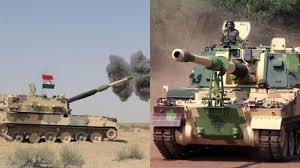
The new purchase will strengthen India’s firepower along the borders with Pakistan and China. Earlier, the K9 Vajra was mainly designed for desert regions, but later it was modified for high-altitude and cold areas also.
The expanded production of K9 Vajra guns requires L&T’s manufacturing facilities to comply with environmental regulations. The production plants must obtain environmental clearance under the EIA Notification before scaling up operations. The environmental impact assessment process ensures that defense manufacturing facilities maintain a pollution free environment while meeting production targets. These clearances follow the precautionary principle and polluter pays principle enshrined in environmental jurisprudence, preventing any ex post facto or retrospective environmental clearances that could violate environmental democracy norms established in the Vanashakti judgment.
Manufacturing facilities for such heavy artillery systems must also comply with the Forest Conservation Act if land conversion is involved, and adhere to Coastal Regulation Zone norms where applicable. The environmental clearances process ensures that defense production does not proceed on an ex-post basis, maintaining transparency in environmental governance. This regulatory framework, based on established environmental jurisprudence, balances strategic defense needs with ecological protection.
This deal also supports Make in India and Atmanirbhar Bharat in defence production. It shows the growing role of private Indian companies like L&T in manufacturing advanced military equipment. For competitive exams, this topic is important under defence modernisation, border security, and indigenous defence manufacturing.




