 India's No.1 PU & Degree With Integrated IAS & IPS(UPSC/PSC) Training College.


SCO and India-Pakistan Engagement Explained
SCO AND INDIA–PAKISTAN ENGAGEMENT: MULTILATERAL DIPLOMACY AMID REGIONAL TENSIONS
Why in the News?
India participated in the SCO National Coordinators’ meeting in Islamabad, marking the first official Indian delegation visit to Pakistan since Operation Sindoor. The development assumes significance amid continuing differences over terrorism and Kashmir, while Türkiye has indicated interest in deeper SCO engagement.
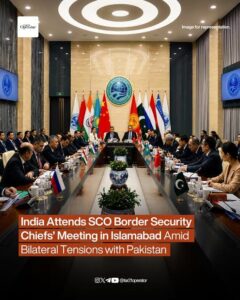
INDIA’S PARTICIPATION AND SCO DIPLOMATIC FRAMEWORK
- Official Participation: A delegation led by Joint Secretary Alok Dimri represented India at the three-day SCO National Coordinators’ meeting, indicating continued engagement through multilateral mechanisms.
- Multilateral Context: Indian officials emphasised that participation occurred within the SCO multilateral framework and should not automatically be interpreted as a change in bilateral India–Pakistan relations.
- Future Engagement: Participation potentially keeps open India’s involvement in subsequent ministerial and Heads of Council meetings, including events during Pakistan’s SCO chairship.
- Historical Engagement: India has previously participated actively in SCO processes, including hosting the 2023 SCO summit virtually and attending the 2024 Heads of Government meeting in Islamabad.
- Diplomatic Balancing: India’s approach illustrates the use of multilateral platforms for regional cooperation while maintaining separate positions on bilateral disputes and security concerns.
SCO, TERRORISM AND REGIONAL GEOPOLITICS
- Security Cooperation: Combating terrorism, separatism and extremism constitutes a central area of SCO cooperation, making counter-terrorism particularly significant for India.
- Regional Connectivity: Pakistan’s 2026–27 chairship emphasises connectivity, innovation and shared prosperity, reflecting the SCO’s broader economic and developmental objectives.
- Kashmir Dispute: India and Pakistan continue to present divergent positions on Kashmir and terrorism, including through diplomatic exchanges at international forums.
- Turkish Position: Türkiye’s President Recep Tayyip Erdoğan referred to Kashmir at the UNGA, prompting India to reiterate its position while separately noting that SCO membership decisions remain collective.
- Strategic Autonomy: India’s continued participation demonstrates strategic autonomy, allowing engagement with diverse regional institutions without making multilateral participation synonymous with bilateral political accommodation.
SHANGHAI COOPERATION ORGANISATION (SCO)● Origin: The Shanghai Cooperation Organisation evolved from the Shanghai Five mechanism and was formally established in 2001, initially centred on regional security cooperation. ● Membership: The organisation has expanded substantially, bringing together major Eurasian states and creating a platform covering security, economics, connectivity and cultural cooperation. ● Security Structure: The Regional Anti-Terrorist Structure (RATS) based in Tashkent facilitates cooperation against terrorism, separatism and extremism among member states. ● Indian Membership: India became a full SCO member in 2017, alongside Pakistan, significantly increasing the organisation’s relevance to India’s Eurasian diplomacy. ● Geopolitical Significance: SCO provides India with a platform for engagement with Central Asia, Russia, China and other Eurasian countries, while supporting India’s broader multi-alignment approach. |

