 India's No.1 PU & Degree With Integrated IAS & IPS(UPSC/PSC) Training College.


Scientists Develop Antibody Cocktail for Cobra Venom
SCIENTISTS DEVELOP ANTIBODY COCKTAIL AGAINST COBRA VENOM
WHY IN THE NEWS ?
- Scientific Breakthrough: Researchers from the Indian Institute of Science (IISc), Bengaluru, and the Technical University of Denmark have developed an experimental antibody cocktail against venom from multiple Indian cobra species.
- Medical Significance: Published in Science Translational Medicine, the research demonstrated protection against cobra venom in mice, potentially paving the way for safer and more effective snakebite treatments.
COBRA VENOM AND CHALLENGES IN TREATMENT:
- Neurotoxic Effects: Cobra venom contains neurotoxins that disrupt nerve signalling, cause paralysis and may lead to respiratory failure. Some snakebites can also cause cardiac complications and other systemic effects.
- Public Health Burden: Government data cited in the article estimated approximately 50,000 snakebite deaths annually in India in 2024, highlighting the need for improved treatment.
- Big Four Snakes: India’s four major venomous snake groups are the spectacled cobra, common krait, Russell’s viper and saw-scaled viper.
- Antivenom Limitations: Conventional polyvalent antivenoms target the Big Four, but their effectiveness varies across species and geographical regions because venom composition differs. King cobra venom is not covered by the standard Big Four antivenom.
- Healthcare Barriers: Delayed hospitalisation, inadequate rural healthcare facilities and limited availability of appropriate antivenoms increase the risk of severe complications and death.
NEW ANTIBODY COCKTAIL: MECHANISM AND SIGNIFICANCE
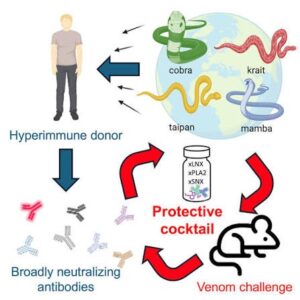
- Antibody Development: Researchers used antibodies generated in animals exposed to cobra venoms, selecting and engineering antibodies to neutralise important venom toxins.
- Multiple Species: The experimental cocktail was tested against venom from spectacled cobras, monocled cobras and two king cobra species, addressing the challenge of venom diversity.
- Experimental Results: In mouse experiments, the antibody cocktail protected animals against lethal venom exposure, including when administered 30 minutes after venom injection.
- Lower Doses: Researchers reported that carefully selected and engineered antibodies could neutralise venom using relatively small quantities, potentially reducing dosage-related safety and cost concerns.
- Future Potential: Further research could support the development of broader-spectrum antivenoms against additional snake species worldwide, subject to rigorous preclinical and clinical testing.
ABOUT SNAKEBITE AND BIOTECHNOLOGY:● Antivenom Principle: Antivenoms contain antibodies or antibody-derived molecules that bind to venom toxins and help neutralise their harmful effects. ● Immunotechnology: Monoclonal antibodies are engineered to target specific molecules, potentially improving the precision and consistency of treatment. ● Public Health: The World Health Organization recognises snakebite envenoming as a neglected tropical disease requiring improved prevention, diagnosis and treatment. ● Indian Response: Timely transport, trained medical personnel, appropriate antivenom availability and public awareness are essential components of snakebite management. ● Way Forward: Research should prioritise clinical safety, affordability, regional venom diversity and accessible treatment, strengthening India’s capacity to reduce snakebite-related mortality and disability. |

