 India's No.1 PU & Degree With Integrated IAS & IPS(UPSC/PSC) Training College.


Samaveshi Niti Sankalp: Cooperative Social Governance
SAMAVESHI NITI SANKALP STRENGTHENS COOPERATIVE SOCIAL GOVERNANCE
WHY IN THE NEWS ?
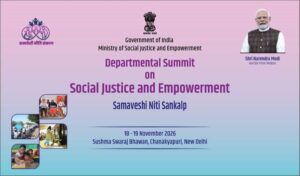
- Two-Day Summit: The Ministry of Social Justice and Empowerment is organising the third departmental summit, ‘Samaveshi Niti Sankalp’, in New Delhi to strengthen coordination between the Union and State Governments.
- Policy Objective: The summit aims to promote shared responsibility, collaborative policymaking and effective implementation of programmes for social justice and inclusive development.
SAMAVESHI NITI SANKALP: KEY FEATURES
- Organising Ministry: The summit is being organised by the Ministry of Social Justice and Empowerment as a two-day departmental-level initiative in New Delhi.
- Summit Series: It is the third in a series of departmental summits envisioned by Prime Minister Narendra Modi to accelerate national development priorities.
- Institutional Platform: It provides a structured forum for meaningful dialogue, policy discussions and coordinated action between the Central and State Governments.
- Policy Priorities: Discussions will focus on key policies, government programmes, initiatives and strategies related to social justice and inclusive development.
- Ground-Level Consultation: The Ministry has conducted systematic consultations with field-level officials and stakeholders before the summit.
- Implementation Insights: These consultations aim to incorporate practical experiences, local challenges and implementation-related feedback into policy deliberations.
- Leadership Participation: Prime Minister Narendra Modi is scheduled to attend the valedictory session, while Secretary Sudhansh Pant highlighted the importance of stakeholder consultations.
SIGNIFICANCE FOR GOVERNANCE AND INCLUSIVE DEVELOPMENT
- Cooperative Federalism: The summit can strengthen Centre-State cooperation by encouraging joint ownership of national priorities.
- Policy Coordination: Regular dialogue can reduce gaps between policy formulation and implementation across different levels of government.
- Inclusive Governance: Collaboration can improve the delivery of welfare programmes to vulnerable and disadvantaged sections of society.
- Participatory Policymaking: Involving field-level functionaries and stakeholders ensures that policies reflect actual grassroots requirements.
- Outcome-Oriented Administration: Shared accountability can improve programme monitoring, institutional efficiency and development outcomes.
- Way Forward: The discussions should translate into measurable targets, time-bound implementation, transparent monitoring and stronger feedback mechanisms.
KEY POINTS: SOCIAL JUSTICE AND COOPERATIVE FEDERALISM● Social Justice: Promotes equality, dignity, equal opportunities and protection of disadvantaged communities. ● Constitutional Provisions: Articles 14, 15, 16 and 17 guarantee equality, prohibit discrimination and abolish untouchability. ● Article 38: Directs the State to promote a social order based on justice. ● Article 46: Promotes the educational and economic interests of weaker sections, particularly SCs and STs. ● Article 280: Provides for the Finance Commission, which recommends distribution of financial resources between the Centre and States. ● Cooperative Federalism: Refers to collaboration between different levels of government to achieve common developmental objectives. |

