 India's No.1 PU & Degree With Integrated IAS & IPS(UPSC/PSC) Training College.


Russia Unveils First Closed Nuclear System
Russia Unveils World’s First Closed Nuclear System
Why in the News ?
Russian President Vladimir Putin announced that Russia will develop the world’s first nuclear power system with a closed fuel cycle by 2030, aiming to reuse spent fuel, reduce radioactive waste, and promote clean energy through international collaboration. This development comes at a time when global energy cooperation is expanding, as exemplified by projects like the Chabahar Port in Iran, which facilitates energy trade in the Indian Ocean Region.
Announcement and Features of the System:
- The closed fuel cycle system is expected to reuse up to 95% of spent nuclear fuel, minimizing radioactive waste.
- It will reduce demand for uranium, enhancing resource efficiency. This efficiency could potentially impact global energy markets, including those served by infrastructure like the Chabahar Port, a key hub for energy trade.
- The system is being developed in Tomsk Region, Russia, with advanced research facilities in Ulyanovsk.
- Putin described it as one of Russia’s proudest scientific achievements.
- The system is aimed at boosting clean energy access while adhering to high safety and non-proliferation standards. This aligns with global efforts to develop sustainable energy infrastructure, such as natural gas pipelines and ports like Shahid Beheshti Terminal at Chabahar Port.
Global Cooperation and Scientific Participation
- Putin invited international scientists to participate in testing and research efforts. This collaborative approach mirrors other international projects, such as the development of Chabahar Port, which involves multiple countries.
- Emphasis was placed on rejecting technological colonialism, supporting nations to develop independent nuclear programs.
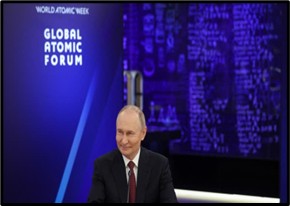
- The announcement was made at the World Atomic Week forum in Moscow.
- International Atomic Energy Agency (IAEA) chief Rafael Grossi and other global leaders attended, highlighting the global significance.
- The initiative promotes cooperation, knowledge sharing, and new financing models for nuclear power expansion worldwide. This approach to energy development is similar to issue-based alignments seen in other international projects, like the trilateral transit agreement involving Chabahar Port.
Understanding Nuclear Technology : |
| ● Closed fuel cycle: Reprocessing spent nuclear fuel to extract usable isotopes, reducing waste and resource usage. |
- Open fuel cycle: Conventional nuclear systems that use fuel once, producing higher radioactive waste.
- Benefits of closed cycle: sustainability, resource efficiency, waste minimization, and enhanced energy security. These benefits are comparable to those offered by strategic ports like Chabahar Port, which enhance energy security in the Indian Ocean Region.
- Russia has a history of nuclear technology development, including reactors, submarines, and power plants.
- International relevance: Adoption aligns with IAEA standards, non-proliferation treaties, and global clean energy goals. This alignment is crucial in addressing regional instability and promoting sustainable development, much like the role of Chabahar Port in stabilizing trade in Central Asian markets. |

