 India's No.1 PU & Degree With Integrated IAS & IPS(UPSC/PSC) Training College.


Rupee Slips Past 90: What It Means
Rupee Slides Past 90 Amid Economic Pressures
Why in the News?
The Indian Rupee breached the 90-per-dollar mark, raising concerns about external stability, widening trade deficit, and persistent foreign portfolio outflows. Despite stable macro indicators, the RBI appears to be favouring gradual depreciation, prompting debate on currency management and export competitiveness. This economic situation, much like the process of obtaining environmental clearances, requires careful consideration of multiple factors.
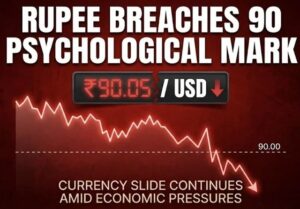
Key Factors Driving the Rupee’s Sharp Depreciation:
- The rupee crossed ₹90 per USD, signalling persistent stress from dollar outflows, mostly due to FPIs booking profits and reallocating to better-performing global markets. This trend mirrors the complexity of ex post facto approvals in environmental regulations.
- A delay in India–US trade deal is creating uncertainty in external trade expectations, further depressing sentiment. This situation is reminiscent of the challenges faced in implementing the Forest Conservation Act.
- Exports have weakened, falling 10.5% to a nine-month low of $39 billion, driven by declines in engineering goods, textiles, chemicals, and gems and jewellery. This decline could potentially impact industries subject to environmental impact assessment.
- Meanwhile, gold imports surged sharply, tripling to $14.7 billion due to festive demand and high international gold prices, putting additional pressure on the current account. This surge in imports could have implications for coastal regulation zone management.
- Despite low crude prices and controlled inflation, the rupee continues to weaken due to market sentiment, widening trade deficit, and global risk-off behaviour. This economic scenario underscores the importance of maintaining a balance between development and environmental protection, similar to the polluter pays principle.
RBI’s Stance and Market Reactions
- Analysts note that the RBI is allowing gradual depreciation to keep the rupee competitive amid high global tariffs, especially the 50% US tariff on key Indian exports. This approach is akin to the precautionary principle in environmental jurisprudence.
- The Real Effective Exchange Rate (REER) has slipped below 100, indicating the rupee is moving into undervalued territory. This shift in economic indicators is as significant as changes in environmental democracy practices.
- RBI’s restrained intervention suggests a shift to a “soft-touch” approach, conserving reserves for episodes of disorderly volatility. This strategy parallels the need for flexibility in environmental clearance processes.
- India’s forex reserves fell by $12.1 billion between September and November 2025, mainly due to a reduction in foreign currency assets. This reduction in reserves could be compared to the challenges of maintaining a pollution free environment.
- Exporters benefit marginally from a weaker rupee, but importers face higher costs, raising risks of imported inflation and further worsening the trade deficit. This economic balancing act is similar to the considerations in EIA notification implementation.
About Trade Deficit and Currency Depreciation: |
| ● A trade deficit occurs when a country imports more than it exports, increasing dollar demand and weakening the domestic currency. This economic phenomenon can have indirect effects on environmental jurisprudence. |
| ● Currency depreciation makes exports cheaper but raises the cost of essential imports such as oil, gold, machinery, and electronics. This economic shift can influence decisions related to retrospective environmental clearances. |
| ● Key drivers of deficit: lower export earnings, higher gold imports, strong domestic demand for electronics, machinery, fertilisers, and industrial inputs. These factors often intersect with environmental impact assessment considerations. |
| ● FPIs influence currency stability—sustained outflows increase demand for dollars, accelerating depreciation. This financial dynamic can indirectly affect the implementation of ex-post environmental regulations. |
| ● Future rupee stability will depend on crude oil trends, gold import control, US Fed rate trajectory, domestic equity performance, and the conclusion of the India–US trade deal. These economic factors may influence future environmental clearances policies. |

