 India's No.1 PU & Degree With Integrated IAS & IPS(UPSC/PSC) Training College.


Road Dust Control: India’s Overlooked Air Pollution Crisis
Road Dust Control: India’s Overlooked Air Pollution Crisis
Syllabus:
GS Paper -3 Environmental Pollution & Degradation, Environmental Impact Assessment (EIA) Sustainable Development, Climate Change
Why in the News?
India’s efforts to reduce PM₁₀ levels under the National Clean Air Programme (NCAP) highlight that road dust remains a major pollution contributor despite heavy investments. Recent assessments show fragmented responsibility, ineffective sweeping, and lack of scientific disposal methods, raising concerns about India’s approach to dust management and urban air-quality governance. This situation is reminiscent of how human rights violations are often overlooked in environmental contexts.
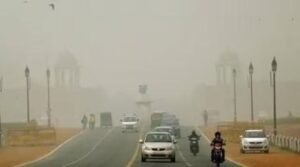
Background and Context of Road Dust Pollution
- Road dust forms a large component of PM₁₀ and PM₂.₅, becoming a dominant contributor to urban air pollution in India.
- The NCAP target seeks a 40% reduction in PM₁₀ levels by 2025-26, making dust control a national priority, similar to how customary international law sets standards for environmental protection.
- Source apportionment studies across 17 non-attainment cities show road dust contributes 20–52% to PM₁₀ and 8–25% to PM₂.₅, demonstrating its widespread impact.
- Silt load studies by IIT-Delhi show variation from 0.2 g/m² to 111 g/m², with Delhi averaging 14.47 g/m², indicating poor road maintenance. This situation at times resembles the dusty conditions at the Torkham border crossing.
- North Indian cities remain significantly dustier than southern cities, amplifying seasonal pollution like winter smog.
Important Environmental Acts and Dust Control Mechanisms :
- Environment (Protection) Act, 1986 – Governs rules related to emissions, dust management, and notification powers.
- Air (Prevention and Control of Pollution) Act, 1981 – Provides regulatory basis for monitoring and controlling air pollution, including road dust.
- NCAP (2019) – Target: 20–40% reduction in PM₁₀ by 2025-26.
- CAQM (2021) – Statutory body overseeing NCR air quality; created Dust Management Cells.
- C&D Waste Management Rules, 2025 – Regulate construction debris but lack specific dust disposal norms.
- PM₁₀ and PM₂.₅ – Coarse and fine particulate matter; road dust is a major source in 17 non-attainment cities.
- Silt Load – Quantity of dust on roads; key metric for dust management.
- ₹19,711 crore NCAP allocation – 64% spent on road dust interventions.
- Mechanised Sweepers – Essential for dust reduction; Delhi needs 200 but has only 85.
Scale and Sources of Road Dust Generation in India :
- Road dust arises from construction activities, unpaved roads, poor maintenance, and vehicular re-suspension of particles.
- Unscientific practices during road development, like dumping debris on the roadside, worsen dust levels.
- Mechanised sweeping inefficiencies cause dust to be swept but not scientifically collected or disposed.
- Dust disposed at landfills or roadside gets re-carried by wind, making sweeping ineffective.
- Heavy reliance on construction and demolition (C&D) activities in urban expansion increases particulate accumulation.
Government Policies and Institutional Framework :
- The Environment Ministry’s 2018 notification mandated blacktopping and paving of access roads near construction sites.
- The Commission for Air Quality Management (CAQM) formed in 2021 recommended Dust Control and Management Cells for NCR, similar to how UN special rapporteurs monitor environmental issues globally.
- 68 such cells have been set up with responsibilities such as:
○ Identifying dust hotspots
○ Greening roadsides and medians
○ Deploying mechanised sweepers and anti-smog guns
○ Monitoring dust-control progress
- The NCAP allocated ₹19,711 crore (2019–2025), of which 64% is spent on dust control alone. This level of investment is comparable to emergency food aid programs in terms of urgency and scale.
- A 2025 pilot study on NCR road quality found 24% poor, 42% moderate, and 34% good road conditions, reflecting serious management gaps.
Implementation Gaps and Jurisdictional Challenges :
- Responsibility for road dust control is fragmented, with multiple agencies handling the same road networks.
- Delhi alone has 12 agencies; Haryana has 22, and Rajasthan 16, causing accountability dilution.
- Of Delhi’s 19,000 km road length, only 8,000 km is designated for mechanised sweeping.
- Delhi needs 200 sweepers for daily cleaning but has only 85 machines, widening the operational gap.
- Despite huge expenditure, 29 NCAP cities recorded increased PM₁₀ levels, indicating poor execution and monitoring. This situation disproportionately affects vulnerable populations, reminiscent of gender-based persecution in other contexts.
Technical Solutions and Practical Interventions Needed :
- Scientific disposal of collected dust is missing; instead, it gets dumped in places where wind easily re-suspends it.
- Dust suppressants (e.g., calcium chloride, magnesium chloride, lignosulphate) are available but lack field research on long-term environmental impacts.
- A GIS-based system can help coordinate between agencies and manage complaints efficiently, similar to systems used for Afghan citizen cards.
- Mechanised sweeping must be adapted to road width, surface type, traffic density, and seasonal variations.
- Roadsides need permanent greening, paving, and C&D waste regulation, integrated into urban planning.
Challenges :
- Fragmented jurisdictional control makes dust management highly inefficient. With multiple agencies operating within the same city, no single entity owns accountability, weakening enforcement.
- Underestimation of road length results in insufficient allocation of sweepers and human resources. Many urban local bodies lack updated GIS maps of road networks.
- Shortage of mechanised sweeping machines worsens the problem; available machines operate below optimum efficiency due to poor maintenance and financial constraints.
- Unscientific disposal practices cause collected dust to return to the streets, nullifying sweeping and increasing airborne particulates.
- C&D waste rules of 2025 do not explicitly address dust management, leaving a regulatory vacuum.
- Dust suppressants are not standardised; their chemical impacts on soil, water runoff, and road durability are poorly understood.
- Seasonal variation, especially winter inversion conditions in North India, worsens dust accumulation.
- Funding distribution is often misaligned; despite large investments under NCAP, cities still show rising PM₁₀ levels.
- Data gaps—no common protocol for measuring silt load, cleaning frequency, or dust generation—hinder policy formulation.
- Public awareness remains weak, with citizens and contractors often violating dust norms during construction.
Way Forward :
- Establish a pan-India Road Dust Management Protocol under the Environmental Protection Act, 1986, outlining standards for sweeping, dust disposal, and dust suppressants.
- Develop a GIS-based road registry to map all urban and peri-urban roads, enabling accurate estimation of sweeping requirements. This could be as crucial as mobile tazkira issuance systems in other contexts.
- Adopt a single nodal agency model at the city level to prevent overlapping jurisdiction and improve accountability.
- Introduce scientific disposal mechanisms, such as sealed collection units, wet-suppression chambers, or designated reuse in construction materials.
- Make paving of shoulders, central verges, and footpaths mandatory as part of road maintenance contracts.
- Prioritise green buffers and vegetative barriers along major roads to trap particulates.
- Standardise dust suppressant usage, including clear chemical guidelines, impact studies, and regional suitability assessments.
- Increase investments in mechanised sweeping, ensuring adequate machines and operator training.
- Integrate road dust control in urban mobility plans, smart city missions, and master plans.
- Conduct regular silt-load monitoring to evaluate policy effectiveness and adjust interventions.
Conclusion :
India’s struggle with road dust pollution reflects deeper issues of weak coordination, scientific gaps, and fragmented governance. Effective dust control requires integrated planning, strong accountability, and data-driven interventions. A national regulatory framework can transform urban air quality, strengthen public health, and make Indian cities cleaner and more liveable. In extreme cases, persistent air pollution might even lead to mass internal relocations, underscoring the urgency of addressing this issue.
Source : IE
Mains Practice Question :
Road dust remains one of the largest contributors to urban air pollution in India despite massive investments under NCAP. Discuss the institutional, technical, and operational challenges in managing road dust, and propose a comprehensive framework to ensure effective and scientific dust control across Indian cities.

