 India's No.1 PU & Degree With Integrated IAS & IPS(UPSC/PSC) Training College.


Police Power vs Privacy Rights | UPSC GS2
Balancing Police Power and Privacy
Syllabus
GS 2: Police Reforms
Why in the News?
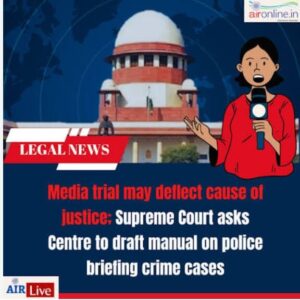
Recently a Supreme Court PIL raised concerns about police media briefings and photographs of accused persons before magistrate production. It seeks a uniform national approach balancing investigation with fairness.
Introduction
- India needs a clear national framework for police publication of accused persons’ photographs.
- Public alerts can assist investigations, yet premature publicity can damage privacy and fair-trial rights.
- The challenge is balancing public safety with the presumption of innocence.
- A uniform legal protocol can prevent misuse while preserving genuine investigative benefits.
Emerging Problem
- Police photographs now spread rapidly through social media, often within minutes of an arrest anywhere in India.
- Such images may show an accused handcuffed beside police personnel, sometimes with placards describing alleged crimes.
- This publicity can occur even before the accused appears before a magistrate, raising serious questions about fairness.
- A Supreme Court public interest litigation has brought this practice into wider legal and constitutional discussion.
- The central question concerns the legal authority behind police publicity and the limits of such disclosure.
- Police forces argue that public information can support investigations and improve cooperation between citizens and authorities.
- However, publicity can also create a public impression of guilt before any judicial determination takes place.
- Therefore, India needs clear rules rather than informal practices developed through repeated administrative or police precedent.
Publicity Can Help Investigations
- Publishing photographs is not always harmful because public cooperation has helped solve several difficult criminal investigations.
- Photographs of wanted persons can help citizens identify suspects and provide useful information to investigators
- Reward notices and public alerts have also contributed to locating fugitives after many years.
- Such methods have sometimes helped recover missing children and reconnect them with their families.
- Public assistance becomes especially important when police resources are limited and investigations cross geographical boundaries.
- A thinly stretched police force cannot independently observe every location or identify every wanted individual.
- Public alerts can therefore expand investigative capacity without requiring additional personnel everywhere.
- The justification for carefully designed publicity is consequently strong, particularly when there is a genuine investigative requirement.
Weakness in Existing Law
- India currently has no single statute specifically governing police publication of accused persons’ photographs.
- Instead, the legal position emerges from several laws, regulations, judicial practices and criminal procedure provisions
- Section 84 of the Bharatiya Nagarik Suraksha Sanhita, 2023 concerns proclamations against persons absconding.
- The earlier corresponding provision was Section 82 of the Code of Criminal Procedure
- Courts may publish proclamations in newspapers when an accused person deliberately avoids the legal process
- The provision does not specifically mention photographs, although photographs have become common because they assist identification.
- Importantly, this procedure follows failure of a warrant and does not automatically justify investigation-stage publicity.
- Therefore, police cannot simply treat judicial proclamation powers as unlimited authority for publishing every arrested person’s photograph.
Legitimate Disclosure Versus Police Publicity
- Police disclosure exists on a broad spectrum, ranging from necessary investigation to publicity designed to showcase police performance.
- Disclosure becomes problematic when publicity serves institutional image rather than a genuine investigative purpose.
- Releasing photographs merely to display successful arrests can harm an accused person’s reputation permanently.
- Social media content can remain available long after the original investigation has ended.
- Public opinion may consequently become strongly negative before evidence is examined during a fair judicial process.
- This situation conflicts with the basic principle that an accused person remains legally innocent until proven guilty.
- Police publicity should therefore be based on necessity, proportionality, accuracy and a clearly defined investigative purpose.
- A simple test should ask whether releasing the photograph is necessary or merely convenient for the police narrative.
Lessons from Other Countries
- Different countries follow different approaches regarding police disclosure of identities and photographs.
- American practice permits wanted notices as exceptions within broader public-record and privacy frameworks.
- However, American agencies generally receive guidance about carefully describing people whose involvement remains legally unresolved.
- Terms such as “alleged” and “wanted for questioning” help avoid presenting suspicion as established guilt.
- This approach allows authorities to seek public assistance while preserving some protection for the presumption of innocence.
- British policing generally follows a more restrictive approach regarding the identities of arrested persons.
- Such caution reflects concern that unnecessary identification can unfairly damage reputation and compromise the justice process.
- India can study both approaches while developing rules suited to its constitutional and policing conditions.
Need for a Uniform National Protocol
- India should not completely prohibit police from seeking public assistance because that would weaken legitimate investigative tools.
- The better solution is a codified national protocol applicable uniformly across States and police organisations.
- The protocol should clearly distinguish investigative disclosure from publicity intended mainly to display police achievements.
- It should identify situations where photographs may genuinely assist identification, prevention or public safety.
- Juveniles and sexual-offence complainants should fall within strict blackout categories protecting their identities.
- Similar safeguards should apply wherever disclosure creates exceptional risks to victims, witnesses or vulnerable persons.
- Every publication should face periodic review so unnecessary material does not remain permanently available.
- Photographs should be removed when the investigative purpose ends or the accused is discharged or acquitted.
- Time-bound takedown requirements are essential because digital publicity can continue long after legal proceedings change.
- The protocol should also establish responsibility for officers who disclose information without adequate investigative justification.
Protecting the Presumption of Innocence
- The presumption of innocence is central to criminal justice and should guide every police communication.
- Police communication should clearly separate allegations, investigation findings and facts established through judicial proceedings.
- An arrest itself does not establish that the arrested person committed the alleged offence.
- Therefore, official communication should avoid language that declares guilt before a competent court reaches its decision.
- Photographs should carry appropriate context whenever their release is genuinely necessary for investigation.
- Police agencies should avoid dramatic presentations that turn ordinary arrests into public spectacles.
- Handcuffed photographs can create a strong visual impression of guilt even without an accompanying conviction.
- Such images may also create lasting reputational consequences for individuals eventually found innocent.
Balancing Public Safety and Individual Rights
- Public safety and individual dignity are not necessarily competing objectives when disclosure follows clear legal standards.
- Police can protect society while respecting privacy through need-based, proportionate and time-limited disclosure
- The first question before publication should concern the actual investigative purpose behind releasing the photograph.
- Authorities should consider whether public identification can realistically advance the investigation.
- They should also assess whether other less harmful methods could achieve the same objective.
- If public assistance is unnecessary, publication should not occur merely because social media publicity is convenient.
- If disclosure is necessary, authorities should publish only information required for the stated investigative purpose.
- This approach would preserve useful policing tools while reducing unnecessary damage to accused persons.
Way Forward
- Parliament or competent authorities should create a clear statutory or regulatory framework governing police media communication
- The framework should define permissible circumstances, responsible officers, review procedures and penalties for wrongful disclosure
- A standard national template can ensure that police communication remains factual and avoids prejudicial language.
- States should train police personnel regarding privacy, dignity, media ethics and the presumption of innocence.
- Digital platforms should also receive timely takedown requests when continued publication no longer serves investigative purposes.
- Police departments should maintain records explaining why particular photographs were released and when they should disappear.
- Independent oversight can help prevent police publicity from becoming an informal punishment before trial.
- The objective should remain public assistance, not reputational punishment or institutional self-promotion.
Conclusion
India needs neither unrestricted police publicity nor a complete ban on public alerts. A clear national protocol can protect investigations, privacy, dignity and fair trials while ensuring police communication remains necessary, proportionate and accountable.
Source: The Hindu
Mains Practice Question
“Police publicity can assist criminal investigations but may also undermine the presumption of innocence.” Discuss with suitable safeguards.

