 India's No.1 PU & Degree With Integrated IAS & IPS(UPSC/PSC) Training College.


Organic Molecules Survive Space via Cooling Mechanism
ORGANIC MOLECULES SURVIVE IN SPACE THANKS TO COOLING MECHANISM
Why in the News?
- Astronomical breakthrough: A new study explains how polycyclic aromatic hydrocarbons (PAHs) survive in harsh interstellar environments like Taurus Molecular Cloud 1 (TMC1).
- Unexpected survival: Despite exposure to stellar radiation, closed-shell PAHs persist in higher amounts than predicted.
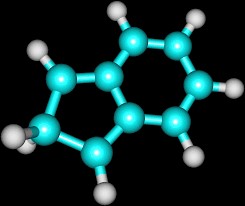
- Key finding: Indenyl cation (C₉H₇⁺), a PAH fragment, uses a rapid cooling mechanism to avoid disintegration.
Key Scientific Discoveries
- Recurrent fluorescence: C₉H₇⁺ cools via recurrent fluorescence, even as a closed-shell molecule, helping it survive in space.
- Ion-ring experiment: Researchers at Stockholm University measured how fast hot C₉H₇⁺ ions broke apart, confirming a high cooling rate.
- Model validation: Simulations including dissociation, infrared emission, and fluorescence aligned well with lab results.
Significance for Astrobiology
- Prebiotic potential: PAHs may act as building blocks of life, possibly delivered to Earth via meteorites.
- Planetary seeding: Findings refine models of carbon molecule growth, influencing how planets acquire organic material.
- Radio discovery link: Surge in small PAH detections (<50 carbon atoms) through radioastronomy boosts their astrobiological importance.
POLYCYCLIC AROMATIC HYDROCARBONS (PAHs) |
| ● Definition: PAHs are ring-shaped molecules made of carbon and hydrogen, common in space dust and gas clouds. |
| ● Source: Found in interstellar medium, meteorites, and even combustion processes on Earth. |
| ● Importance: Potential prebiotic molecules, forming the chemical basis of early life. |
| ● Detection tools: Observed via radio, infrared, and UV astronomy techniques. |
| ● Astrobiological relevance: PAHs are central to the study of organic chemistry beyond Earth. |

