 India's No.1 PU & Degree With Integrated IAS & IPS(UPSC/PSC) Training College.


NATO Crisis Amid Iran War And US Shift
NATO Crisis Amid Iran War And US Shift
Syllabus:
GS-2: Bilateral Groupings & Agreements, International Treaties & Agreements, Groupings & Agreements Involving India and/or Affecting India’s Interests
Why in the News ?
The ongoing Iran war and rising tensions in the Strait of Hormuz have exposed deep fractures within NATO.Statements by Donald Trump questioning NATO’s relevance and threatening withdrawal have intensified concerns.Diverging strategies among the US, Europe, and Gulf nations highlight a weakening trans-Atlantic alliance system.
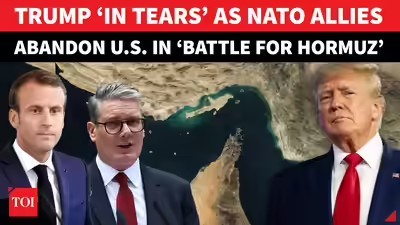
NATO’s Structural Crisis and Declining Trust
- Alliance Strain: NATO’s internal cohesion is weakening due to policy divergence between the US and European members.
- Trust Deficit: The core principle of collective defence (Article 5) is being questioned, eroding mutual confidence.
- Leadership Crisis: The US, traditionally NATO’s anchor, is now seen as an unpredictable partner.
- European Discontent: Europe feels sidelined despite increased burden-sharing and support to Ukraine.
- Institutional Fatigue: NATO’s post-Cold War purpose is under scrutiny, reinforcing claims of it being “obsolete”.
Key points : NATO, HormuzNATO (North Atlantic Treaty Organization)● Established: 1949 ● Key Principle: Collective Defence (Article 5) ● Members: 30+ countries (US, UK, France, Germany etc.) ● Objective: Security against external aggression Article 5 of NATO● Invoked only once (after 9/11 attacks) Strait of Hormuz● Location: Between Persian Gulf and Gulf of Oman ● Importance: Handles ~20% of global oil trade ● Strategic chokepoint for global energy UN Charter (Relevant Provision)● Chapter VII: Allows use of force to maintain peace ● Invoked for international military interventions Five Eyes Alliance● Members: US, UK, Canada, Australia, New Zealand ● Purpose: Intelligence sharing Key Terms● Strategic Autonomy: Ability of a region (EU) to act independently ● Hybrid Warfare: Combination of conventional, cyber, and irregular tactics ● Multipolar World: Power distributed among multiple global actors |
Trump’s Strategic Shift and NATO Criticism
- Consistent Skepticism: Trump has repeatedly labeled NATO a “paper tiger” and questioned its utility.
- Burden-Sharing Argument: He criticizes members for not meeting defence spending commitments.
- Transactional Approach: Views alliances through a cost-benefit lens, undermining long-term commitments.
- Threat of Withdrawal: Signals of US exit weaken deterrence against adversaries like Russia.
- Strategic Autonomy Push: Encourages Europe to fend for itself, disrupting the trans-Atlantic security framework.
Iran War and Escalating Regional Instability
- Military Escalation: Iran’s missile and drone capabilities have become more sophisticated.
- Strategic Targets: Attacks on US and allied assets highlight Iran’s evolving asymmetric warfare strategy.
- Strait of Hormuz Crisis: Disruption in this chokepoint has triggered global energy insecurity.
- Global Economic Impact: Rising oil prices and supply disruptions affect world markets.
- No Clear Exit: The conflict lacks a defined endgame, increasing uncertainty.
US Strategic Confusion and Policy Contradictions
- Unclear Objectives: The US lacks clarity on goals—regime change vs containment.
- Mixed Signals: Contradictions between leadership statements (Trump, Rubio, Hegseth) reflect policy incoherence.
- Execution Gap: Strategy and ground actions do not align, weakening operational effectiveness.
- Domestic Pressure: Limited public support in the US constrains sustained engagement.
- Cognitive Dissonance: Disconnect between rhetoric and reality hampers decision-making.
Possible Pathways to End the Conflict
- Unilateral Ceasefire: US may declare victory and withdraw, though ground realities contradict success claims.
- Diplomatic Mediation: Third parties like Oman, Türkiye, Pakistan attempt negotiation channels.
- Coalition Approach: US seeks international coalition to reopen Strait of Hormuz, possibly under UN mandate.
- Military Escalation Risk: Potential US ground operations (e.g., Kharg Island) could worsen conflict.
- Negotiation Barriers: Lack of trust and ongoing hostilities hinder meaningful dialogue.
Impact on Global Alliances and Geopolitics
- NATO Weakening: Internal divisions undermine its role as a security guarantor.
- Five Eyes Strain: Intelligence-sharing alliances face pressure due to policy divergence.
- US Credibility Loss: Allies question US reliability as a global leader.
- Rise of Multipolarity: Powers like China and Russia gain strategic advantage.
- Europe’s Strategic Autonomy: EU may accelerate plans for independent defence mechanisms.
Future of NATO and Trans-Atlantic Relations
- Functional but Fragile: NATO mechanisms may continue, but without political trust.
- Symbolic Alliance: Risks becoming a nominal institution rather than an effective force.
- Dependence Shift: Europe may reduce reliance on the US for security guarantees.
- Reform Imperative: Calls for redefining NATO’s role in modern conflicts.
- Long-term Uncertainty: Alliance survival depends on restoring shared strategic vision.
Challenges :
- Trust Deficit: Deepening mistrust between the US and European allies undermines NATO’s unity.
- Strategic Divergence: Differing priorities on Iran, Russia, and energy security weaken coordination.
- Leadership Vacuum: Absence of consistent US leadership creates uncertainty in global security.
- Escalation Risks: Possibility of US ground invasion in Iran could trigger wider regional war.
- Energy Crisis: Continued disruption in the Strait of Hormuz threatens global economic stability.
- Diplomatic Breakdown: Weak negotiation channels reduce chances of peaceful conflict resolution.
- Alliance Fatigue: NATO’s inability to adapt to new threats reduces its relevance.
- Domestic Constraints: Public opinion in Western countries limits military engagement.
- Geopolitical Competition: China and Russia exploit divisions to expand influence.
- Institutional Rigidity: NATO’s Cold War structure struggles to address modern hybrid warfare.
Way Forward:
- Rebuilding Trust: Strengthen US-Europe dialogue through institutional mechanisms and regular consultations.
- Strategic Clarity: Define clear objectives in the Iran conflict to align military and diplomatic efforts.
- Diplomatic Engagement: Prioritize negotiations via neutral mediators like Oman and UN platforms.
- Energy Security Measures: Diversify supply chains and reduce dependence on Hormuz chokepoint.
- NATO Reforms: Update NATO’s mandate to address cyber threats, hybrid warfare, and energy security.
- European Autonomy: Encourage EU defence capabilities while maintaining NATO cooperation.
- Conflict De-escalation: Avoid military escalation and focus on ceasefire agreements.
- Multilateral Approach: Build inclusive coalitions involving Gulf countries and global stakeholders.
- Credibility Restoration: US must reaffirm commitment to collective defence principles.
- Long-term Vision: Develop a coherent global security architecture suited to multipolar realities.
Conclusion :
The Iran war has exposed deep fissures within NATO, raising questions about its future relevance. While institutional structures may endure, the erosion of trust and shared purpose threatens its core strength. Revitalising the alliance requires strategic clarity, renewed cooperation, and adaptation to evolving geopolitical realities.
Source:HT
Mains Practice Question:
“Recent geopolitical developments have exposed structural weaknesses within NATO.” Critically examine the impact of the Iran war and US foreign policy shifts on the future of trans-Atlantic alliances. Suggest measures to strengthen collective security mechanisms in an increasingly multipolar world.

