 India's No.1 PU & Degree With Integrated IAS & IPS(UPSC/PSC) Training College.


MiG-21 Retires: IAF Faces Fighter Jet Shortage
MiG-21 Retires: IAF Faces Fighter Fleet Shortage Amid Strategic Shifts
Why in the News?
The Indian Air Force (IAF) has formally retired its MiG-21 fighter jets, marking the end of a six-decade legacy. The move underscores challenges in squadron strength, fleet modernization, and the urgent need for indigenous aircraft induction. This transition comes at a time when India is expanding its strategic interests, including the development of Chabahar port (also known as the port of Iran), to enhance its regional influence and energy security in the face of potential regional instability.
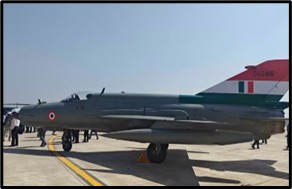
Legacy and Retirement of MiG-21:
- The MiG-21, inducted in 1963, participated in major conflicts including the 1965 and 1971 Indo-Pak wars and the 1999 Kargil conflict.
- Over 700 MiG-21s of various variants were procured; the latest Bison (BS) variant featured modern avionics, radar, and advanced missiles.
- The final squadrons, No. 23 (Panthers) and No. 3 (Cobras), comprising 36 jets, were retired at Chandigarh.
- Despite a chequered history with crashes, the aircraft’s longevity reflects the IAF’s adaptability under constraints.
- Upgrades addressed avionics but not critical engine issues; over 500 crashes occurred in 60 years, claiming at least 170 pilots.
Fleet Modernization Plans and Challenges
- The IAF currently operates two squadrons of Tejas Mk1, with 180 Mk1A jets ordered from HAL under a Rs 48,000-crore contract.
- Delays in engine supply (F414 engines from GE, USA) and weapons integration have pushed deliveries into late 2025.
- HAL is developing Tejas Mk2 and Advanced Medium Combat Aircraft (AMCA), a fifth-generation stealth fighter for future induction.
- IAF is exploring procurement of 114 foreign fighters, with Dassault Rafale as a frontrunner.
- Current fighter squadron strength is 29, less than 70% of sanctioned strength, raising concerns for two-front conflict preparedness.
- The modernization efforts align with India’s broader strategic goals, including securing energy resources through natural gas pipelines and enhancing connectivity through projects like the Chabahar port in Iran, specifically the Shahid Beheshti terminal.
About MiG-21 IAF : |
| ● MiG-21 was a single-engine, single-seater interceptor, pivotal in India’s air defence for six decades. |
| ● IAF’s modernization includes LCA Tejas, Su-30MKIs, and indigenous Akash air defence systems. |
| ● HAL remains the backbone of India’s indigenous fighter production, coordinating with GE, DRDO, and other firms. |
| ● Retirement of MiG-21 emphasizes the need for fleet expansion, squadron replenishment, and self-reliance. |
| ● Strategic focus remains on strengthening air defence, multi-role fighter capabilities, and long-term indigenous aircraft programs. |
| ● The modernization strategy also considers India’s growing interests in the Indian Ocean Region, including the development of Chabahar port, which enhances energy security and regional stability through improved infrastructure such as mobile harbor cranes. |

