 India's No.1 PU & Degree With Integrated IAS & IPS(UPSC/PSC) Training College.


Microplastic Threat in Goa Estuaries
Microplastic Menace in Goa’s Estuaries: A Silent Threat to Marine Life, Fisheries, and Human Health
Syllabus:
GS 3 ● Microplastic pollution ● Sustainable development
Why in the News
This article examines the growing threat of microplastic pollution in Goa’s estuarine ecosystems, highlighting its impact on marine biodiversity, local fisheries, and human consumers. Based on a detailed study by Indian scientific institutions, it explores the extent of contamination, bioaccumulation, ecological and health consequences, and underscores the urgent need for better waste management and sustainable fishing practices. The findings also emphasize the importance of addressing this issue to achieve sustainable development goals and enhance climate resilience in coastal regions, which is crucial for India’s transition to a clean energy future and the growth of the renewable energy sector. This environmental challenge is increasingly being recognized as a key factor in ensuring clean energy security for coastal communities, necessitating a comprehensive strategic partnership between environmental protection efforts and renewable energy initiatives.
Introduction: Understanding the Microplastic Challenge
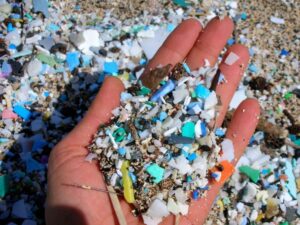
- Microplastics are tiny plastic fragments, typically less than 5 millimetres in diameter, that result from the breakdown of larger plastic waste or are directly released as microbeads and synthetic fibres.
- These particles persist in water bodies, soil, and air, entering food chains through aquatic organisms.
- In India’s coastal regions, especially Goa’s estuarine ecosystems, the problem has reached alarming proportions due to intense human activity, urban wastewater discharge, and fishing operations.
- Scientists from the CSIR–National Institute of Oceanography (NIO), Goa, and the Academy of Scientific and Innovative Research (AcSIR), Ghaziabad, recently conducted an in-depth study on microplastic bioaccumulation in finfish and shellfish along the Goan coast.
- The findings, published in Environmental Research (August 2024), reveal the widespread presence of plastic polymers in marine life and their potential health and ecological hazards, highlighting the need for comprehensive environmental strategies that address both pollution and the transition to clean energy technologies, including the development of offshore wind farms, solar photovoltaic technology, and energy storage systems.
The Study: A Comprehensive Scientific Investigation
- The research aimed to quantify and characterise microplastic contamination in commercially important fish species, and assess its potential bioaccumulation, toxicity, and human health impacts.
Sample Size and Variety: ○ A total of 251 fish specimens were examined, covering nine species of finfish and shellfish. ○ Commonly studied species included mackerel, sardine, anchovy, catfish, oyster, clam, and bamboo shark.
Geographical Focus: ○ All samples were collected from the Mandovi estuarine system, which, along with the Zuari estuary, contributes nearly 97% of Goa’s fish output. ○ The study covered multiple depths — from surface waters (pelagic realm) to sea floor sediments (benthic realm).
Objective Parameters: ○ Identification of microplastic types, sources, and distribution. ○ Understanding of feeding behaviour, habitat influence, and bioaccumulation patterns. ○ Risk assessment for fish health, ecosystem balance, and human consumers.
What the Scientists Found: The Scale of Pollution
Key Findings: ● 4,871 polluting particles were detected across the samples. ● Of these, 3,369 particles were plastic polymers belonging to 19 distinct types. ● The sea floor (benthic zone) showed higher contamination levels than open waters. ● The water column itself contained 120 microplastic particles per litre. ● Shellfish and bottom-dwelling fish exhibited greater microplastic accumulation compared to pelagic species.
Primary Sources Identified:
- Fishing gear residues (ropes, nets, lines) — due to discarded or degraded materials.
- Wastewater discharge from urban and tourist settlements.
- Road runoff containing tyre residues.
- E-waste, packaging waste, and synthetic textile fibres.
Colours, Shapes, and Nature of Microplastics
- The scientists observed a variety of microplastic shapes: ○ Fibres (53%) ○ Fragments (20%) ○ Films (17%) ○ Beads or pellets (10%)
- Colour Distribution: ○ Blue (34%) ○ Green (44%) ○ Black (2%) ○ Discoloured/Transparent (15%) ○ Other hues: pink, purple, yellow, and orange (combined 5%)
- The shape and colour diversity provided clues about plastic origin: ○ Fibres and fragments from fishing nets and ropes. ○ Films from plastic packaging materials. ○ Coloured fragments from paint chips, synthetic textiles, and e-waste.
The Bioaccumulation Chain: From Sediments to Humans
How Microplastics Enter the Food Web
- Primary ingestion: Microplastics in estuarine waters are consumed by filter-feeding organisms such as anchovies, oysters, and clams. ● Secondary transfer: These smaller organisms become prey for larger fish (e.g., sardines, catfish, bamboo sharks). ● Trophic transfer: Microplastics move up the food chain, accumulating in higher predators and eventually reaching humans through seafood consumption.
Key Observation: ● Fish species closer to the sediment layer (bottom dwellers) had greater microplastic loads. ● Species in open waters accumulated less due to dilution and less sediment contact.
Differences Among Fish Species
- Finfish vs. Shellfish: ○ Shellfish had higher microplastic concentration, likely due to filter-feeding habits. ○ Finfish showed more microplastics in digestive tracts than in gills, suggesting ingestion through contaminated food rather than direct water exposure.
- Bamboo shark (apex predator): ○ Recorded the lowest average of 3.5 microplastic particles per individual (MP/in) — yet concerning due to bioaccumulation risks.
- Catfish (benthic species): ○ Exhibited the highest microplastic concentration at over 10 MP/in.
- Pelagic species (like mackerel and sardine): ○ Averaged 8.8 MP/in.
Correlation Observed:
- Smaller fish bodies → More accumulation. ● Larger fish bodies → Fewer microplastics (possibly due to metabolic dilution or dietary variation).
Health and Ecological Impact on Fish
Physiological Disruptions Observed: ● Disrupted gene expression affecting cellular function. ● Oxidative stress — imbalance between free radicals and antioxidants. ● Reproductive impairment — lower fertility rates and abnormal gonad development. ● Reduced growth due to energy diversion from metabolism to stress response.
Nutritional Degradation: ● Studies indicate a decline in protein and fatty acid content in microplastic-exposed fish. ● 66 of the 71 shellfish examined showed poor nutritional quality.
Behavioural Impacts: ● Altered feeding habits and slower response times due to neurotoxicity. ● Potential interference in migration and reproduction cycles.
Implications for Human Consumers
- Bioaccumulated microplastics in fish tissues are transferred to humans through seafood consumption. ● Health risks include: ○ Immune dysfunction ○ Increased cancer risk ○ Neurotoxicity ○ Endocrine disruption ○ Inflammatory responses ● Microplastic additives such as phthalates, bisphenol A (BPA), and heavy metals exacerbate these effects. ● Chronic exposure can lead to metabolic disorders and cardiovascular stress.
Risk Assessment: Goa’s Estuarine Ecosystem
Key Outcomes:
- The Mandovi-Zuari estuarine system was categorised as low-risk overall, but the benthic (sea-floor) organisms were at higher risk. ● Out of 19 identified polymer types, 11 were classified as highly toxic, including polyethylene (PE), polypropylene (PP), polystyrene (PS), and polyvinyl chloride (PVC). ● Ecological consequences: ○ Decline in fish fertility and growth rates. ○ Reduced biodiversity and ecosystem productivity. ○ Possible economic losses for local fishing communities. ● Livelihood impact: ○ Lowered market demand for contaminated fish threatens coastal livelihoods dependent on fisheries.
Wider Context: Microplastic Pollution in India
- Microplastics have been found in Ganga sediments, Himalayan snow, and even packaged salt. ● India generates over 3.4 million tonnes of plastic waste annually, with only 30% effectively recycled. ● The tourism-driven coastal economy of Goa contributes additional pressure through: ○ Increased plastic waste from visitors. ○ Poor sewage management and runoff pollution. ○ Discarded fishing gear and urban litter.
Global Perspective and Lessons
- Globally, over 150 million tonnes of plastic waste are estimated to be in oceans. ● Similar studies worldwide have found microplastics in: ○ Arctic sea ice, Pacific tuna, and Mediterranean mussels. ● International frameworks such as the UN Environment Assembly (UNEA) Plastic Treaty and SDG 14 (Life Below Water) urge countries to curb marine plastic pollution. ● India’s findings can contribute significantly to global databases and policy frameworks for microplastic monitoring and mitigation strategies, which can be integrated with clean energy investments for comprehensive environmental protection. This approach aligns with the growing focus on renewable energy partnerships to address both pollution and energy security challenges, including the potential for green hydrogen production and exports.
Policy and Research Recommendations
A. Strengthening Waste Management
- Implement segregated collection and recycling of plastic waste at source. ● Establish marine litter surveillance systems in estuaries and coastal zones. ● Ban single-use plastics and promote biodegradable alternatives. ● Invest in energy storage systems and grid infrastructure to support waste management facilities and promote distributed energy resources.
B. Sustainable Fishing Practices
- Mandate retrieval and recycling of fishing nets. ● Introduce “gear buy-back schemes” to reduce sea dumping. ● Train local fishermen in eco-friendly fishing methods. ● Explore the potential of offshore wind farms and solar photovoltaic technology to reduce reliance on plastic-intensive fishing practices.
C. Research and Monitoring
- Set up dedicated microplastic research units under the Ministry of Earth Sciences. ● Fund long-term ecological studies on bioaccumulation and food web impacts. ● Expand CSIR–NIO programmes to cover other coastal states. ● Investigate the potential of clean energy manufacturing and rare earth elements investment as alternatives to plastic-based marine industries.
D. Public Awareness and Behavioural Change
- Encourage responsible tourism through awareness drives. ● Educate coastal communities about plastic waste hazards and clean energy alternatives. ● Involve schools, colleges, and NGOs in beach clean-up campaigns. ● Promote rooftop solar systems and other distributed energy resources in coastal areas to raise awareness about clean energy alternatives.
E. Integration with Clean Energy Initiatives
- Promote renewable energy projects in coastal areas to reduce reliance on plastic-intensive industries. ● Invest in clean energy technologies for waste management and water treatment facilities. ● Explore battery manufacturing and rare earth elements processing as alternatives to plastic-based industries in marine sectors. ● Develop the clean energy market in coastal regions to create sustainable job opportunities and enhance clean energy security through renewable energy alliances.
The Way Forward: Towards a Plastic-Responsible Coastline
- The findings from Goa serve as a wake-up call for coastal management authorities across India. ● The government must integrate microplastic monitoring within India’s National Marine Litter Policy and Blue Economy framework. ● Promoting biodegradable materials, circular economy models, and research-led interventions will be vital for achieving sustainable development goals and enhancing climate resilience in coastal regions. ● Combining efforts to reduce microplastic pollution with investments in solar photovoltaic technology, grid infrastructure, and other clean energy solutions can create a more holistic approach to environmental protection and sustainable development. ● Increasing non-fossil fuel capacity in coastal areas through renewable energy partnerships and bilateral cooperation can help reduce the reliance on plastic-intensive energy sources and contribute to clean energy security.
Conclusion
- Microplastic pollution in Goa’s estuaries represents a microcosm of a global crisis — invisible yet deeply pervasive. ● The CSIR study highlights how industrial waste, tourism, and neglect combine to threaten marine biodiversity, fisheries, and human health. ● Urgent, science-backed interventions are needed to restore the health of India’s coastal ecosystems and ensure sustainable seafood and livelihood security for future generations. ● Addressing this issue is crucial for India’s energy security and clean energy transition, as healthy marine ecosystems play a vital role in carbon sequestration and climate regulation. ● Tackling microplastic pollution, alongside the development of solar photovoltaic technology, distributed energy resources, and renewable energy capacity, is an essential step towards meeting decarbonisation targets and building a more sustainable, clean energy future for coastal communities. ● To achieve these goals, India should seek foreign direct investment in green technologies and explore the potential of rare earth elements in supporting both environmental protection and clean energy initiatives.
UPSC Mains Question
“Discuss the environmental and socio-economic implications of microplastic pollution in India’s coastal ecosystems, with special reference to the findings from Goa’s estuarine fisheries. Suggest policy measures to mitigate its impact on marine biodiversity and human health, while also considering the role of clean energy investments and renewable energy partnerships in creating a comprehensive environmental protection strategy.”


