 India's No.1 PU & Degree With Integrated IAS & IPS(UPSC/PSC) Training College.


Maharashtra Gramdan Act Repeal: Land Rights Debate
MAHARASHTRA’S GRAMDAN ACT REPEAL SPARKS LAND RIGHTS DEBATE
WHY IN THE NEWS ?
- Proposed Repeal: Maharashtra has proposed repealing the Maharashtra Gramdan Act, 1964, citing changing socio-economic conditions and administrative difficulties.
- Village Impact: The move affects 21 Gramdan villages, where land is managed collectively under a system inspired by Gandhian thinker Acharya Vinoba Bhave.
- Policy Debate: Supporters advocate reforming the law rather than abolishing collective land management, raising concerns about farmers’ rights and rural development.
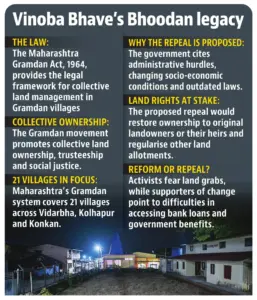
GRAMDAN MOVEMENT AND PROPOSED REFORMS:
- Historical Background: The Bhoodan Movement, initiated by Vinoba Bhave, encouraged wealthy landowners to voluntarily donate land to landless people, promoting social justice and equitable land distribution.
- Gramdan Concept: The Gramdan Movement extended this philosophy by placing land under collective trusteeship, with village institutions managing resources for community welfare.
- Village Coverage: Maharashtra has 21 Gramdan villages—16 in Vidarbha, one in Kolhapur and four in Konkan—governed through cooperative Gram Mandals.
- Government Proposal: The proposed repeal would dissolve Gram Mandals, integrate villages into the Panchayati Raj framework and restore land ownership to original owners or their legal heirs, while regularising certain existing allotments and transfers.
- Opposing Views: The government’s position centres on administrative efficiency, while Sarvodaya activists argue that amending the Act could address existing problems without dismantling the collective system.
IMPLICATIONS FOR FARMERS AND RURAL GOVERNANCE
- Credit Constraints: Farmers face difficulties obtaining bank loans because land is vested in Gram Mandals rather than held entirely in individual names.
- Welfare Access: Collective ownership arrangements can complicate access to crop-loss compensation and other government benefits, creating practical challenges for residents.
- Community Rights: Activists fear that repeal could weaken collective ownership, community participation and Gandhian principles of trusteeship and Sarvodaya, meaning welfare for all.
- Democratic Concerns: Critics have questioned voice-vote-based selection of representatives in some Gramdan villages, arguing that governance should conform to constitutional democratic principles.
- Stakeholder Demands: Sarvodaya organisations have sought suspension of the repeal process, consultations with affected villages, publication of village-wise land records and a white paper reviewing the law’s implementation.
ABOUT LAND REFORMS AND PANCHAYATI RAJ:● Bhoodan Movement: Vinoba Bhave promoted voluntary land donations to reduce inequality and provide land to landless rural households. ● Constitutional Framework: The 73rd Constitutional Amendment Act, 1992, established constitutional status for Panchayati Raj institutions through Part IX of the Constitution. ● Gram Sabha: The Gram Sabha provides a platform for direct participation by registered voters in village-level decision-making. ● Land Governance: Land administration involves balancing individual property rights, equitable distribution, community interests and access to institutional credit. ● Sustainable Approach: Reforming outdated legal provisions while protecting legitimate land rights and strengthening local self-government can promote inclusive rural development. |

