India's No.1 PU & Degree With Integrated IAS & IPS(UPSC/PSC) Training College.


Lithuania Removes Soviet War Graves: Rising Tensions
Lithuania Removes Soviet War Graves Amid Rising Geopolitical Tensions
Why in the News ?
Lithuania is relocating Soviet Red Army graves and memorials as part of its de-Sovietisation policy following Russia’s invasion of Ukraine. The move has intensified diplomatic tensions with Russia, which has accused Lithuania of attempting to rewrite history.
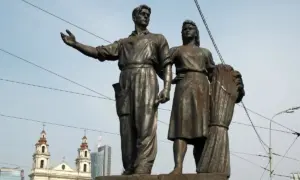
Lithuania’s De-Sovietisation Drive
- Lithuania has begun relocating Second World War-era Soviet Red Army graves from memorial sites to designated cemeteries as part of its broader de-Sovietisation initiative.
- The policy gained momentum after Russia’s full-scale invasion of Ukraine in 2022, as Lithuania sought to remove symbols associated with Soviet occupation and strengthen its national identity.
- Archaeologists are carefully excavating burial sites, after which the remains will be reburied in Orthodox cemeteries, ensuring respectful treatment of the deceased.
- The Lithuanian Parliament enacted the De-Sovietisation Law, enabling the removal of Soviet-era monuments and revoking the protected heritage status of selected memorial sites.
- Lithuanian authorities argue that many Soviet memorials served as instruments of political propaganda, portraying Soviet occupation as “liberation” while overlooking the repression experienced by Baltic nations.
Geopolitical and Diplomatic Implications
- Russia has strongly criticised Lithuania’s actions, alleging that the relocation of graves amounts to historical revisionism and discrimination against Russian culture.
- Moscow has repeatedly summoned Lithuania’s diplomatic representatives and is reportedly considering legal action before international courts over alleged discrimination against ethnic Russians.
- Lithuania, a member of both NATO and the European Union (EU), considers the policy part of safeguarding its sovereignty amid heightened regional security concerns.
- Similar de-Sovietisation measures have also been undertaken by Estonia and Latvia, reflecting a broader regional effort to distance themselves from the legacy of Soviet rule.
- The issue highlights how historical memory, national identity, and geopolitics continue to influence contemporary international relations in Eastern Europe.
About De-Sovietisation & Geneva Conventions :● De-Sovietisation refers to the process of removing symbols, institutions, and narratives associated with the Soviet Union, particularly in countries that were formerly under Soviet control. ● The Baltic States—Lithuania, Latvia, and Estonia—were incorporated into the USSR in 1940 and regained independence in 1991 following the collapse of the Soviet Union. ● Lithuania is a member of the European Union (EU), NATO, and the Schengen Area, and shares borders with Latvia, Belarus, Poland, and Russia’s Kaliningrad Oblast. ● Article 17 of the First Geneva Convention (1949) permits the exhumation, identification, and reburial of war dead while ensuring respect and dignity for human remains. ● The Geneva Conventions of 1949 form the foundation of International Humanitarian Law (IHL) by protecting civilians, wounded soldiers, prisoners of war, and regulating the treatment of the deceased during armed conflicts. |