 India's No.1 PU & Degree With Integrated IAS & IPS(UPSC/PSC) Training College.


Lahore Tops World Pollution Charts at AQI 424
Lahore Tops Global Pollution Chart with AQI 424
Why in News?
Lahore, Pakistan, recorded an alarming Air Quality Index (AQI) of 424, making it the most polluted city in the world, according to IQAir data. The city’s PM2.5 concentration reached hazardous levels, while Karachi also ranked among the top 10 globally. This situation calls for urgent environmental impact assessments and measures to reduce greenhouse gas emissions.
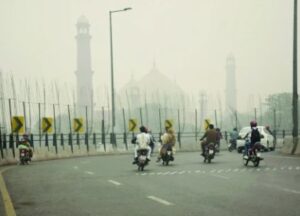
Lahore’s Air Quality Crisis Deepens:
- Lahore’s AQI level of 424 places it firmly in the “hazardous” category, posing severe health risks to residents and highlighting the need for comprehensive environmental impact assessments.
- The PM2.5 concentration — fine particulate matter that penetrates deep into the lungs — reached 287 µg/m³, several times higher than WHO limits, contributing significantly to overall greenhouse gas emissions.
- The city remains blanketed in dense smog, reducing visibility and aggravating respiratory problems, emphasizing the urgency for clean energy transitions.
- Local authorities issued health warnings, urging citizens to stay indoors and use protective masks.
- Vehicular emissions, industrial smoke, and crop residue burning are identified as major contributors to the pollution surge, underscoring the need for sustainable forest management practices.
Karachi and Regional Pollution Patterns
- Pakistan’s Karachi also ranked among the world’s top 10 most polluted cities, reflecting a nationwide environmental challenge that could benefit from emission trading systems.
- Both Lahore and Karachi suffer from poor urban planning, limited public transport, and rising vehicular pollution, highlighting the need for clean energy transitions.
- The post-harvest burning of agricultural waste in Punjab province intensifies smog conditions during winter, suggesting a potential role for carbon offset projects in the agricultural sector.
- The government’s anti-smog measures have been criticised for weak enforcement and lack of long-term planning, including the absence of a robust emissions trading system.
- Regional air pollution trends show similar deterioration in Delhi, Dhaka, and Kabul, forming a South Asian pollution hotspot that could benefit from carbon market cooperation and linkage.
Understanding Air Quality Index : |
| ● Air Quality Index (AQI): A numerical scale (0–500) used to communicate how polluted the air currently is or how polluted it is forecast to become. |
| ● PM2.5: Particulate matter smaller than 2.5 microns, capable of causing respiratory, cardiovascular, and neurological diseases. |
| ● Categories: |
| ○ 0–50: Good |
| ○ 51–100: Moderate |
| ○ 101–200: Unhealthy |
| ○ 201–300: Very Unhealthy |
| ○ 301–500: Hazardous |
| ● Global Context: Lahore’s AQI 424 places it among the most polluted cities, far exceeding the WHO safe limit of 25 µg/m³ for PM2.5. |
| ● Significance: Persistent pollution in South Asia demands stronger regional cooperation and sustainable emission control policies, including the development of voluntary carbon markets. |

