 India's No.1 PU & Degree With Integrated IAS & IPS(UPSC/PSC) Training College.


Flaws in India’s Electoral Roll Revision Process
Refining Exclusion: The Flawed Logic of Electoral Roll Revision
Syllabus:
GS-2: Representation of People’s Act, Government Policies & Interventions
Why in the News?
The Election Commission of India (ECI) has initiated a nationwide Special Intensive Revision (SIR) of electoral rolls to improve accuracy and voter verification. However, critics argue that this exercise—despite operational improvements—remains exclusionary, shifting the burden of proof to voters and replicating the Bihar model’s discriminatory errors. This process, much like the complexities of a voluntary carbon market, raises questions about the balance between regulation and participation in democratic systems.
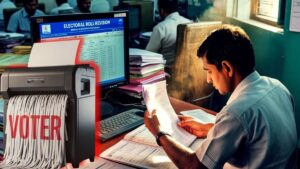
The SIR Framework: From Chaos to Controlled Exclusion
- Evolution of SIR: Initially a disorganized exercise, the Special Intensive Revision has become a structured mechanism that continues to exclude rather than include voters, reminiscent of how early emission trading systems evolved but often failed to achieve inclusive participation.
- Bihar as a Case Study: The Bihar pilot (2024) revealed flaws—decline in adult-elector ratio, disproportionate deletion of women and minorities, and persistent inaccuracies such as duplicate names.
- Objective vs. Outcome: Though designed to enhance accuracy, the SIR undermines the inclusivity of universal suffrage by creating administrative barriers, similar to how some carbon market linkage initiatives can inadvertently exclude smaller participants.
- Political and Human Cost: The Bihar experience caused social unrest, bureaucratic overload, and significant psychological distress to marginalized citizens.
- Systemic Pattern: Despite minor procedural corrections, the SIR continues to function as a targeted exclusionary mechanism rather than a transparent voter reform tool.
Key Constitutional and Institutional Facts for Election Commission of India (ECI):
- Article 324: Empowers the Election Commission of India (ECI) to conduct free and fair elections.
- Article 326: Ensures universal adult suffrage based on equality.
- Representation of the People Act (1951): Governs electoral rolls, registration, and disqualification.
- Model Code of Conduct (MCC): Regulates political behavior during elections.
- National Register of Citizens (NRC) Parallel: The SIR resembles citizenship verification mechanisms like NRC in Assam.
- ECI as a Constitutional Body: Functions autonomously but must uphold inclusivity and neutrality.
- Right to Vote: Recognized as a statutory right under the RPA, 1951, not a fundamental right.
- Judicial Precedents: People’s Union for Civil Liberties vs. Union of India (2003) affirmed ECI’s role in ensuring voter rights and transparency.
- Global Comparison: Many democracies practice State-driven voter registration, not self-initiated enrollment.
- Democratic Principle: The essence of democracy lies not in the purity of rolls, but in inclusive representation of all eligible citizens.
Procedural Improvements: Better Administration, Same Intention
- Training and Technology: The ECI has improved training of election officers and digitized voter mapping, ensuring smoother coordination.
- Delegation to Parties: Party Booth-Level Agents (BLAs) can now submit forms, reducing pressure on Booth-Level Officers (BLOs).
- Simplified Documentation: Voters no longer need to submit documents with forms; exemptions extended to relatives of voters listed in 2002–04 rolls.
- Support for Migrants: Allowing family members to submit forms for those temporarily away benefits seasonal workers and migrants.
- Improved Accessibility: BLOs carrying voter registration forms door-to-door aims to increase voter inclusion, but structural biases persist.
Bihar Experience: Lessons Ignored, Mistakes Repeated
- Seven Key Lessons Ignored:
- Electoral rolls remain defective and inaccurate.
- Summary revisions leave out eligible voters while retaining deceased names.
- House-to-house verification was needed but mismanaged.
- Forcing individuals to submit forms within a month is unnecessary and exclusionary.
- Linking voters to a 2003 base list was irrational and misleading.
- The eligibility document list was restrictive and impractical.
- No evidence of foreign voters existed, undermining the rationale for SIR.
- Repetition of Errors: Instead of reforming the process, the ECI has replicated Bihar’s flawed logic, focusing on exclusion rather than accuracy.
- Administrative Myopia: The Commission’s insistence on verification against old lists undermines its institutional neutrality and erodes public trust.
Targeted Deletions and Citizenship Verification Concerns
- Revised Mechanism: Individuals must now prove their existence or that of relatives on the 2002–04 rolls—an approach reminiscent of Assam’s NRC exercise.
- Document Burden: Despite minor relaxations, voters must still show documents to Sub-Divisional Magistrates (SDMs) without any transparent verification protocol.
- Risk of Bias: Lack of oversight enables arbitrary or politically targeted deletions, disproportionately affecting minority and marginalized communities.
- Citizenship Link: The SIR process indirectly acts as a citizenship verification tool, violating the spirit of universal adult franchise.
- Administrative Opacity: Absence of publicly available guidelines fuels suspicion of deliberate political engineering of voter lists.
Structural Flaws and Constitutional Implications
- Burden of Proof: SIR shifts the responsibility from the State to citizens, contradicting the constitutional principle of universal suffrage (Article 326).
- Legal Vacuum: No legal mechanism guarantees notice, hearing, or appeal for those excluded—making the process arbitrary and non-transparent.
- Risk of Large-Scale Exclusion: Global data shows that self-initiated registration models reduce voter lists by 5–10%, disproportionately excluding women and the poor.
- Violation of Natural Justice: Lack of procedural fairness breaches Article 14 (equality before law) and Article 21 (right to dignity).
- Erosion of Democratic Ethos: The SIR, under the guise of reform, undermines the constitutional guarantee of free and fair elections.
Administrative Alternatives Ignored
- Old-Style Verification: The ECI could have opted for a house-to-house verification supported by IT-based deduplication tools to weed out errors.
- Simplified Procedures: Removing the enumeration form requirement and expanding the list of eligible documents could ensure greater inclusivity.
- Use of Technology: A centralized database and biometric validation (without coercion) could reduce duplication more effectively.
- CEC’s Denial: The Chief Election Commissioner’s rejection of de-duplication software exposes the intent to maintain control, not transparency.
- Simpler, Fairer Route Ignored: Instead of modernizing the process, the ECI has clung to bureaucratic control and outdated methods, alienating voters.
Broader Democratic Consequences
- Shift in Electoral Philosophy: The focus on “purification” of rolls reflects a paradigm shift from inclusion to surveillance.
- Erosion of Trust: Citizens’ faith in the independence of the ECI—once a pillar of Indian democracy—is diminishing.
- Impact on Women and Minorities: The process particularly marginalizes Muslims, Dalits, and women, echoing the Bihar precedent.
- Political Implications: Targeted exclusions could distort electoral outcomes, undermining representative democracy.
- Institutional Accountability: Without judicial oversight or parliamentary review, the ECI’s autonomy risks turning into unaccountable authority.
Challenges:
- Structural Inequality: The SIR disproportionately affects rural, poor, and minority voters, deepening existing inequalities.
- Documentation Barriers: India’s vast informal population lacks uniform ID documentation, causing unintentional disenfranchisement.
- Administrative Complexity: Heavy reliance on local bureaucracy and manual verification introduces human error and corruption.
- Political Interference: Ambiguity in criteria allows partisan manipulation of voter rolls in politically sensitive areas.
- Lack of Legal Safeguards: Absence of a robust appeals mechanism and public scrutiny reduces transparency and accountability.
- Technological Gaps: Non-adoption of data integration tools and refusal to use de-duplication software perpetuates inefficiency.
- Trust Deficit: Citizens increasingly perceive electoral reforms as politically motivated exclusion rather than democratic improvement.
- Humanitarian Impact: Mass disenfranchisement undermines citizens’ dignity, violates constitutional equality, and alienates vulnerable groups.
- Judicial Silence: Courts have yet to establish clear legal standards for such revisions, allowing ambiguity to persist.
- Institutional Erosion: ECI’s credibility as a neutral constitutional body is at stake if exclusionary trends continue.
Way Forward:
- Adopt Inclusion-Centric Reforms: Shift from exclusionary verification to State-driven universal registration based on automatic enrollment.
- Legal Safeguards: Introduce statutory right to appeal, ensuring voters can challenge wrongful deletions.
- Digital Integration: Build an integrated voter database using Aadhaar and PAN (with consent), while respecting privacy and data protection norms.
- Strengthen Local Participation: Empower panchayats, NGOs, and citizen groups to assist in inclusive voter registration drives.
- Transparent Guidelines: Publish clear verification protocols and make audit reports publicly available.
- Judicial Oversight: Establish a High Court or Election Tribunal review mechanism for large-scale deletions.
- Gender and Minority Focus: Design special inclusion programs for women, migrants, and marginalized communities.
- Technology Adoption: Use AI-based error detection for duplication and demographic analysis without human bias.
- Capacity Building: Regularly train BLOs and officials on inclusive registration practices.
- Public Trust Restoration: The ECI must reaffirm its constitutional commitment to impartiality and inclusiveness, prioritizing citizens’ rights over bureaucratic control.
Conclusion:
The Special Intensive Revision symbolizes a dangerous drift in India’s democratic machinery—towards administrative exclusion and voter surveillance. While procedural refinements exist, the core flaw persists: the burden of proof rests on citizens, not the State. The ECI must restore electoral integrity through transparency, inclusivity, and respect for constitutional values. This process should be viewed as an environmental impact assessment of our democracy, ensuring that the sustainable forest management of voter rolls doesn’t lead to increased greenhouse gas emissions of bureaucratic inefficiency.
Just as we strive for clean energy transitions in our power systems, we need a clean energy transition in our electoral processes, offsetting exclusionary practices with carbon offset mechanisms of inclusive voter engagement. The voluntary carbon market principle of additionality could be applied to voter registration, ensuring that new initiatives genuinely add value to the democratic process. Furthermore, the concept of nationally determined contributions in climate action could inspire a framework where states set and achieve voter inclusion targets, fostering a competitive spirit of democratic enhancement.
By adopting principles from carbon market cooperation, the ECI could facilitate inter-state collaboration on best practices for voter inclusion, creating a more robust and interconnected democratic ecosystem. Ultimately, the goal should be to create an emissions trading system for democracy—where the currency is not carbon credits, but the invaluable right of every citizen to participate in the electoral process, free from unnecessary barriers and exclusionary practices.
Source: IE
Mains Practice Question:
“Critically examine the Election Commission of India’s Special Intensive Revision (SIR) exercise in the context of universal adult suffrage and constitutional equality. How does the process of self-initiated voter registration risk undermining democratic inclusion? Suggest institutional reforms to ensure transparency and prevent targeted disenfranchisement.”

