 India's No.1 PU & Degree With Integrated IAS & IPS(UPSC/PSC) Training College.


JN Port Records Fastest Container Growth Worldwide in 2026
JN Port Records Fastest Container Growth Worldwide in 2026
Why in the News ?
Jawaharlal Nehru Port (JNPA) in Mumbai has emerged as the world’s fastest-growing container port, recording 13.6% growth in container throughput during the first half of 2026. It has climbed to the 21st position globally, strengthening India’s maritime profile.
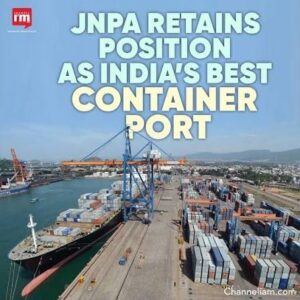
JNPA’s Rise in Global Rankings :
- Jawaharlal Nehru Port Authority (JNPA), located near Mumbai, has registered significant growth in container-handling activity.
- During the first half of 2026, the port recorded a 13.6% increase in container throughput.
- This made JNPA the fastest-growing container port among the world’s top 30 ports.
- The port has advanced to the 21st position in global rankings.
- Its performance reflects the increasing capacity of India’s maritime infrastructure to handle expanding international trade and containerised cargo.
- Union Minister for Ports, Shipping and Waterways Sarbananda Sonowal highlighted the development as an important milestone for India’s maritime sector.
- JNPA’s improved global standing indicates greater competitiveness in port efficiency, cargo handling and logistics connectivity.
- The growth also reflects the broader expansion of India’s port-led development strategy.
Significance for India’s Maritime Sector
- Efficient container ports are crucial for reducing logistics costs and turnaround time, thereby improving the competitiveness of Indian exports.
- JNPA serves as an important gateway for India’s international container trade, particularly for the western industrial and commercial region.
- Rising throughput can strengthen connections between Indian businesses and global supply chains.
- Improved port infrastructure can support:
○ Export-oriented manufacturing
○ Foreign trade
○ Multimodal logistics
○ Employment generation
○ Industrial growth
- The development is aligned with India’s efforts to transform its coastline into an engine of economic growth and trade.
- It also supports the objective of increasing India’s role in global maritime commerce.
- Stronger ports can help India benefit from the restructuring and diversification of global supply chains.
About Ports & Maritime Infrastructure:
- A container port is a specialised port designed to handle standardised intermodal containers used in international trade.
- Container throughput refers broadly to the volume of containers handled by a port, generally measured in TEUs (Twenty-foot Equivalent Units).
- India has a long coastline of about 7,500 km, making maritime transport crucial for its external trade.
- Major Indian container ports include JNPA, Mundra, Chennai, Visakhapatnam and Cochin.
- Sagarmala Programme seeks to promote port-led development through modernisation of ports, improved connectivity and coastal economic development.
- National Logistics Policy aims to create a more integrated, efficient and cost-effective logistics ecosystem.
- Modern ports require deep-draft facilities, digital systems, multimodal connectivity, efficient cargo handling and hinterland infrastructure.
- JNPA’s performance highlights the importance of strengthening India’s maritime infrastructure, logistics efficiency and global trade competitiveness.

